Illinois AC Cooling
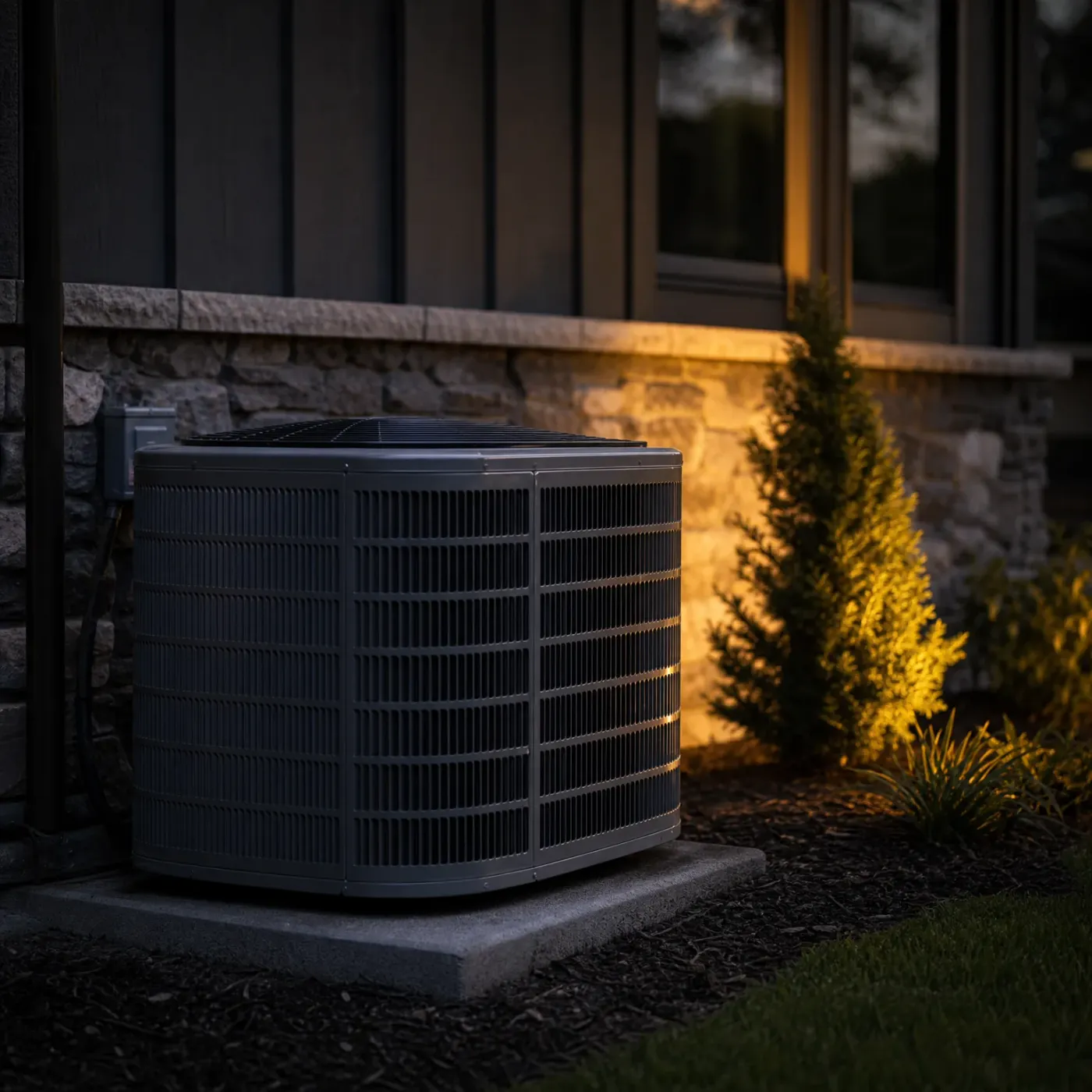
An outdoor air conditioning condenser unit on a concrete pad beside a house with stone veneer and vertical board siding, with a small shrub and mulch bed lit by a ground light at dusk.

Stop chasing an air conditioner pro

Central AC or mini split for an Illinois home

Deciding between central air and a mini split is really a question about your ducts, your gas furnace, and what Illinois summers and electric rates do to each option over time. This page walks through how they compare for a home like yours. Send the form once and stop calling around for quotes yourself.

Hand it off

For most Illinois homes, central air is the better fit if ductwork is already in place, and a mini split makes more sense when it isn't. Central air uses the same ducts your gas furnace runs through, so one system handles summer and winter without adding equipment. A mini split skips ductwork entirely, running refrigerant lines to wall units instead, which matters if you're cooling a room addition, a converted attic, or a house that's never had ducts at all. Both do fine against Illinois summers. The real difference shows up in the install and in the electric bill after, since mini splits condition only the rooms with a unit while central air cools the whole house evenly through the ducts you already have. If your home has working ductwork, that's the question this page answers first.

Power costs 17.67 cents per kilowatt-hour statewide

At 17.67 cents per kilowatt-hour, every degree you push your AC down shows up on the bill. A mini split cools only the room it's in, so if you're just trying to take the edge off one space, it can cost less to run than central air cooling the whole house.

EIA-861 2025 statewide residential average

If your house already has ducts, central air uses them in summer the same way your furnace uses them in winter. You're not paying to add anything new, and one thermostat covers the whole house.

If your house doesn't have ducts, a mini split skips that cost entirely. It mounts on a wall or ceiling and cools from there, which also makes it the one that fits an addition or a garage your ducts never reached.

A man in a blue sweatshirt reclines with closed eyes in a brown leather armchair in a living room with a bookshelf, houseplant, sofa, window, and a side table holding newspapers and a dark mug.
A bearded man in a gray pullover reclines with closed eyes on a brown leather sofa in a sunlit room with a window, framed picture, potted plant, and a wooden cabinet holding papers and a dark mug.
A man in a gray sweater leans back with closed eyes in a brown leather armchair beside a wooden side table holding a dark mug and a folded newspaper, with bookshelves and a window seat behind him.
A man in a green sweater reclines in an armchair with his eyes closed and a slight smile, beside a window with plants, a small table holding a mug and folded newspaper, and bookshelves behind him.

17.67 cents per kWh

Central air cools the whole house on one thermostat. On Illinois power rates, that convenience costs more to run than a mini split cooling a single room.
Hand off the search

No ductwork needed

A mini split mounts on a wall and runs on its own line set. It skips the cost of adding ducts a gas furnace home may not already have.

Hand off the search

Is your AC keeping up with a muggy Illinois summer?

Notice which rooms stay warm no matter where you set the thermostat. A bonus room over the garage, a finished attic, an addition built after the ductwork went in. Those are the spots central air often struggles to reach evenly, and they're usually the reason someone starts looking at a mini split in the first place. If your system is running long stretches without the house ever feeling quite right, or your electric bill climbs faster than the temperature does, that's the equipment working harder than it should. Left alone, a system that's mismatched to your house tends to run more than it needs to, and that shows up on your bill before it shows up as a breakdown.
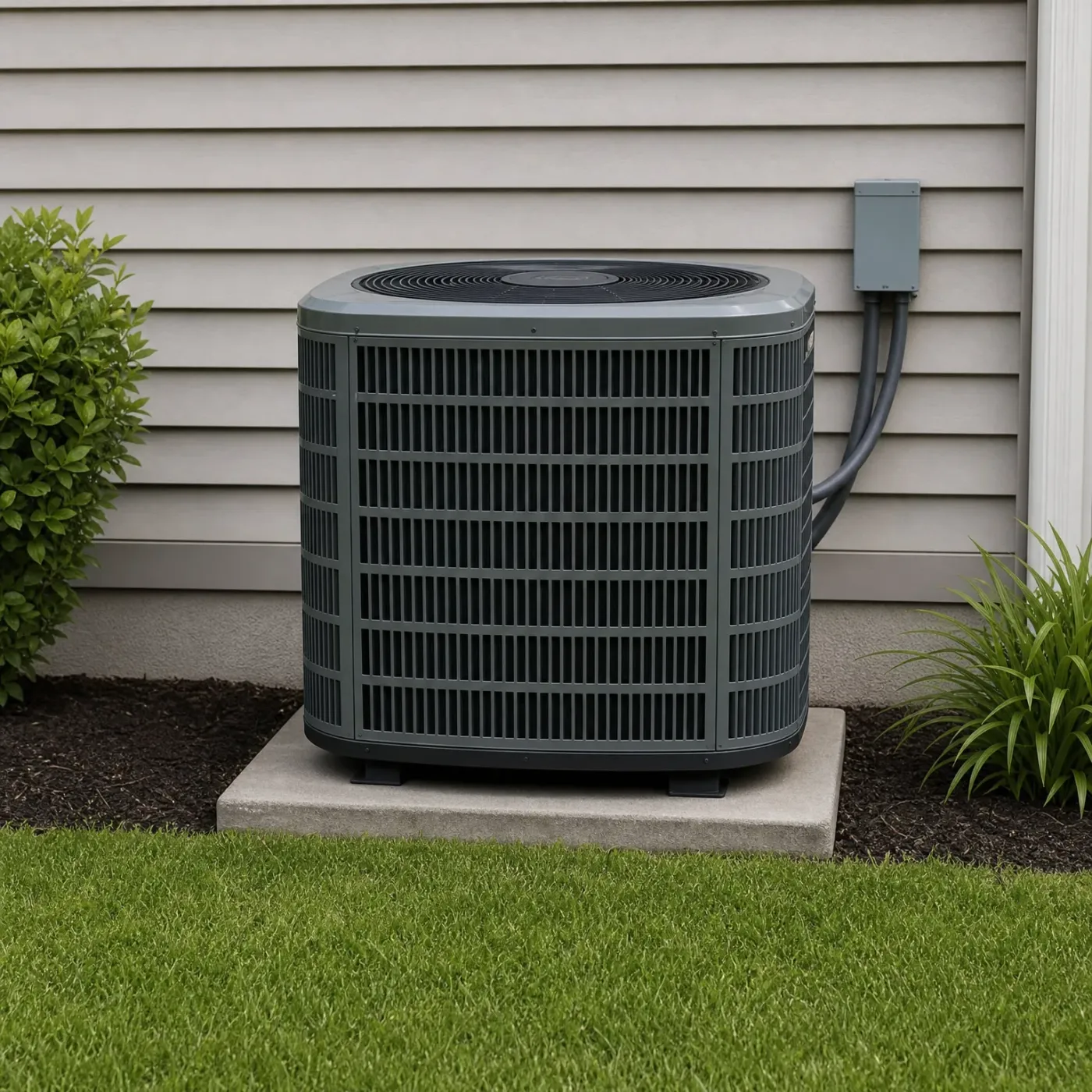
A gray outdoor air conditioning condenser unit on a concrete pad beside a house with horizontal lap siding, with a wall-mounted electrical disconnect box and refrigerant lines, shrubs, mulch and lawn around it.

The system running the way it should

This is what a healthy condenser looks like: clean fins, clear ground around it, a disconnect box wired up tight on the wall. Air moves through it without a fight, and it can run all summer without drawing more power than it needs to.
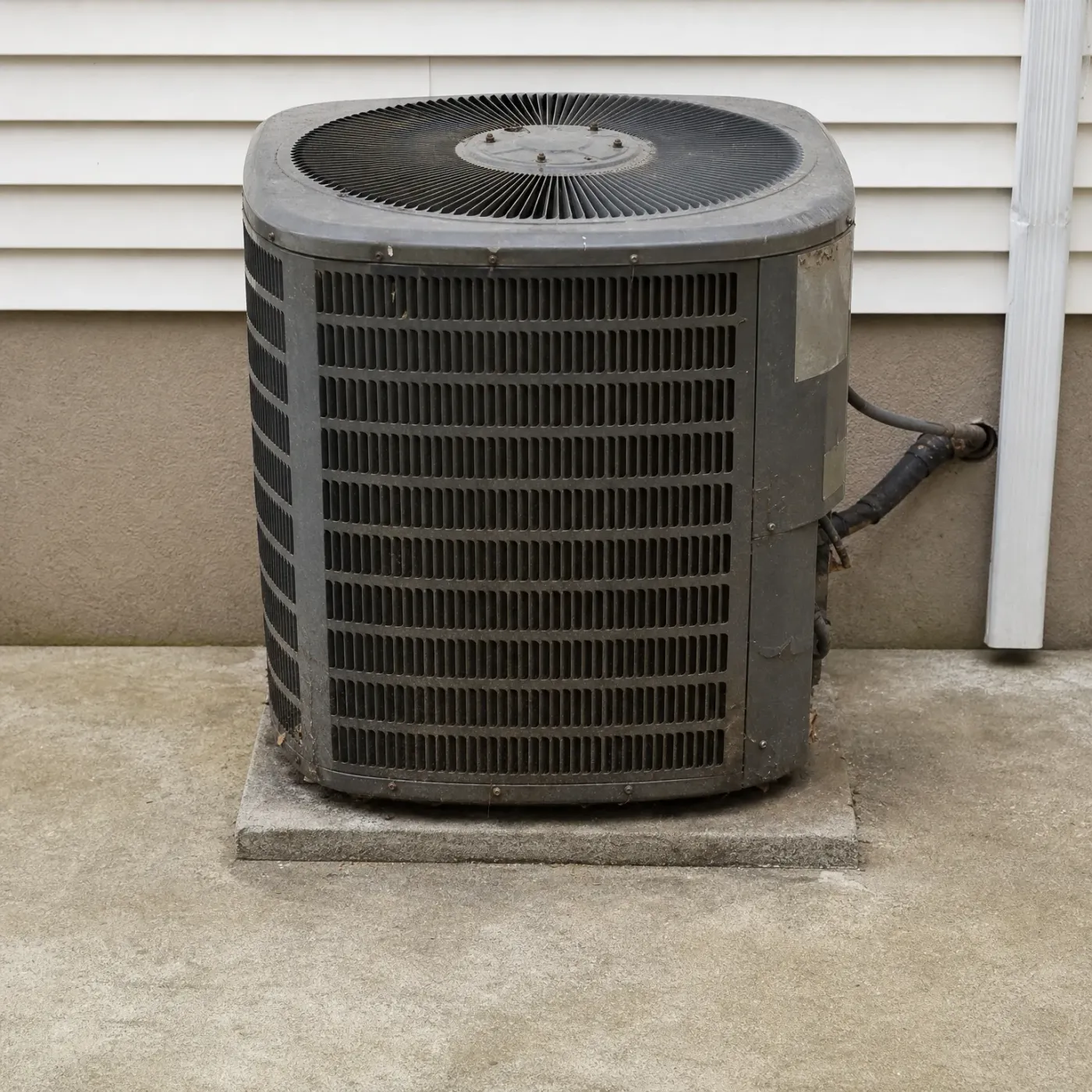
An outdoor air conditioner condenser unit on a concrete pad beside a house wall with stucco lower section, horizontal siding above, and a white downspout to the right.

The system working against itself

Grime packed into the fins blocks airflow, so the unit has to run longer to move the same heat. On Illinois electric rates, that difference shows up on the bill before it shows up as a breakdown. An older, caked-up unit like this is also one that's closer to needing a decision, not just a cleaning.


A gray-haired man with a beard in a blue button-placket shirt reclines on a couch with his eyes closed, beside a sunlit window with a green plant.
A woman in a cream knit sweater sits in an armchair with her eyes closed near a window showing yellow autumn foliage, with a mug on a round wooden side table beside her.
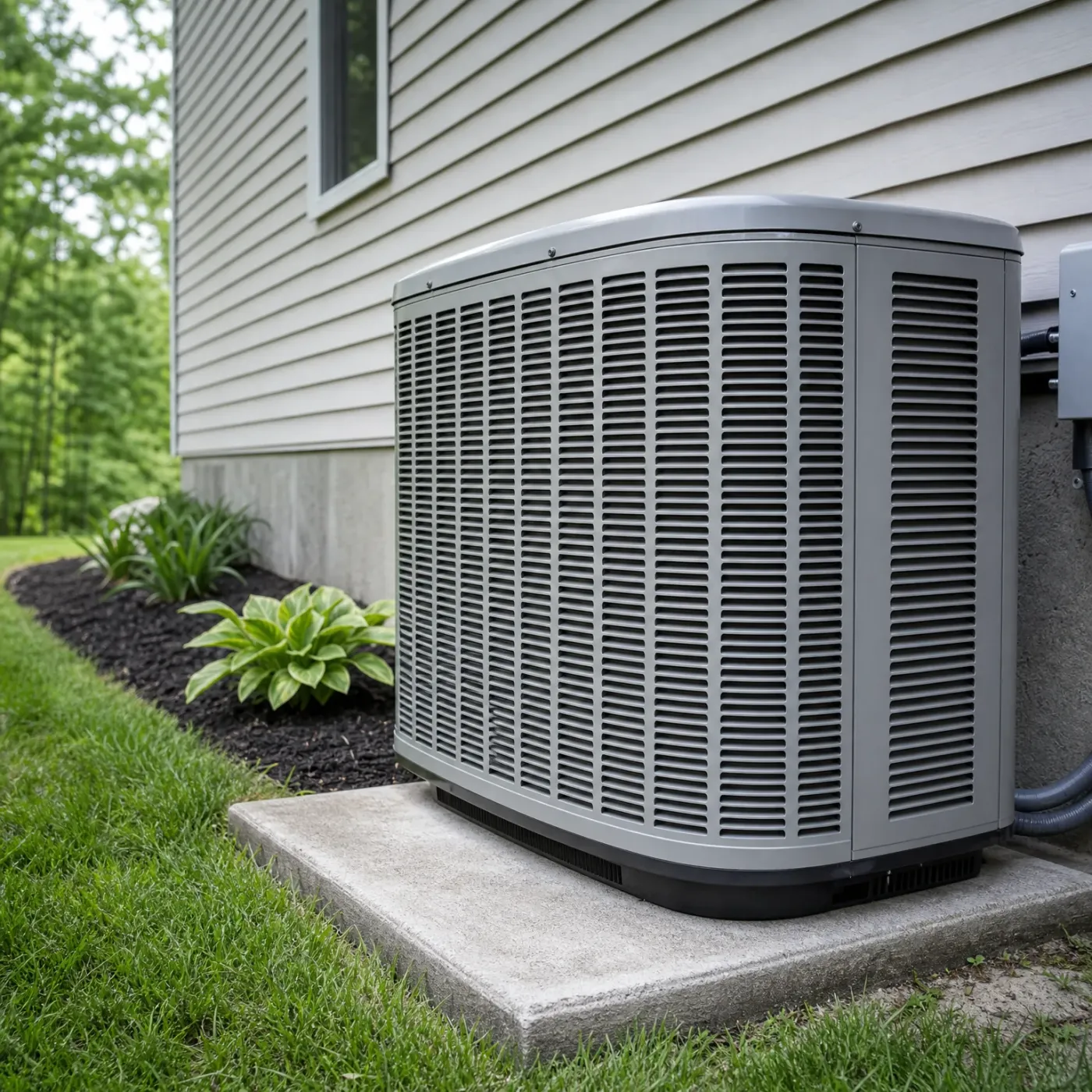
A gray outdoor air conditioning condenser unit on a concrete pad beside a house with light horizontal siding, with a mulched planting bed and lawn to the left.

Finding a pro stops being your job

Skip collecting and comparing quotes for the new air conditioner.

Send the form and stop researching installers for the new air conditioner.

Send my request

No fee to send it, and nothing to sign.

Central Air or Mini Split: Which Fits Your House

Central air

  • Runs off your existing ducts, so it pairs with your gas furnace instead of adding a second system to maintain.
  • One thermostat covers the whole house, which matters if you've got more than a couple rooms to keep cool.
  • The condenser sits outside and the air handler ties into the furnace, so installation means working with what's already run through your walls.
  • If a bonus room or finished attic came after the ductwork went in, central air may not reach it any better than it does now.
  • Repairs and replacement later on mean dealing with ducts, a condenser, and a furnace connection, not just one box on a wall.
  • Cooling the whole house on Illinois power rates costs more than cooling just the room you're in.

Mini split

  • Mounts on a wall and runs on its own line set, so a home without ducts doesn't need them cut in to get central cooling.
  • Cools only the room it's in, which is cheaper to run if you're just trying to fix one hot bedroom or that addition over the garage.
  • Needs its own thermostat or remote per unit, so covering several rooms means several units to manage.
  • Doesn't touch your gas furnace at all, it's a separate system start to finish.
  • Works well for additions, bonus rooms, and finished attics built after the original ductwork went in.
  • A whole house of mini splits costs more upfront than extending the ducts you've already got.
A dim bedroom with a box fan sitting in an open double-hung window, sunlight streaming through the hazy air onto an unmade bed in the foreground.

The box fan in the window is just moving the hot air around. It's past eight and still bright out, the light gone orange through the haze. You're sitting on top of the covers because under them isn't an option tonight. Downstairs the thermostat says seventy-two, same as it says every night, but up here it doesn't mean anything. The vent in the corner is blowing, you checked, held your hand up to it an hour ago. Whatever's coming out of it isn't cold enough to matter by the time it crosses the room. Your phone's too bright to look at. The dog's stretched flat on the floor by the door like the floor might be cooler. It isn't.
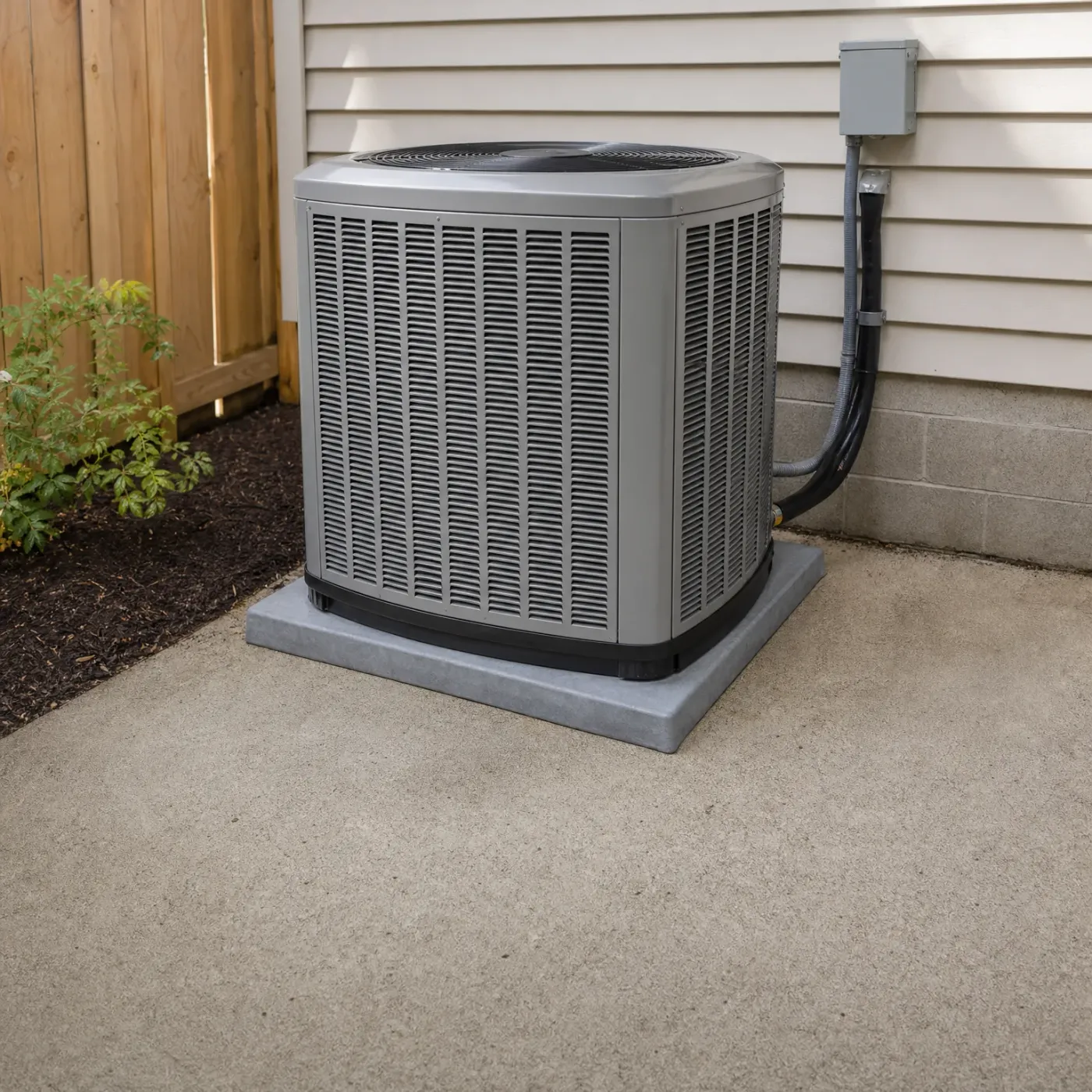
A gray outdoor air conditioning condenser unit on a composite pad beside a house with horizontal lap siding, with a wall-mounted disconnect box, refrigerant lines, and a wooden fence and shrubs to the left.
Clean fins, a clear pad, a disconnect wired up tight. This condenser moves air without a fight, even on the hottest days.
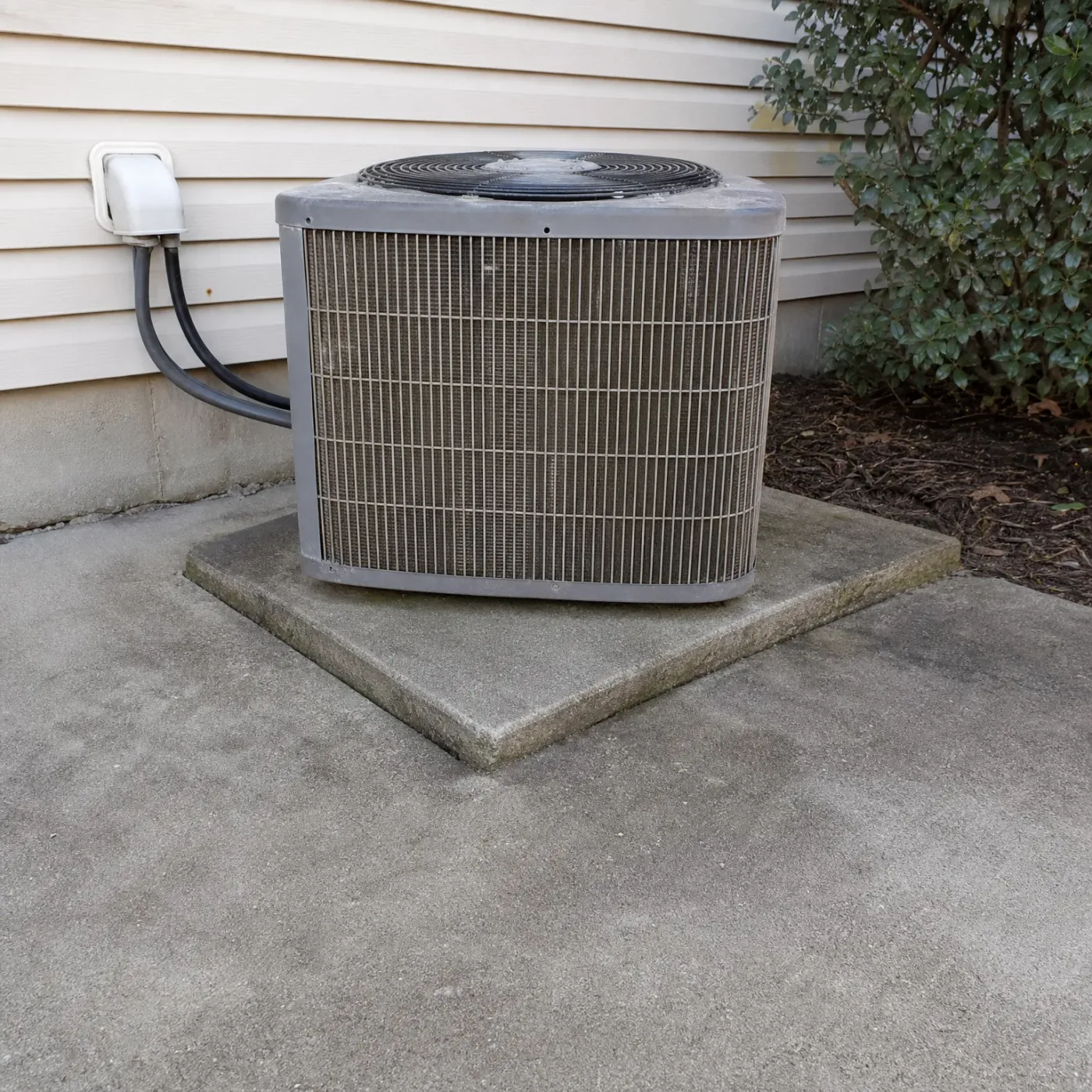
An outdoor air conditioning condenser unit on a concrete pad beside a house with light vinyl siding, with electrical conduit running to a wall-mounted disconnect box and a shrub in mulch to the right.
A warm room upstairs, a run time that won't quit. Wiring and conduit alone don't tell you the compressor inside is struggling.
  1. A contractor checks whether your existing ducts can carry the new system's airflow.

  2. For central air, the condenser ties into your gas furnace's blower and ductwork.

  3. For a mini split, the crew runs a line set through a small wall opening.

  4. The indoor unit mounts high on a wall or connects to the duct trunk.

A closed dark laptop and a ceramic mug of coffee on a wooden dining table, with wooden chairs, a dark kitchen cabinet with cutting boards and a potted plant, and a leafy plant by a window in the background.

Ducts decide it

If your ducts already reach the rooms you want cool, central air is the straightforward choice. It ties into the furnace you already have and runs the whole house off one thermostat. If a room was never ducted, or you're cooling a space your system was never built to reach, a mini split handles that without tearing into walls.

Either way, the work ahead is a contractor measuring your ducts, checking your furnace's blower, and sizing the right unit for your house, not a guess off a chart. Finding that contractor is the part you don't have to do. No calling around, no repeating your situation to three different companies, no sorting through quotes that all explain things differently. Send the form and that search is off your plate.


A living room corner with a beige sofa and cushion, a round wooden coffee table holding a pale ceramic vase of eucalyptus stems and a wooden bowl, and a curtained window with a potted plant above a latticed radiator cover in the background.
At dusk, a dark board-and-batten house with a standing-seam metal roof and lit entry walkway of stone pavers, with two large outdoor heat pump units on a stone-walled pad at right and trees and hills in the background.

Air Conditioner Installation

Let someone else find the pro

Step 1 of 3: Equipment
  • A brown leather and wood armchair with a cream knit throw sits in a corner beside a woven basket holding a dark cushion, under a framed mountain photograph, with a wood-trimmed window showing yellow and green foliage.
    • A local installer who puts in air conditioners gets your project.
    • Get in touch with a local installer about a new air conditioner.
  • A dark wood dresser against a pale wall holds a ceramic vase of eucalyptus branches, a stack of books with a wooden bowl, and a woven basket, with a framed landscape painting above and a woven basket holding a knit blanket on the floor beside a window.
    • Send the request and finding a pro stops being your problem.
    • After this form, you can stop searching for an air conditioner pro.
  • A window seat with beige linen and brown textured cushions, a chunky knit blanket, and an open book, beside a window showing blurred yellow autumn foliage.
    • One form replaces the calls you'd make to find an air conditioner pro.
    • Skip the round of in-home estimates for a new air conditioner.
  • A cream upholstered armchair with a rust-colored pillow and knit fringed throw sits beside a window with a ceramic vase of orange-leafed branches on the sill, overlooking autumn trees and leaf-covered ground.
    • One installer gets your project, so there's no bidding war over it.
    • Your request stays with one local pro.