A local installer who puts in air conditioners gets your project.
A two-stage air conditioner runs on low most of the time and only shifts to full power on the hottest days. In Illinois, where summer humidity sits heavy for months, that matters more than it would somewhere dry. Low stage runs longer, pulls more moisture out of the air, and keeps the house from swinging hot and cold the way a single-stage unit does when it cycles on and off.
Power here isn't cheap, and a system that runs long and low instead of hard and short tends to cost less to operate month to month. Most homes in Illinois heat with gas, so the AC's job is purely cooling, which makes this choice a little simpler than in places where the same equipment handles both.
Whether a two-stage unit is worth it for your house depends on things a page like this can't know: the size of your home, your ductwork, what your current system is doing wrong, what you're paying now. A contractor who can look at your actual setup is the one who can tell you if the difference in comfort and in your summer bill justifies the cost of going two-stage over single-stage.
That's the part worth skipping past on your own. Finding a contractor who installs this equipment, calling a few, explaining your house and your symptoms each time, then trying to compare quotes that are never quite apples to apples, is most of the work before any work gets done. You can hand that off here. Answer a few questions about your home and your system, and a contractor who installs AC equipment in your area will reach out to you directly, already knowing what you're dealing with.
What you do with that conversation, whether you go two-stage or stick with what you have, is yours to decide once someone's actually looked at your situation.
Is a two-stage AC worth it in Illinois?
You're trying to figure out if the higher price tag on a two-stage AC actually makes sense for your house, or if it's just an upsell. With Illinois summers running hot and sticky and power costing what it does here, you want to know the stickiness and the electric bill actually factor into the answer before you commit to one unit over another.
For most Illinois homes, yes
A single-stage AC only has one setting: full blast, then off. It cools fast but shuts off before it's pulled much humidity out of the air, so the house cools down but still feels damp. A two-stage unit runs its low setting most of the summer, moving air slowly over the coil long enough to wring the moisture out of it. In a state where the air itself carries that much water from June through August, that difference shows up in how the house actually feels, not just the number on the thermostat. It also means the compressor isn't slamming on and off all day, which matters over the life of the unit. The tradeoff is cost up front, and whether that's worth it depends on how long you plan to stay in the house and what your current system is doing now.
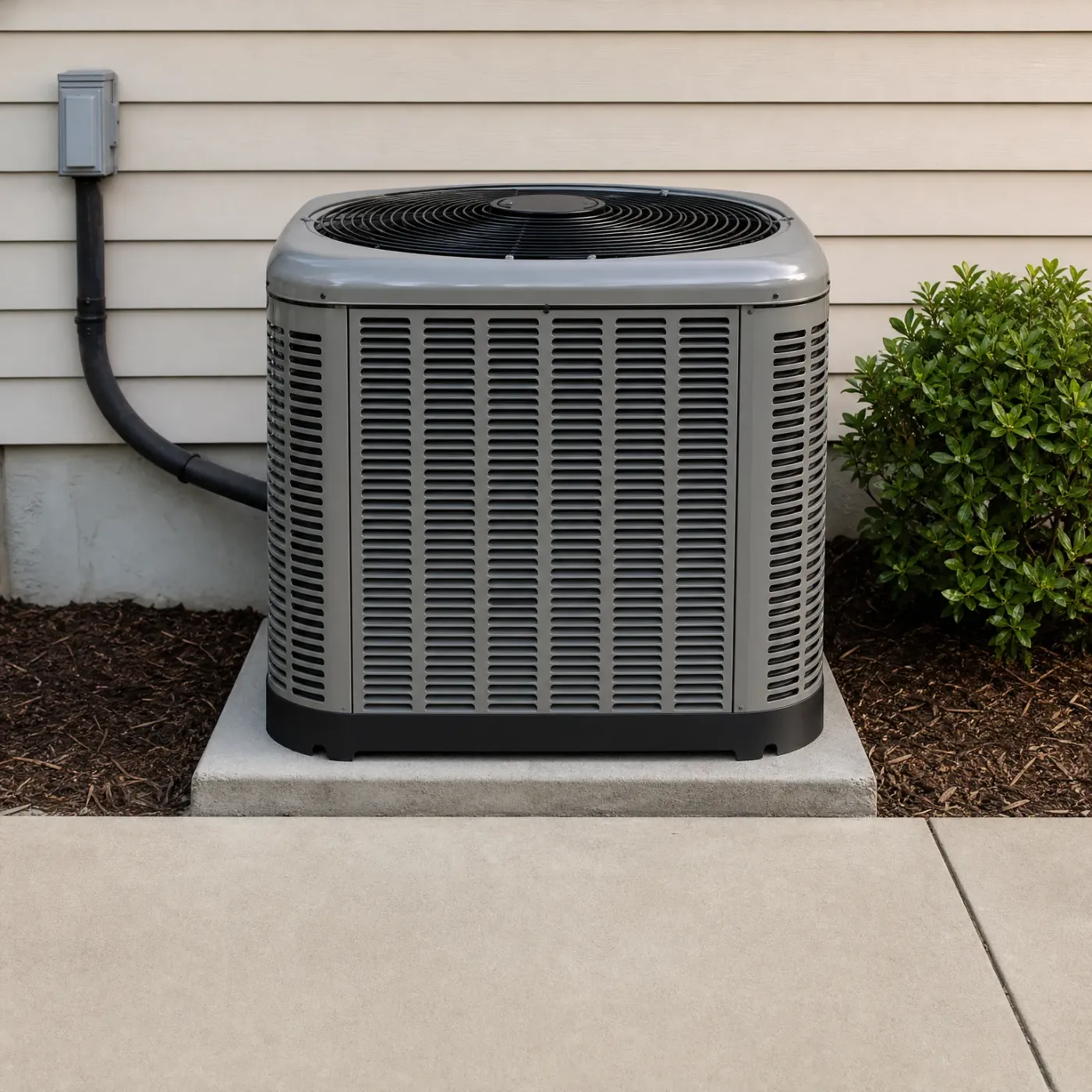
A single-stage unit running normal
This is a single-stage AC doing its job. It runs full blast whenever it runs, then shuts off. That's fine for a lot of houses, and it costs less to install than a two-stage unit. The tradeoff shows up on humid days, when it cools the air fast but doesn't run long enough to pull much moisture out.
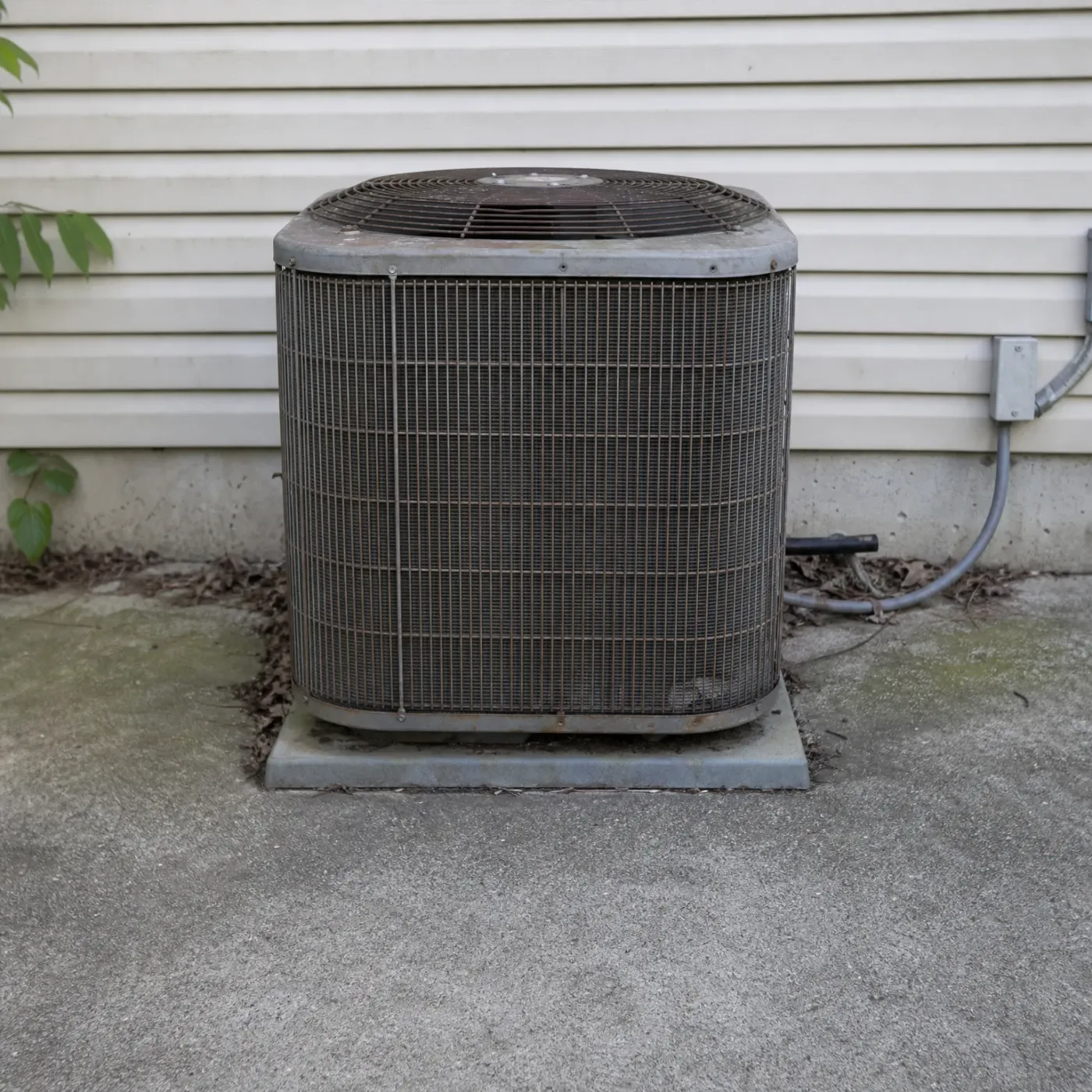
An aging unit struggling
This condenser has years on it. The grille is caked with dirt, leaves have piled up against the base, and airflow through it is restricted. A unit in this shape works harder to move the same heat, whether it's single-stage or two-stage, and that shows up on the power bill before it shows up as a breakdown.
Does your house feel damp even with the AC running
You turn the thermostat down and the room cools, but it still feels clammy. The air conditioner shuts off and on fast, and the house never quite dries out. Upstairs rooms run warmer than the rest of the house. Your electric bill climbs through July and August even though you haven't changed how you use the house. Some rooms feel fine while others stay sticky no matter what the thermostat says. Left alone through enough summers, that extra moisture sitting in the house gives mold and mildew a place to start, especially in basements and closets that don't get much airflow.
Describe the project once instead of to every installer.
Sending the form costs nothing.
What low stage does on a humid day
On a sticky afternoon, a two-stage AC left on low stage runs for a long stretch rather than shutting off every few minutes. That long runtime matters because moisture only leaves the air while the system is actually running. A unit that cycles off quickly pulls some moisture out, then stops before it finishes the job. Low stage keeps the blower and coil working steadily, so the air passing over the coil gets wrung out more completely before the house reaches the set temperature. That's why a two-stage system tends to leave a house feeling drier than a single-stage one, even at the same thermostat setting, on the kind of humid day Illinois gets a lot of.
Why full power still matters
High stage exists for the days low stage can't keep up, when the outdoor temperature climbs and the house gains heat faster than low stage can remove it. On those days the system shifts to full capacity automatically, cools the house down, then drops back to low stage once it catches up. A single-stage unit only has that one setting, so it's always running at full output whenever it runs at all. The two-stage unit spends most of its time in the gentler mode and saves full power for when it's actually needed, which is part of why it tends to use less electricity over a season where power costs what it does here.
Single-stage AC
One speed, full power every time it runs. Costs less to install. On a sticky Illinois day it still cools the house, but it cycles off before the air fully dries out.
A two-stage AC has a compressor built to run at two fixed speeds, not a dial that slides between them. A thermostat with two-stage controls tells it which one to use, checking how fast the house is gaining heat and how long the last cycle ran. Call for cooling comes in, the compressor starts on low. If the house keeps gaining heat faster than low stage can keep up, the control signals the compressor up to high. That decision happens on its own, cycle to cycle, without anyone touching the thermostat.
This only works if the thermostat and the outdoor unit are matched to talk to each other, and if the system is sized for your house rather than oversized to compensate for poor ductwork. That's a judgment call that depends on your specific house, your ducts, your attic, the whole picture. A contractor who installs two-stage systems regularly can look at your setup and tell you whether yours would actually get the two stages working the way they're meant to, or whether something in your house would keep it running on high most of the time anyway.
Power costs 17.67 cents per kilowatt-hour statewide
At 17.67 cents per kilowatt-hour, every hour your compressor runs full blast costs more here than in most states. A single-stage unit gives you one speed: full power, every cycle. A two-stage system spends most of a summer day on low, so the hours it's actually running cost less per hour.
EIA-861 2025 statewide residential average
A two-stage AC costs more to install than a single-stage one, and in an Illinois house that runs for months of sticky summer weather, most of that extra cost gets spent on low stage, where it pulls moisture out of the air without running up the power bill the way full blast does. Whether that trade is worth it for your house depends on things like how your current system cycles and what your upstairs rooms feel like in July, not on a rule that applies to every house the same way. Sorting that out usually means pricing it against your specific equipment and ductwork, which means calling around, explaining the same thing to a few different contractors, and sitting with quotes that are hard to compare because they're not pricing the same job. You don't have to do that part. A contractor who knows Illinois installs can look at your situation directly and tell you whether two-stage makes sense for your house.
Get your air conditioner to the right pro
Skip collecting and comparing quotes for the new air conditioner.