Signs of a bad AC capacitor in Illinois

Send the request today and let an air conditioner pro reach out to you.

I'm done searching

A bad capacitor usually shows up as an AC that hums but the fan won't spin, or a unit that shuts off a few minutes after it starts. Some units click and try to restart over and over. The capacitor stores the charge that gets the compressor and fan motor moving, and once it weakens, the motor doesn't get the push it needs. Heat and long run time wear it down faster, and in Illinois that means the humid stretch from June through August, when the outdoor unit runs for hours at a stretch. A weak capacitor often fails on the hottest, most humid day, not a mild one, because that's when the system works hardest. If your outdoor unit is silent, buzzing, or cycling on and off without cooling the house, the capacitor is one of the first things worth checking before the compressor itself takes the strain and fails too.

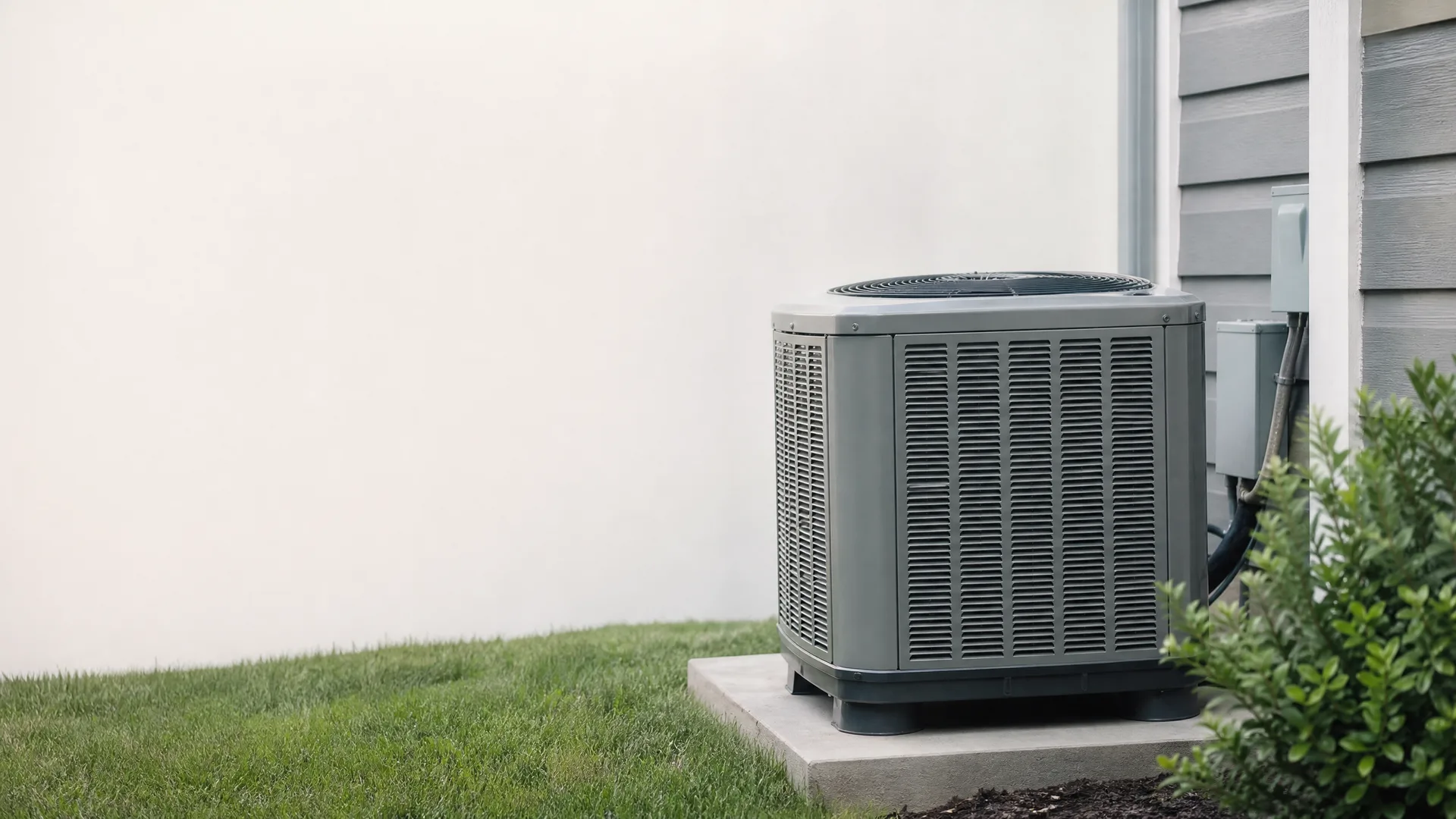
A gray outdoor air conditioner condenser unit on a concrete pad beside a house corner with lap siding and a stucco wall, surrounded by mown green grass.

Why heat makes it worse

A capacitor holds its charge less well as it gets hot, and the air around your outdoor unit on a July afternoon in Illinois can run well past 90 degrees. That heat sits right where the capacitor lives, inside the condenser cabinet, with a compressor running next to it for hours at a stretch. A capacitor that gets the system through a mild stretch can fail outright once the heat and the run time both climb.

An outdoor air conditioning condenser unit on a concrete pad beside a house with light stucco and lap siding, with mown grass to the left and a green shrub to the right.

What the fan tells you

Open the outdoor unit's top panel, with the power off, and look at the fan blade. If it's caked with a season or two of grass clippings and cottonwood fluff, the motor is already working harder to turn it, and a weak capacitor won't have the reserve to push through that extra drag. A fan that spins freely by hand but won't start on its own points straight at the capacitor, not the motor.

Why does my AC hum but the fan won't turn?

That hum usually means the motor is getting power but can't get moving on its own. You've probably stood out by the unit listening to it, maybe even seen the fan blades sitting still while the cabinet buzzes. It's a specific sound, not a dying noise, and it's worth knowing exactly why it happens before you decide whether this is something to look at closer or leave alone.

The capacitor can't give the motor the jolt it needs to start spinning

A fan motor needs a strong push to overcome its own resistance at the moment it starts. That push comes from the capacitor's stored charge, released all at once. When the capacitor is weak, the motor gets power but not enough of a push, so it sits there pulling current and humming instead of turning. Some units will start if you give the fan blade a nudge by hand, which tells you the motor itself is fine and the capacitor is the problem. Left alone, the motor keeps drawing current it can't use, and that strain is what eventually burns out a motor that otherwise had years left in it.

A smiling man with dark curly hair in a dark green henley shirt sits on a light sofa in a living room with large windows, a lamp, shelving, a stone fireplace, and a bowl of popcorn in the foreground.
A smiling man in a dark long-sleeved henley shirt sits on a beige sofa in a living room, with a bowl of popcorn and a remote on the table in the foreground and shelves, a lamp, and a doorway behind him.
A smiling man with graying hair and stubble in a blue henley shirt sits on a gray sofa with cushions in a living room, with a bowl of popcorn on a wooden table in the foreground.
A smiling man in a dark green long-sleeve shirt reclines on a sofa in a dimly lit living room, with a bowl of popcorn on a side table in the foreground and a bookshelf, lamp, and houseplant behind him.

Is your AC about to leave you without cool air

Walk past your unit and listen. A hum with no fan movement, a rattle, or a unit that starts then quits a few minutes later all point the same direction. You might notice the air coming from your vents isn't as cold as it was, or that the system cycles on and off more than it used to. Some homeowners catch a burning smell near the outdoor unit, which means the capacitor is further along in failing. Left alone through a run of 90 degree days, a weak capacitor usually finishes failing outright, and that means no cold air until it's replaced. The compressor can also take damage trying to start without enough charge behind it, which turns a small part into a bigger repair.

  1. The thermostat calls for cooling and sends power to the unit.

  2. The capacitor delivers a jolt that starts the compressor and fan motor.

  3. A weak capacitor can't deliver enough charge to get the motor spinning.

  4. The motor draws power and hums but the fan blade stays still.

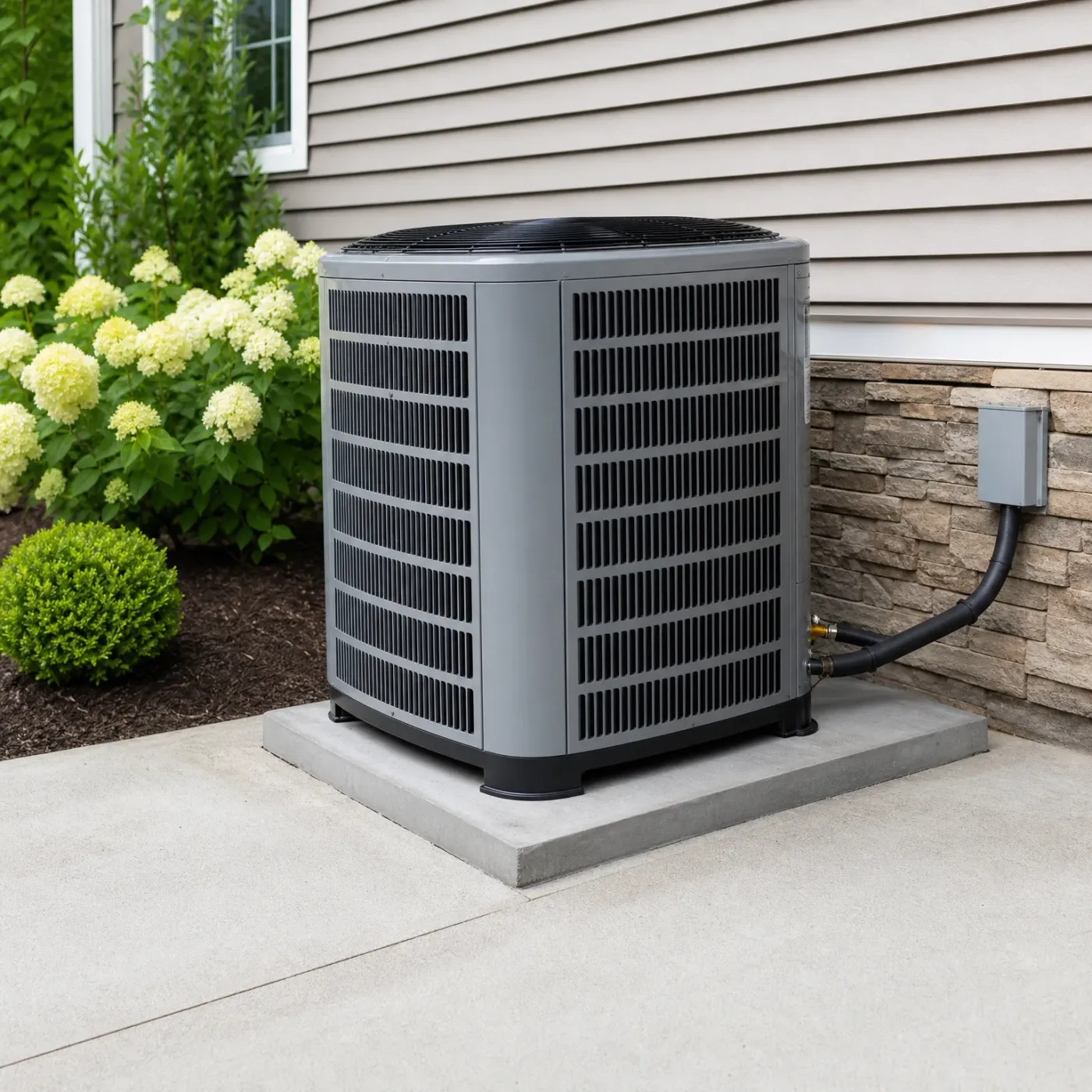
A gray outdoor air conditioning condenser unit on a concrete pad beside a house with horizontal siding and a stone veneer base, with refrigerant line and electrical disconnect box on the wall and flowering shrubs to the left.
This unit starts, runs, and cools without a hitch, fins clean and the cabinet free of grime.
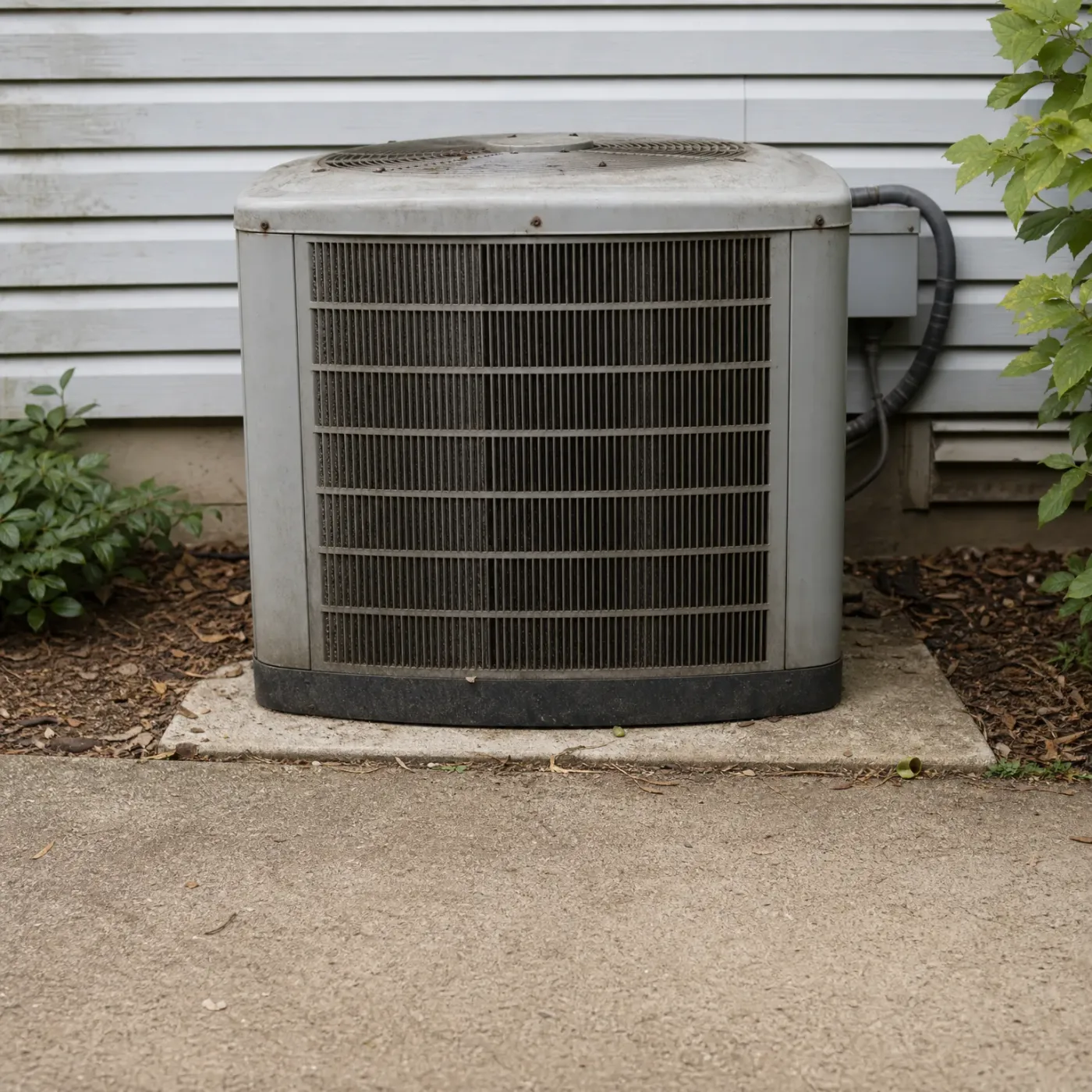
An outdoor air conditioner condenser unit on a concrete pad beside a house with light gray horizontal siding, with mulch and green shrubs on either side and a concrete walkway in the foreground.
Dirt and weathering like this trap heat against the capacitor and push it toward failure sooner.
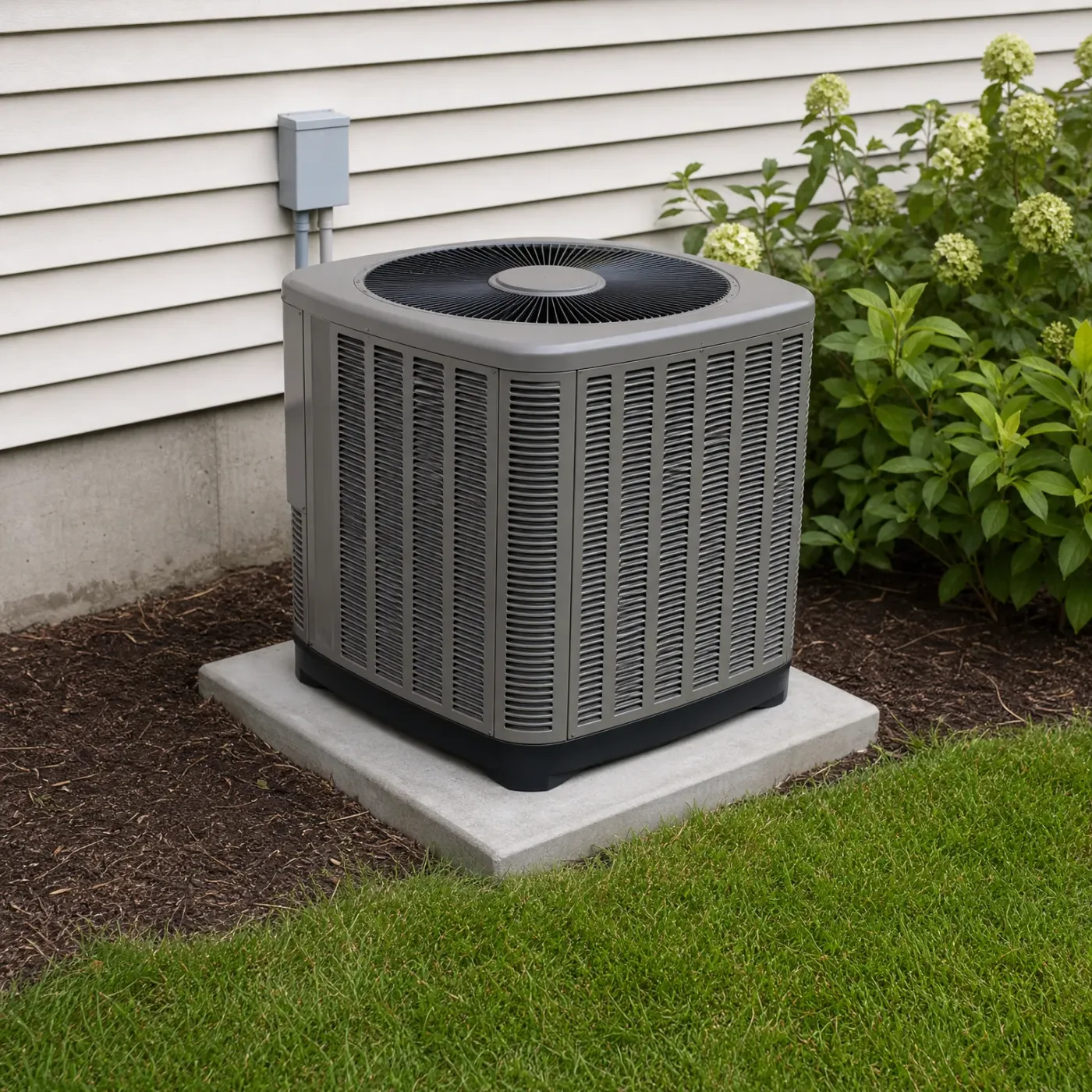
An outdoor air conditioner condenser unit sits on a concrete pad beside a shingled house wall, surrounded by mulch, broad-leaved shrubs and a lawn in low evening light.

You're out back around seven, grass still warm underfoot, watching the light go orange over the fence line. The condenser is humming low against the house, but the fan isn't moving. You crouch down and look through the grille. Nothing. The cabinet feels warm from the day, warmer than it should, and the hum just keeps going like it's waiting on something that isn't coming. Inside, the air from the vents has gone soft and warm. You think about the kids upstairs, about how this room holds heat worse than the rest of the house. You pull your phone out and start typing before you've even stood back up.


One request and it's handed off

A capacitor that's failing doesn't wait for a convenient week. Once it starts struggling, the compressor is drawing more than it should every time it tries to start, and that strain doesn't fix itself. In Illinois, where summer humidity makes a dead AC more than an inconvenience and power costs enough that a straining compressor shows up on your bill, letting it ride is the expensive choice. Finding a contractor yourself means calls, quotes, and schedules to juggle while your house sits warm. Send the request instead and a licensed contractor local to Illinois, someone who sees this exact failure every summer and knows a bad capacitor from a dozen other things that mimic it, gets your information directly. No juggling five companies against each other. Just the right person, already headed toward your actual problem.

A gray outdoor air conditioner condenser unit on a concrete pad beside a house with horizontal vinyl siding, surrounded by mulch, flowering shrubs, and lawn.

Running clean

This condenser sits on its pad with the fins clear and the cabinet free of dirt. Air moves through the coil the way it's supposed to, so the capacitor isn't fighting extra heat on top of a hot Illinois afternoon. It starts on the first try and keeps cooling without a stumble.

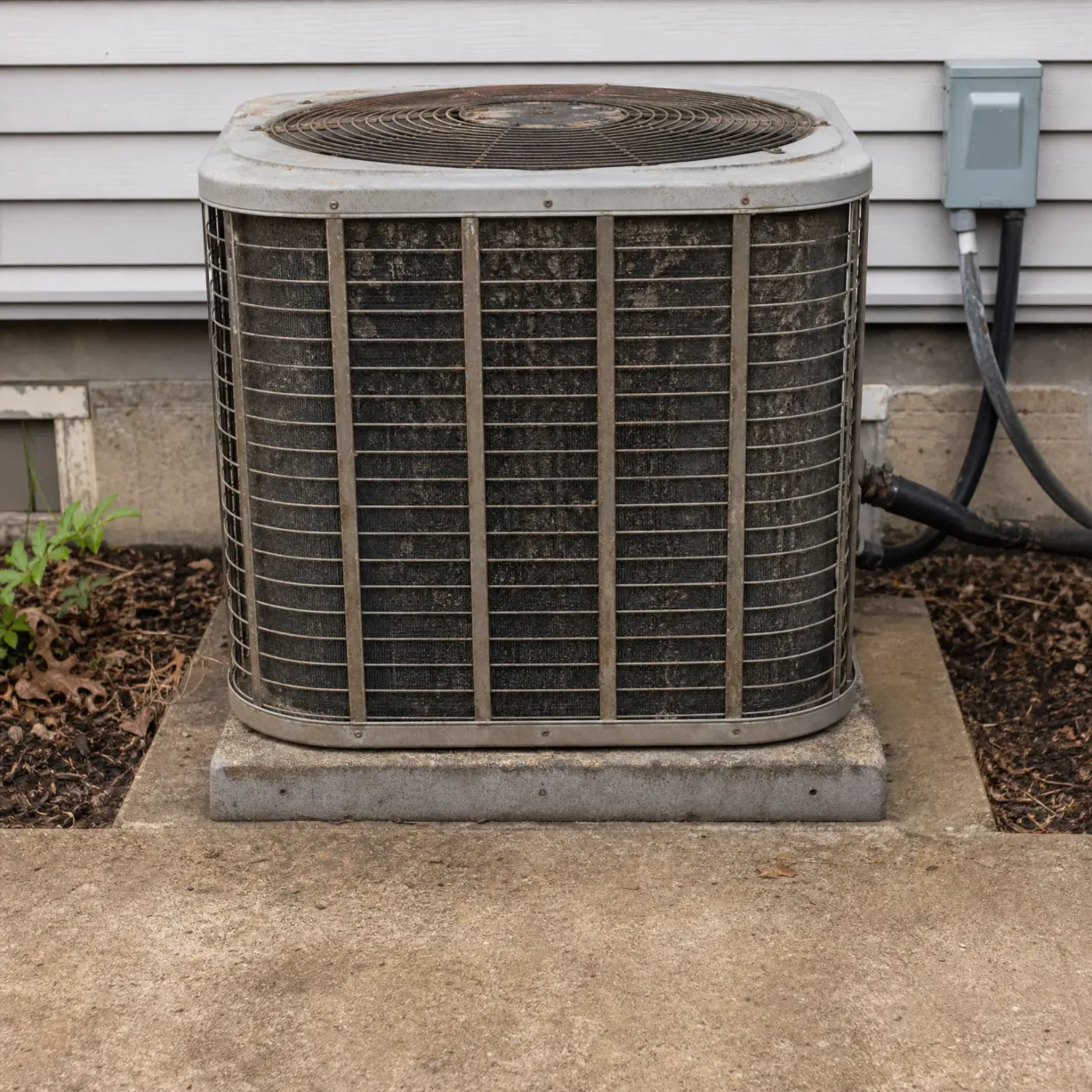
A weathered outdoor air conditioning condenser unit on a concrete pad beside a house with light horizontal siding, an electrical disconnect box and conduit on the wall, and mulched soil on either side.

Choked with grime

Dirt and debris packed into the coil and cage hold heat against the cabinet instead of letting it shed. That buildup pushes the temperature around the capacitor even higher than the summer air already does. A capacitor working under that kind of heat wears out sooner than one that's kept clean.

An outdoor air conditioning condenser unit on a concrete pad beside a house with horizontal lap siding, with a conduit and electrical disconnect box on the wall at right.
Before you get your air conditioner repair
A gray outdoor air conditioner condenser unit on a concrete pad beside a house with horizontal lap siding, with a wall-mounted disconnect box and conduit to its right and shrubs to the left.
After you get your air conditioner repair
A two-story house with cream horizontal siding, a dark gabled roof, and a white front door, fronted by a lawn, shrubs, and a concrete walkway leading to a sidewalk and street, with large leafy trees on both sides.

Illinois summers don't just run hot, they run heavy. NOAA puts the average summer dew point across the state at 63°F for June, July and August, which is the kind of air that still feels damp at ten at night. Your AC isn't just dropping the temperature on a day like that, it's wringing water out of the air the whole time it runs, and that's more work than a dry 85 degree day asks of it. A struggling capacitor feels that load first. It's why a unit that's been fine for years can start short-cycling the moment the air turns sticky, even before the thermometer hits its peak.

NASA POWER T2MDEW county cells weighted by homes

Capacitor Alone or Capacitor and Motor

Capacitor only

  • A new capacitor matched to your unit's specs usually gets the fan and compressor starting the way they did when the system was new.
  • The compressor itself hasn't been damaged if it's caught early, so replacing just the capacitor avoids touching a part that's still good.
  • Parts around the capacitor, like the contactor and fan motor, only need a look to confirm they weren't strained by the repeated hard starts.
  • A straightforward capacitor swap gets cool air moving again without opening up the rest of the system.
  • If the unit is still humming and trying to start rather than silent, the capacitor is often the only part that failed.

Capacitor plus motor

  • If the compressor or fan motor was forced to draw too much current for days or weeks, the motor windings can be damaged along with the capacitor.
  • A motor that's been straining against a weak capacitor may run hot and loud even after the new capacitor is in.
  • Replacing the capacitor alone on a motor that's already burned out won't bring the fan back, since the motor itself is the part that failed.
  • A contactor pitted from repeated restart attempts may need replacing too, since it's the part switching power to the compressor each time it tries to start.
  • When a unit has been trying to restart over and over for a while, the motor is worth checking even if the capacitor is the obvious failure.
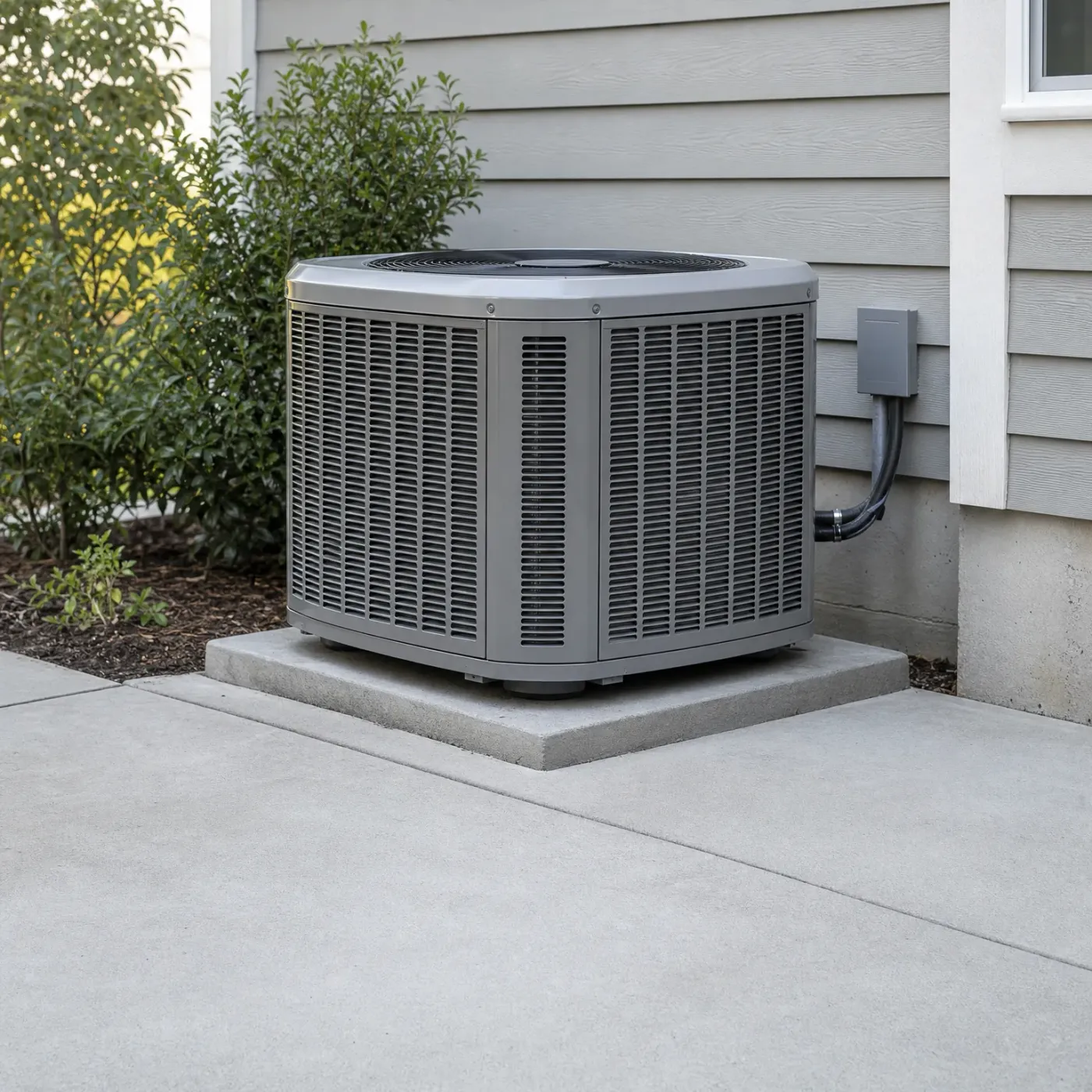
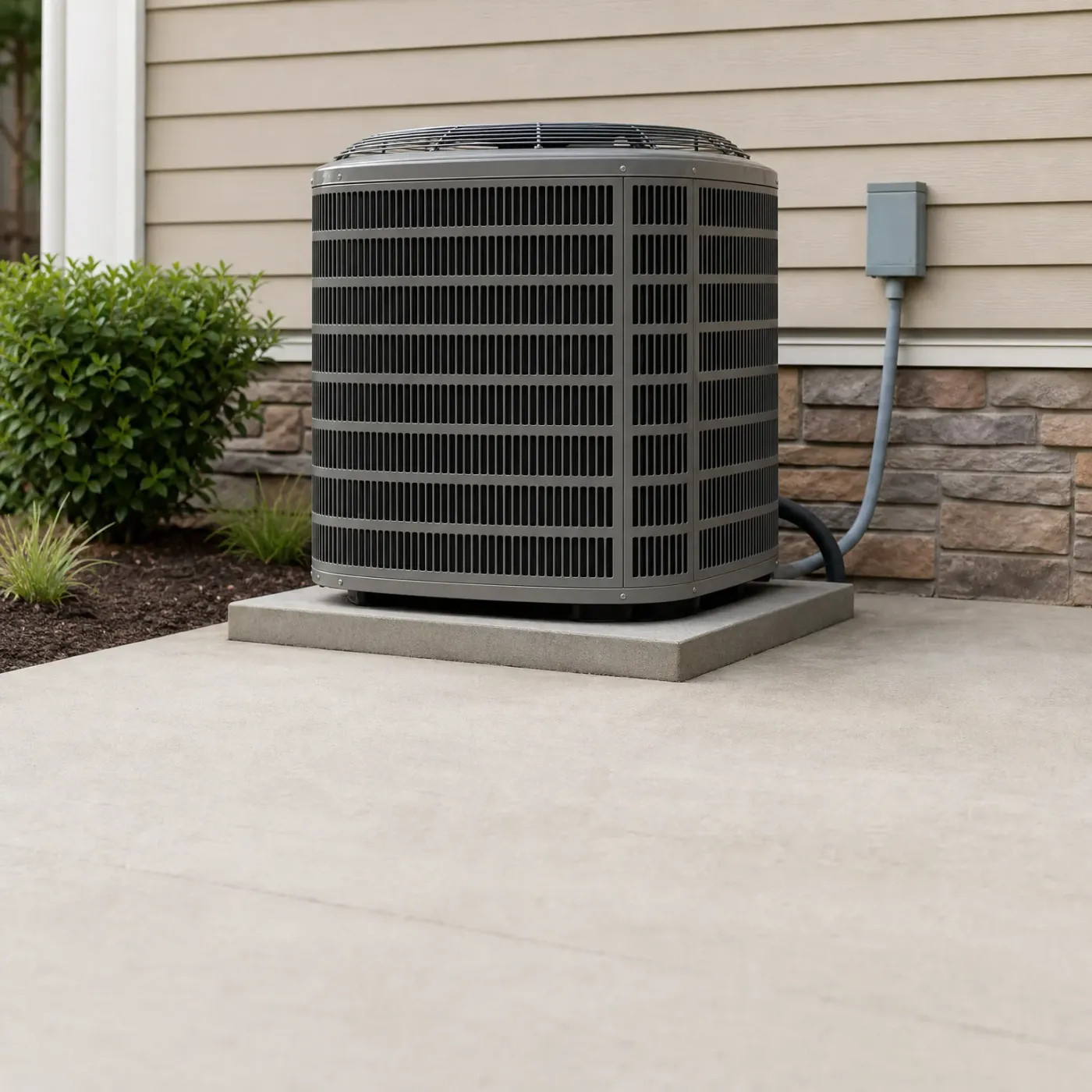
A gray outdoor air conditioning condenser unit on a concrete pad beside a house with horizontal siding and a stone veneer base, with a wall-mounted disconnect box and conduit, next to a shrub bed and a concrete patio.

Starting the way it should

This condenser kicks on and gets quiet about it. The fan spins right away, the cabinet doesn't rattle, and it runs straight through until the thermostat's satisfied. That's a capacitor doing its job, pushing the compressor and fan motor to full speed without a fight.

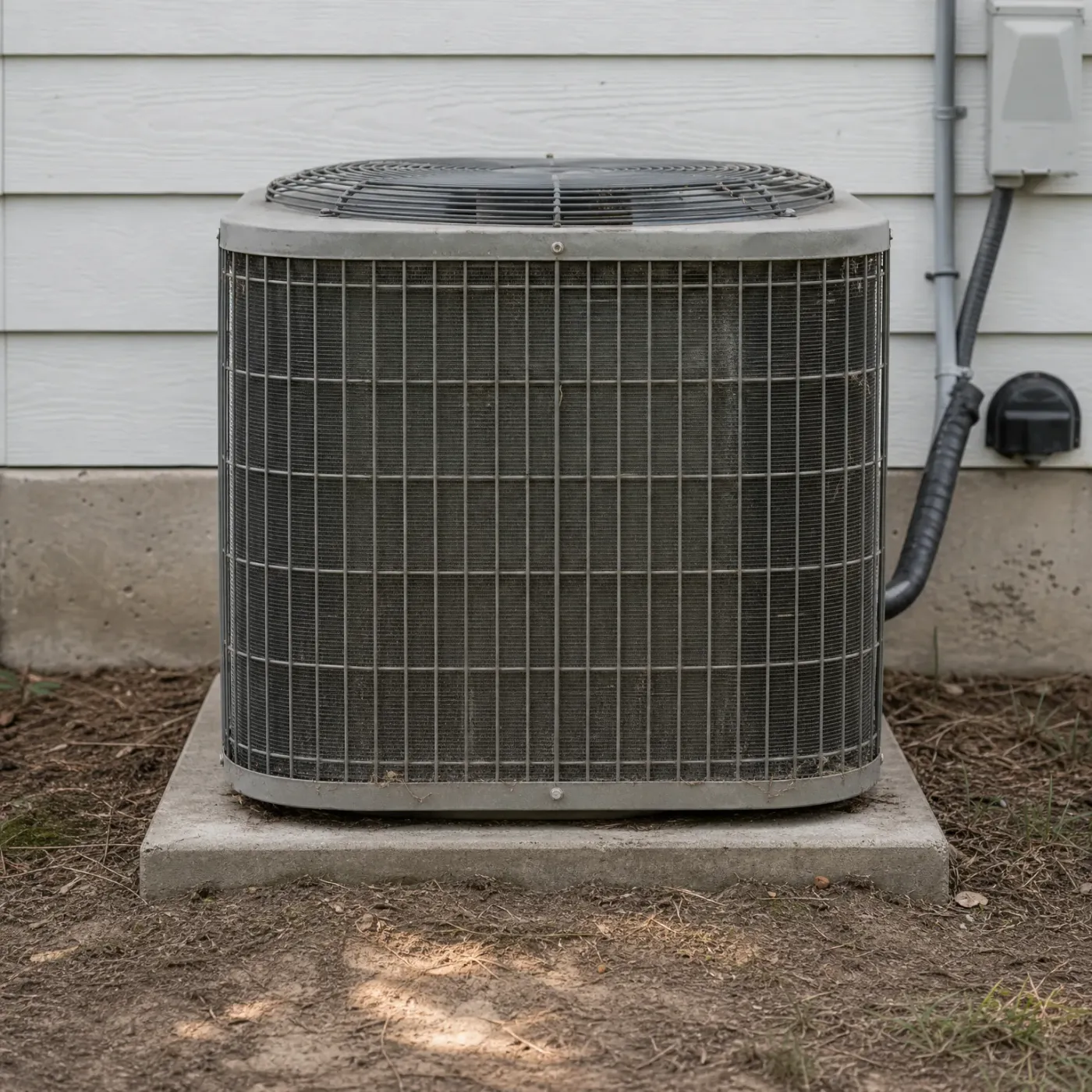
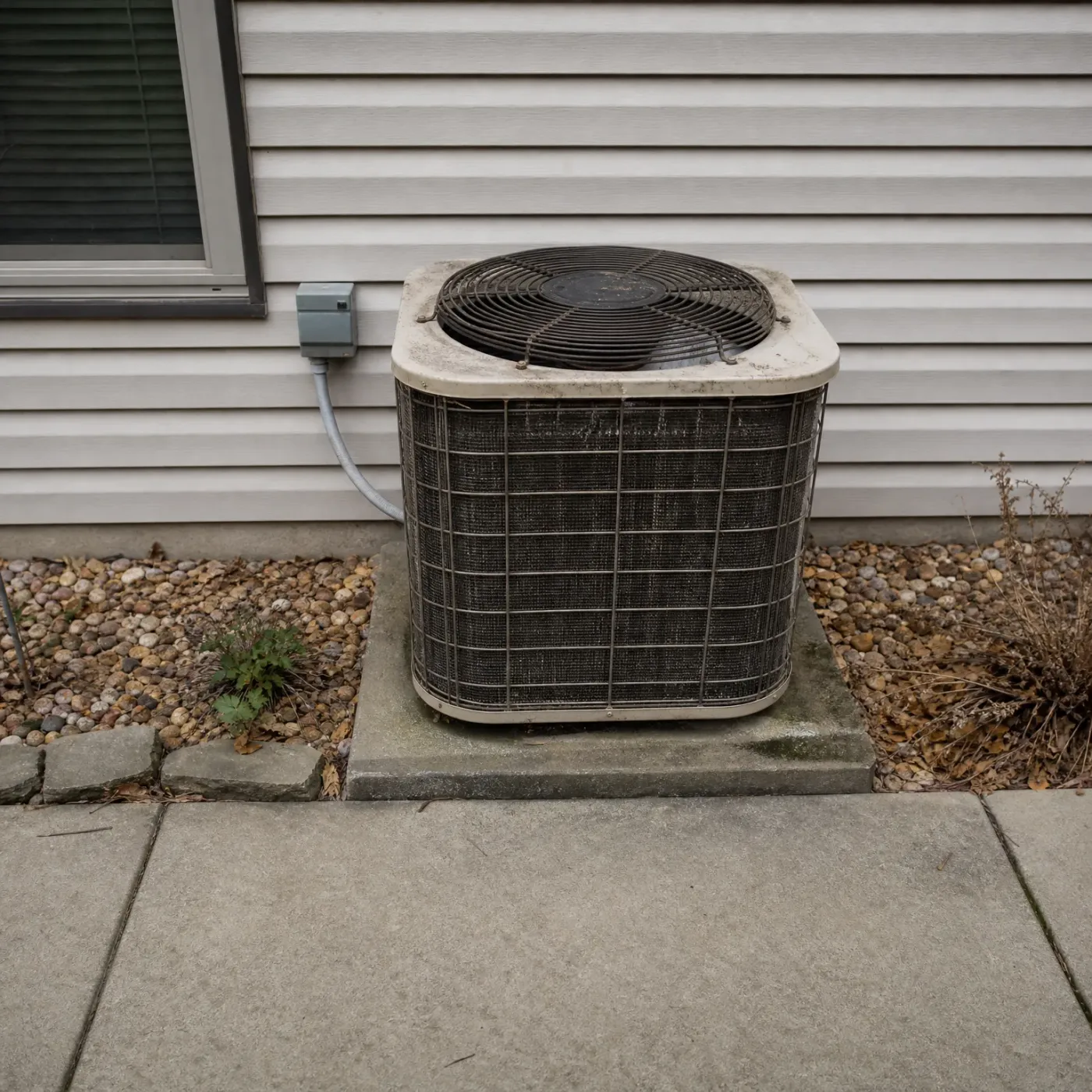
An outdoor air conditioner condenser unit on a concrete pad beside a house with light gray vinyl siding, with a gray electrical disconnect box and conduit on the wall, gravel beds and dried plants nearby, and a concrete sidewalk in the foreground.

Worn down and working harder

This one's older, sitting in gravel with weeds crowding the pad. A unit that's weathered like this has had more summers to wear its capacitor down, and the strain shows in how it starts. Listen for a hum that drags on before the fan catches, or doesn't catch at all.

Power costs 17.67 cents per kilowatt-hour statewide

At 17.67 cents a kilowatt-hour, a compressor that strains to start every cycle shows up fast on your bill. A failing capacitor makes the motor pull harder each time it tries to run, and your AC pays for that extra draw all summer.

EIA-861 2025 statewide residential average

What a Bad Capacitor Looks Like

  • A hum with no fan movement, a unit that quits minutes after starting, or repeated clicking all point to the capacitor.
  • Heat shortens a capacitor's life, and a hot Illinois summer afternoon pushes the inside of the cabinet well past 90 degrees.
  • A failing capacitor makes the compressor draw more current every time it tries to start, straining the motor further.
  • Caught early, a bad capacitor is usually a capacitor-only repair that doesn't touch the compressor.
  • Left alone, the extra draw on a struggling motor shows up on the power bill before the unit quits for good.
  • A unit running clean, starting on the first try, and cooling without rattling is doing what a healthy capacitor allows.

A hum with no fan, a unit that quits a few minutes in, or a compressor that clicks and tries again and again. Any of those is the capacitor telling you it can't deliver the jolt that gets the motor moving. It's a small part doing a specific job, and when it weakens, the symptoms show up in how the unit starts, not in how it cools once it's running.

Illinois summers don't help it along. The inside of a condenser cabinet on a hot afternoon runs well past 90 degrees, and heat is what wears a capacitor down faster than anything else. Every time it struggles to start the compressor, the motor pulls more current than it should, and that strain adds up over a season, not just on the part but on your power bill.

Catch it early and the fix usually stays simple. A capacitor that's failing but hasn't taken the compressor down with it gets swapped for one matched to your unit's specs, and the system starts the way it did when it was new. Wait, and the extra draw keeps showing up in what you pay to run it, right up until the day it doesn't start at all.

A unit that starts on the first try, runs quiet, and cools without rattling is a unit whose capacitor is still doing its job. That's the baseline. Anything short of it is worth a look before the next hot stretch finds the weak point for you.

A woman in a dark gray sweater reclines on a couch with her eyes closed and a knit blanket over her lap, an open book resting face-down in front of her, with a lit table lamp and shelving blurred in the background.
A bearded man in a dark navy sweater over a collared shirt smiles and looks off to the side while seated at a dinner table with a glass of red wine, a lit candle, and a plate of food in the foreground of a dimly lit room.

Air Conditioner Repair

Done looking for an air conditioner pro

The pro who reaches out is licensed in Illinois.

A black-framed smartphone standing upright against a plain light gray background, its screen filled with solid green.
Step 1 of 3: Equipment