
The R-410A phase-out and new AC units in Illinois

Step 1 of 3: Equipment

Can I still get R-410A for my AC in Illinois?

You've got an Illinois summer bearing down and an AC that runs on R-410A, and you keep hearing it's being phased out. You want to know if you're stuck, whether a tech can still fix your system this year, and whether you should be worried about getting through July and August without it.

Yes, but the phase-out means new AC units no longer use it

R-410A itself hasn't disappeared. What changed is that as of January 1, 2025, manufacturers stopped building new residential air conditioners that run on it. New systems sold now use R-454B instead. If your AC already runs on R-410A, it can still be serviced and recharged with it, since the refrigerant is still produced for existing equipment. Through an Illinois summer, that matters less for comfort right now and more for what happens when your unit needs a repair down the road. R-410A supply is expected to shrink and cost more over time, since production is being wound down on a schedule. A unit that needs a lot of it, say for a leak, can get expensive to keep running on old refrigerant.

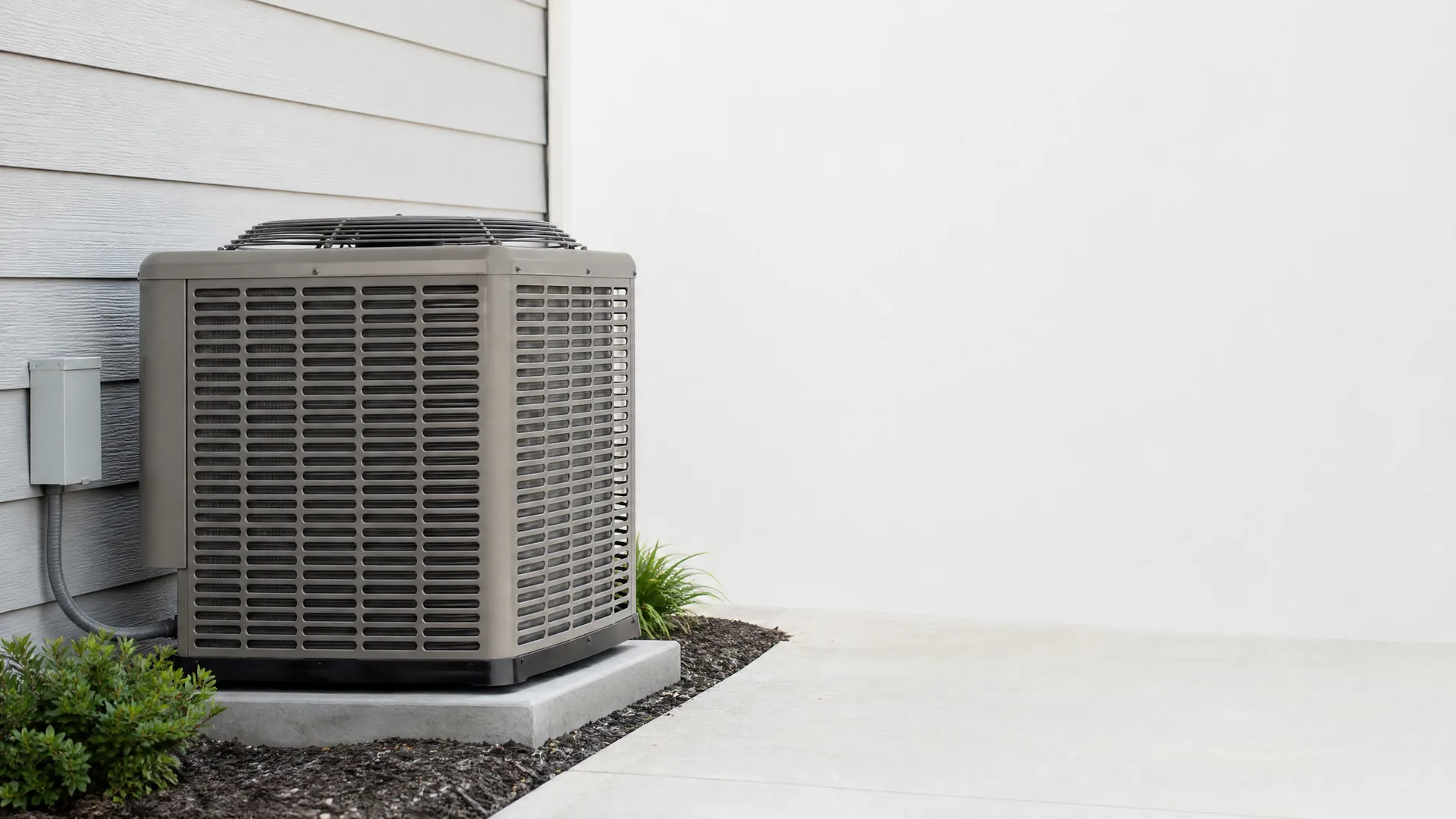
An outdoor air conditioner condenser unit on a concrete pad beside a house with light horizontal siding, with a small electrical disconnect box on the wall, mulch and shrubs at left, and a plain white wall and concrete slab at right.

What's actually changing in 2025

The phase-out targets new equipment, not the gas already in your system. As of January 1, 2025, manufacturers stopped building new residential air conditioners that use R-410A. If your outdoor unit was installed before then, a licensed tech can still service it, charge it, and repair the line set if it leaks. What's going away is production of new R-410A systems, not support for the one running in your backyard right now.

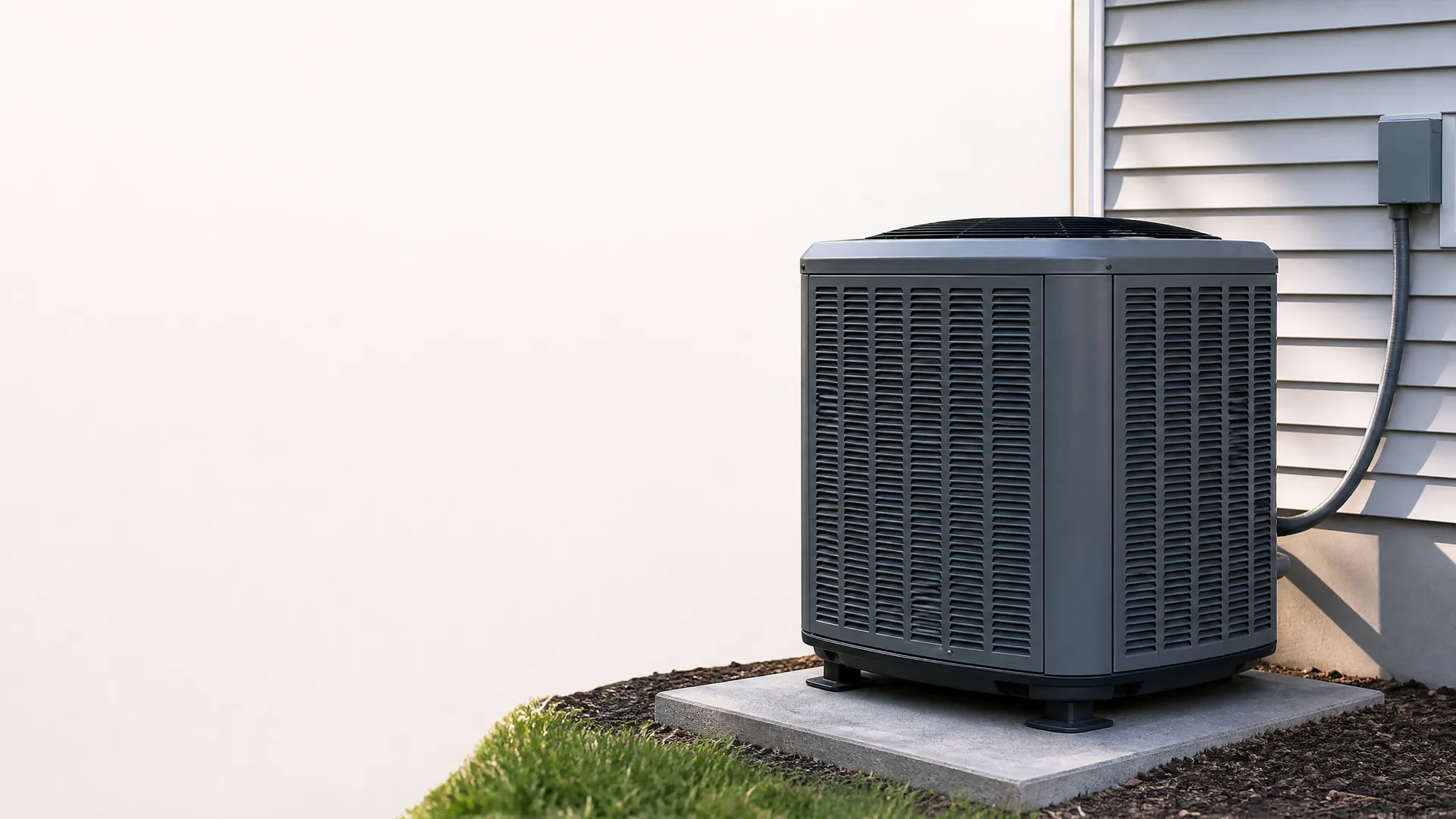
A dark gray outdoor air conditioner condenser unit on a concrete pad beside a house with horizontal siding and a plain light wall, with mulch and grass in the foreground and a conduit and electrical box on the wall.

Why a leak changes the math

R-410A itself isn't banned from sale, but the supply is shrinking as manufacturers wind down production, and prices on the refrigerant have moved up as a result. A small leak might still make sense to repair on an older unit. A bigger leak, or a compressor that's already stressed, is a different call. A contractor who works on these systems all summer in Illinois can tell you which repairs still pencil out and which ones are better put toward a new unit that runs on R-32 or another replacement refrigerant.

Keep It Running or Replace It Now

Keep your R-410A unit

  • A contractor can still service and recharge an R-410A system with no deadline forcing a change.
  • R-410A stays available for units already installed, so a low charge or a leak repair isn't a dead end.
  • You avoid the cost of a new install and get more years out of equipment that's already paid for.
  • Illinois summers push an aging unit hard, and a system already losing charge or cycling more will keep declining.
  • Parts for older R-410A units can get harder to find as manufacturers shift production toward newer refrigerants.

Install a new unit now

  • New residential units sold today use R-32 or another replacement refrigerant, not R-410A.
  • A new unit comes with a full warranty instead of relying on a system that's already logged years of Illinois summers.
  • Newer equipment is built to current efficiency standards, which matters with how expensive power is here.
  • Since most homes here heat with gas, the AC is the one appliance doing the heavy lifting against the heat and humidity.
  • A new install means working with the contractor on sizing and setup instead of inheriting whatever was put in originally.
  • You take on the upfront cost of a full system now rather than spreading repairs out over the coming summers.
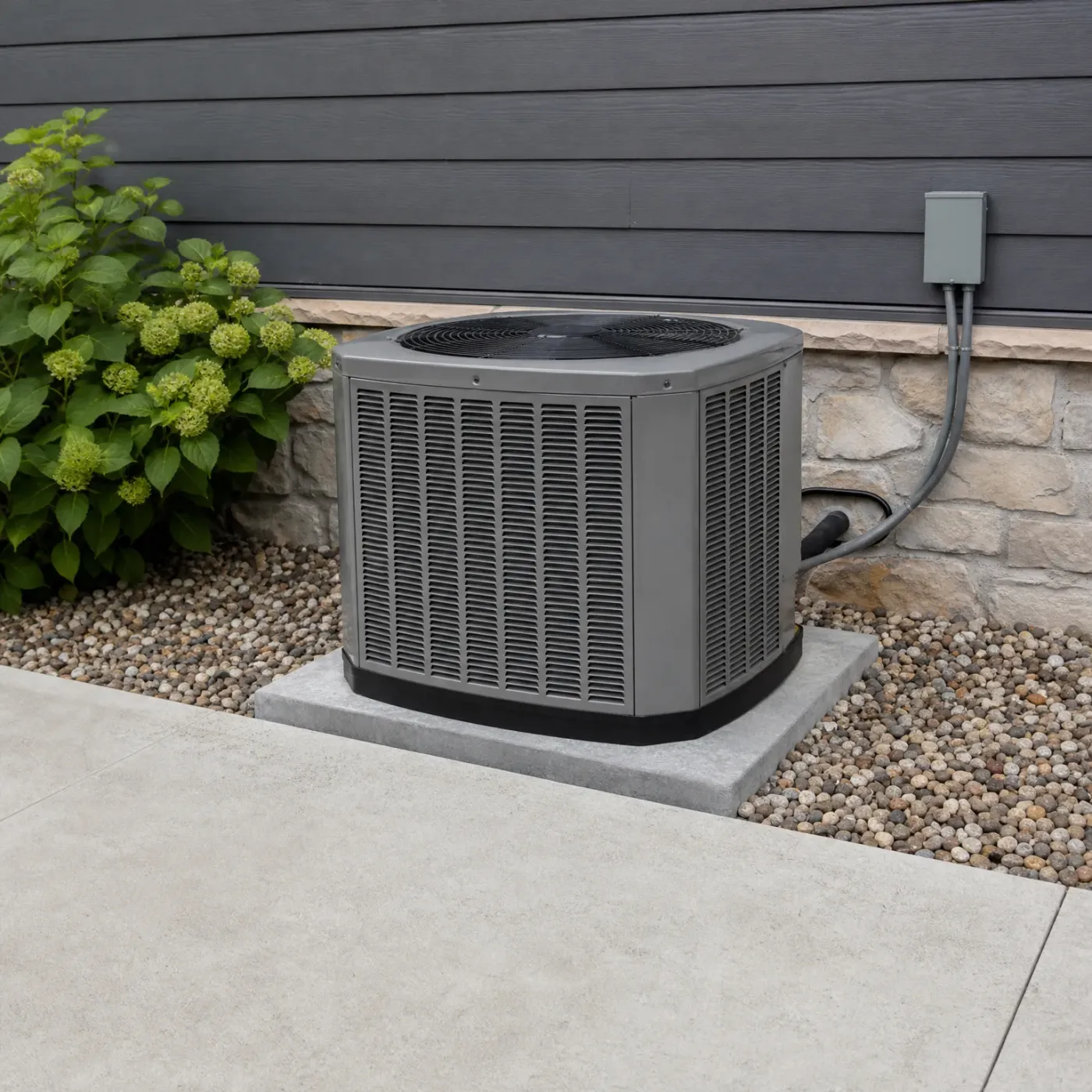
A gray outdoor air conditioner condenser unit on a concrete pad beside a house with dark horizontal siding and a stone base, surrounded by gravel, with a flowering shrub at left and a concrete walkway in front.

Running on R-410A now

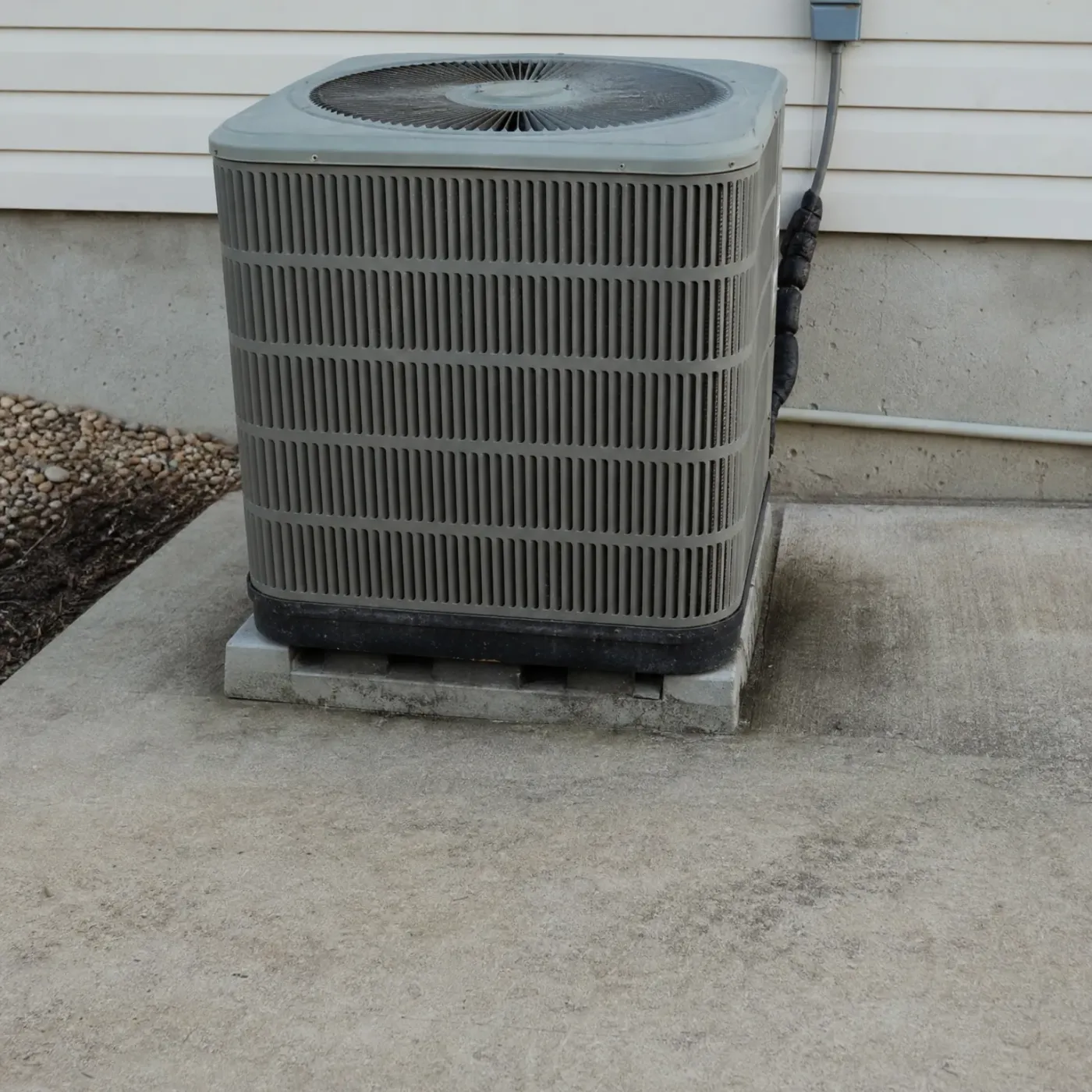
This is a unit still doing its job. If yours looks like this, clean fins, solid pad, no rust creeping up the casing, a tech can keep it running on R-410A. Parts and refrigerant are there when you need a repair, and an Illinois summer is no reason to rush a change.
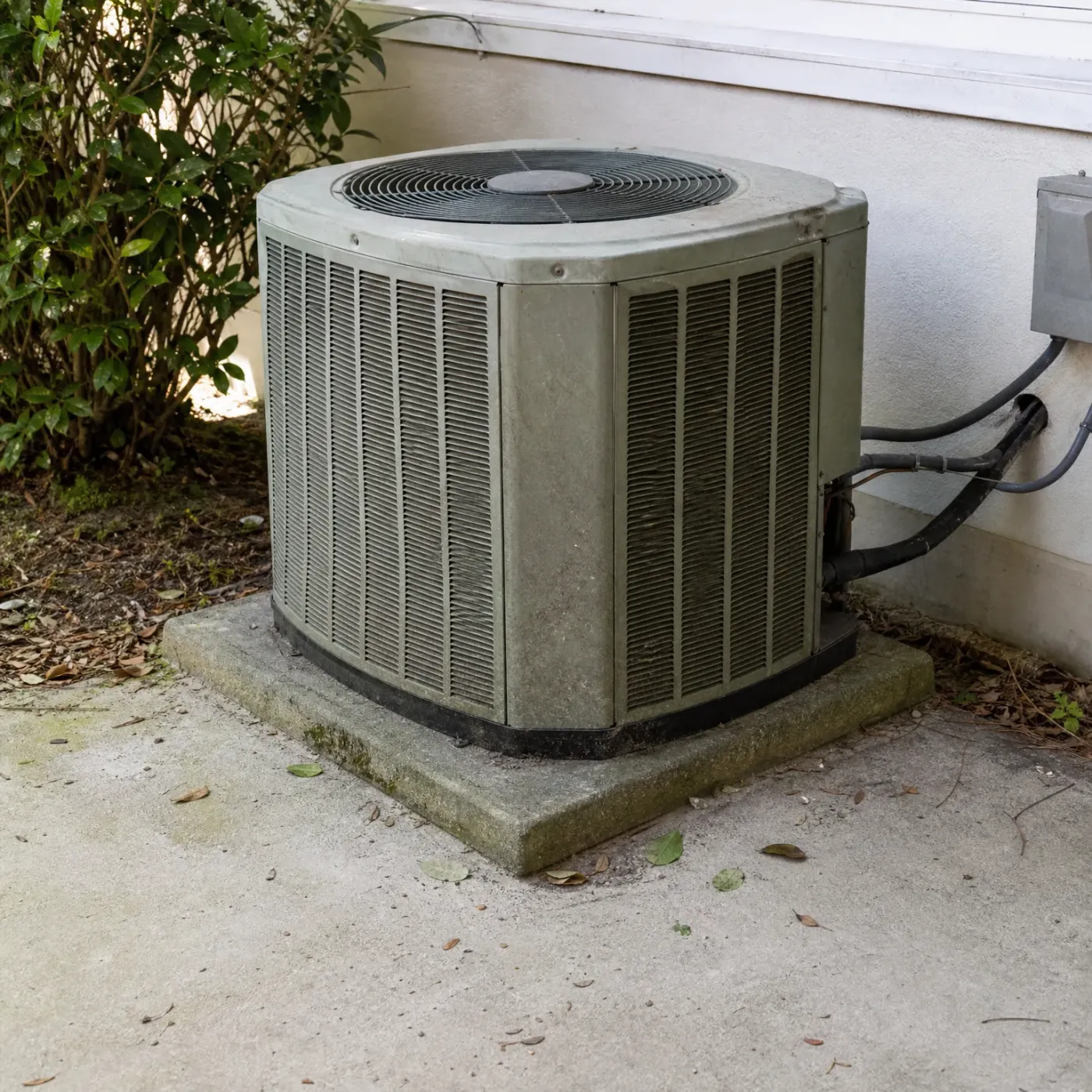

An outdoor air conditioner condenser unit sits on a concrete pad beside a stucco wall, with refrigerant lines and conduit running to the wall and a shrub to the left.

Old unit, new choice

Grime on the fins and a casing that's seen twenty Illinois summers tell you something different. When a unit like this needs a compressor or a coil, the repair bill starts competing with a new system, one built for the refrigerant that replaced R-410A. That's the point where replacement is worth a real look.

A woman with long wavy brown hair in a grey ribbed sweater sits on a couch indoors, looking toward a window, with a potted palm-like plant and fireplace behind her.
A woman with long brown hair wearing a green V-neck top and beige cardigan sits on a light sofa, looking off to the side, with a dining table, lamp and framed picture in the background.
A woman with long dark hair in a cream knit sweater sits on a beige sofa indoors, looking toward a bright window with a houseplant and framed picture in the background.
A woman with long dark hair in a green knit sweater sits on a couch indoors, smiling and looking toward a window with a blurred room behind her.

Get the right pro for your air conditioner

If your R-410A unit is getting old or the repairs are starting to add up, replacing it now means picking the new refrigerant on your own terms instead of waiting for a breakdown in August. The units going in today run on R-32 or another low-GWP refrigerant, and an Illinois summer doesn't give a failing AC much room to wait. Sizing one of these right for your house, and knowing how it should tie into a gas furnace, is the kind of thing a contractor who works on this equipment all season gets right the first time. Submitting this request gets your situation in front of one licensed local installer, not a handful of companies bidding for the job, so you're dealing with someone who actually knows the new systems rather than fielding calls all week. With summer humidity here, a unit that's struggling now isn't going to get easier to live with.

What a failing R-410A unit means now

If your outdoor unit is old enough that parts are getting harder to source, a breakdown in July doesn't wait for a convenient time. You're the one who notices first when the house stops cooling down by evening and everyone's uncomfortable trying to sleep. A dead compressor or a coil leaked past patching means a decision made under pressure, in the heat, with a houseful of people counting on you to fix it fast. Repair costs on an aging R-410A system can climb as the unit gets harder to source parts for, and at some point a tech will tell you straight that another repair isn't worth it. That's a different conversation than planning a changeover before the heat hits.

Choosing the timing instead of the weather

Replacing an R-410A unit before it fails means you pick the week, not a heat wave. A local contractor who services these units all summer knows which models in Illinois homes are reaching the point where repairs stop making sense, and can tell you honestly whether yours is one of them. Getting matched with one contractor, not several, means a single visit and a straight answer instead of competing sales pitches while your family is stuck in a hot house. For a household where keeping everyone comfortable is the whole point, that's the difference between a planned swap this spring and a scramble next August.

An outdoor air conditioner condenser unit sits on a gray pad beside a light vinyl-sided wall, on a concrete slab next to a gravel bed.
Before you get your air conditioner installation
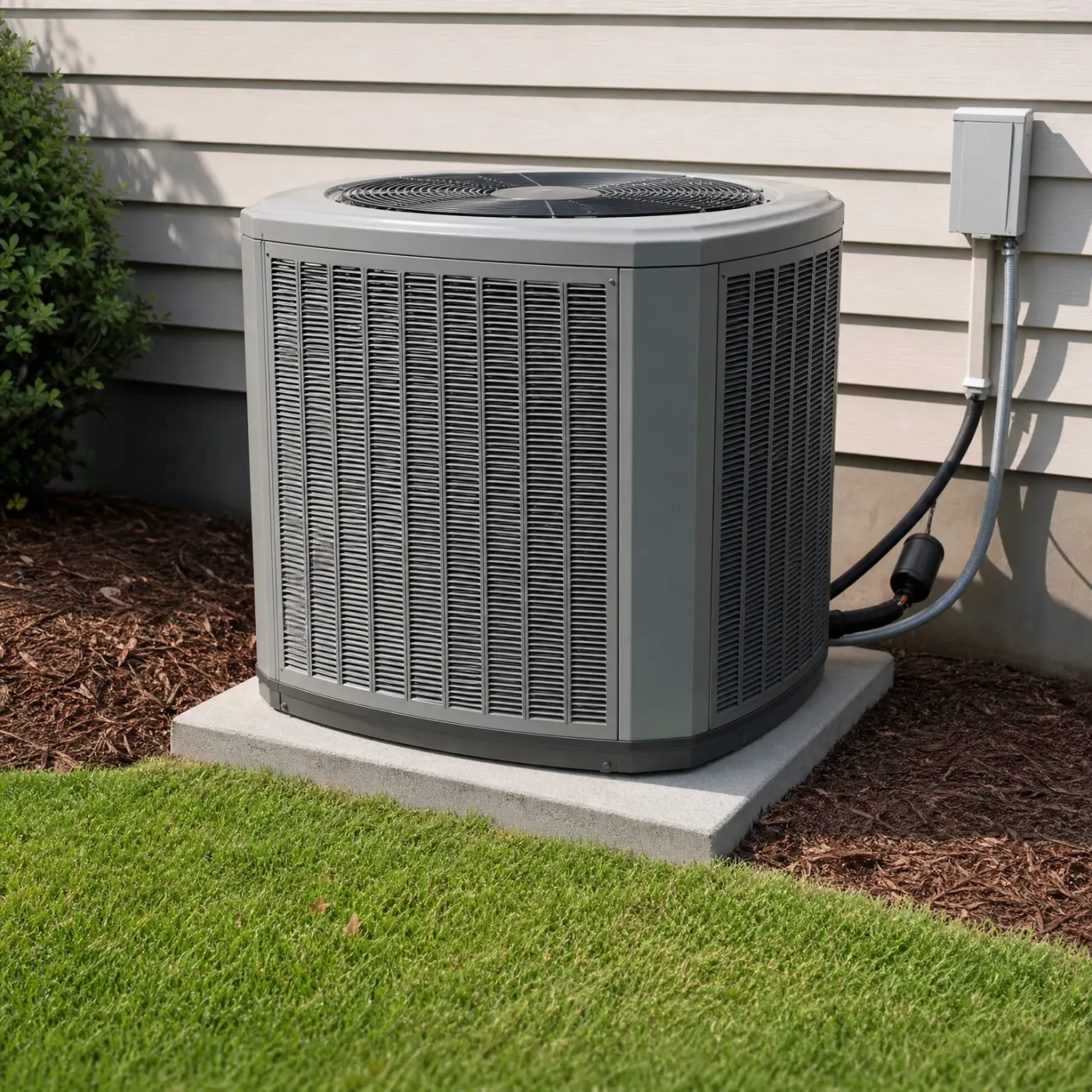
A gray outdoor air conditioner condenser unit on a concrete pad beside a house with horizontal lap siding, with a wall-mounted disconnect box and conduit, mulch bed, shrub, and lawn nearby.
After you get your air conditioner installation

Before, you're watching a thermometer that won't move, running the system harder through an Illinois summer evening and wondering if the next repair is the one that doesn't fix it.

After, a licensed local contractor has sized and installed a unit built for the refrigerant made today, and you're not thinking about any of this again for years.

An older woman with gray hair in a bun and glasses, wearing a beige knit sweater, smiles while looking to the side in a warmly lit kitchen, with a loaf of bread on the counter in the foreground and a snowy scene outside the window.
A woman with her hair in a bun holds a sleeping young child against her chest, both wrapped in a textured beige knit blanket on a sofa in a dimly lit room with a lamp, framed picture, and bookshelf behind them.
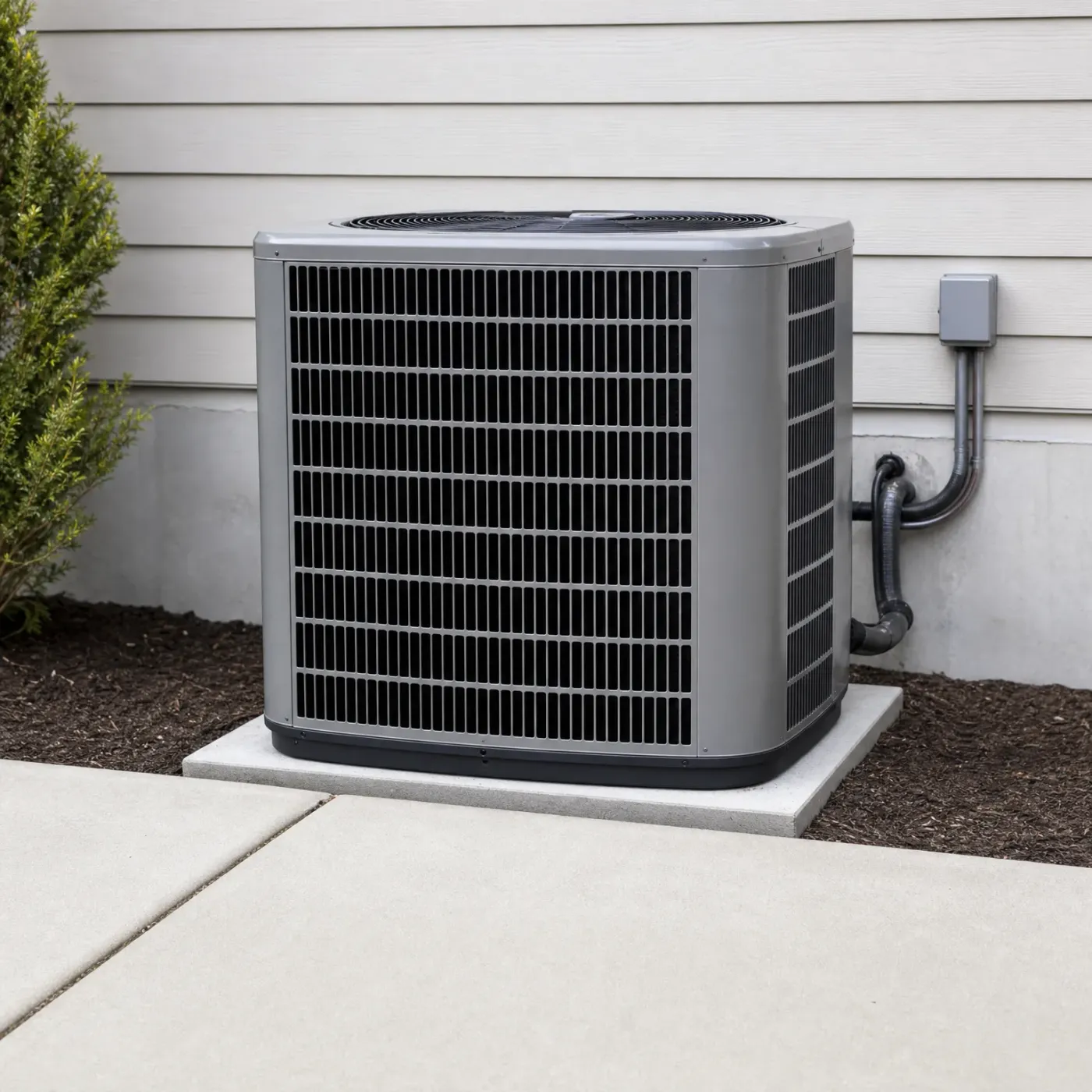
A gray outdoor air conditioner condenser unit sits on a concrete pad beside a house with horizontal lap siding, with conduit and an electrical disconnect box on the wall, dark mulch and a shrub to the left, and a concrete walkway in the foreground.
A unit like this, clean grilles, tight fittings, no rust on the casing, has nothing to fix.
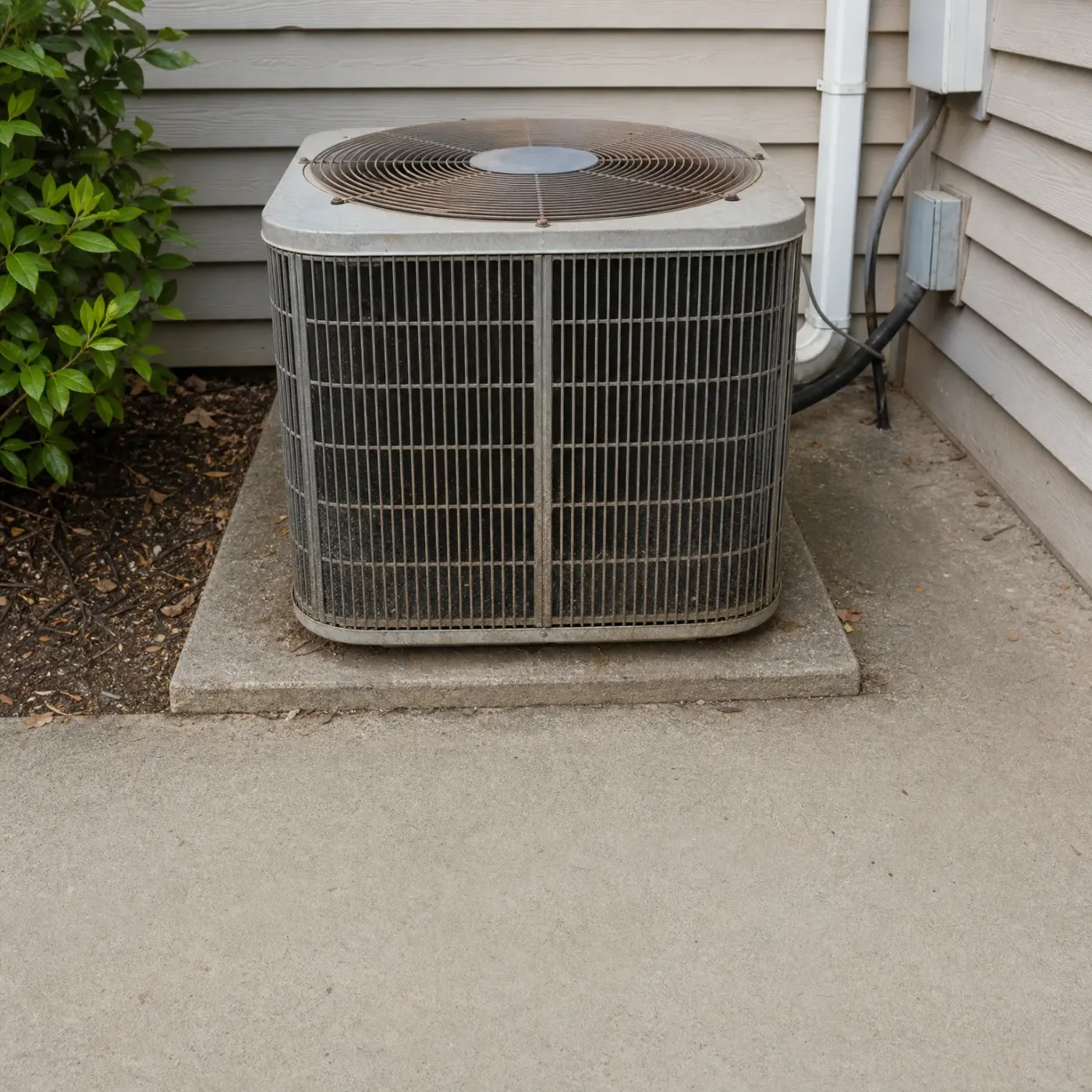
An outdoor air conditioning condenser unit on a concrete pad beside a house with horizontal lap siding, with a shrub and mulch bed to the left and conduit and a small electrical box on the wall to the right.
Dirt packed in the grilles and a disconnect box worn like this often come with a compressor that's close behind.

Power costs 17.67 cents per kilowatt-hour statewide

At 17.67 cents per kilowatt-hour, every hour your AC runs shows up on the bill fast. An older R-410A unit losing efficiency costs you more each summer to hold the same temperature. A new system sized right for your house keeps that number from working against you.

EIA-861 2025 statewide residential average

R-410A isn't disappearing from Illinois overnight. Your system can still be charged and repaired, and that won't change on any set date. What's different is what's sold new, and that's where the decision sits: keep going with repairs on the unit you have, or move to a new refrigerant on your own schedule instead of your compressor's. Either way, the work is the same kind a local contractor handles every summer, sizing a system for an Illinois house, tracing a refrigerant leak, telling you honestly whether a unit's worth another repair or past it. That's the person you want on this, someone who services this equipment all season and has seen what a worn disconnect box or a failing compressor looks like before it quits in August. When you request a match, it goes to one licensed contractor working in your area, not a handful competing for the job, so the person who calls you back already knows the territory and the equipment. Your AC, your call. The answer either way starts with someone who actually looks at the unit.

Sunlight falls across a beige upholstered sofa with a textured woven cushion and a chunky knit throw, beside a dark wood cabinet holding a ceramic vase with green leafy branches, near a white-framed window.
A sunlit corner of a room with a wooden side table holding a ceramic vase of green foliage and a wooden bowl, beside a light upholstered sofa with a knit throw and rust-colored pillow, with window shadows cast on a beige wall.
A sunlit room corner with beige walls, a white-framed window with sheer cream curtain, wood floor with a light rug, and a woven basket holding a knit blanket.
A beige ceramic vase holding a leafy green branch sits on a wooden cabinet in a corner, with sunlight through a sheer curtain casting leaf shadows on the wall.
A grey upholstered sofa with a rust-orange velvet cushion and a textured throw sits beside a window with linen curtains, next to a wooden side table holding a pale ceramic vase of olive branches.

A pro who works on air conditioners

Only one pro gets your request, so you hear from one company.

Request a pro

No fee to send it, and nothing to sign.