



Why your AC can't keep up on hot Illinois days

Step 1 of 3: Equipment

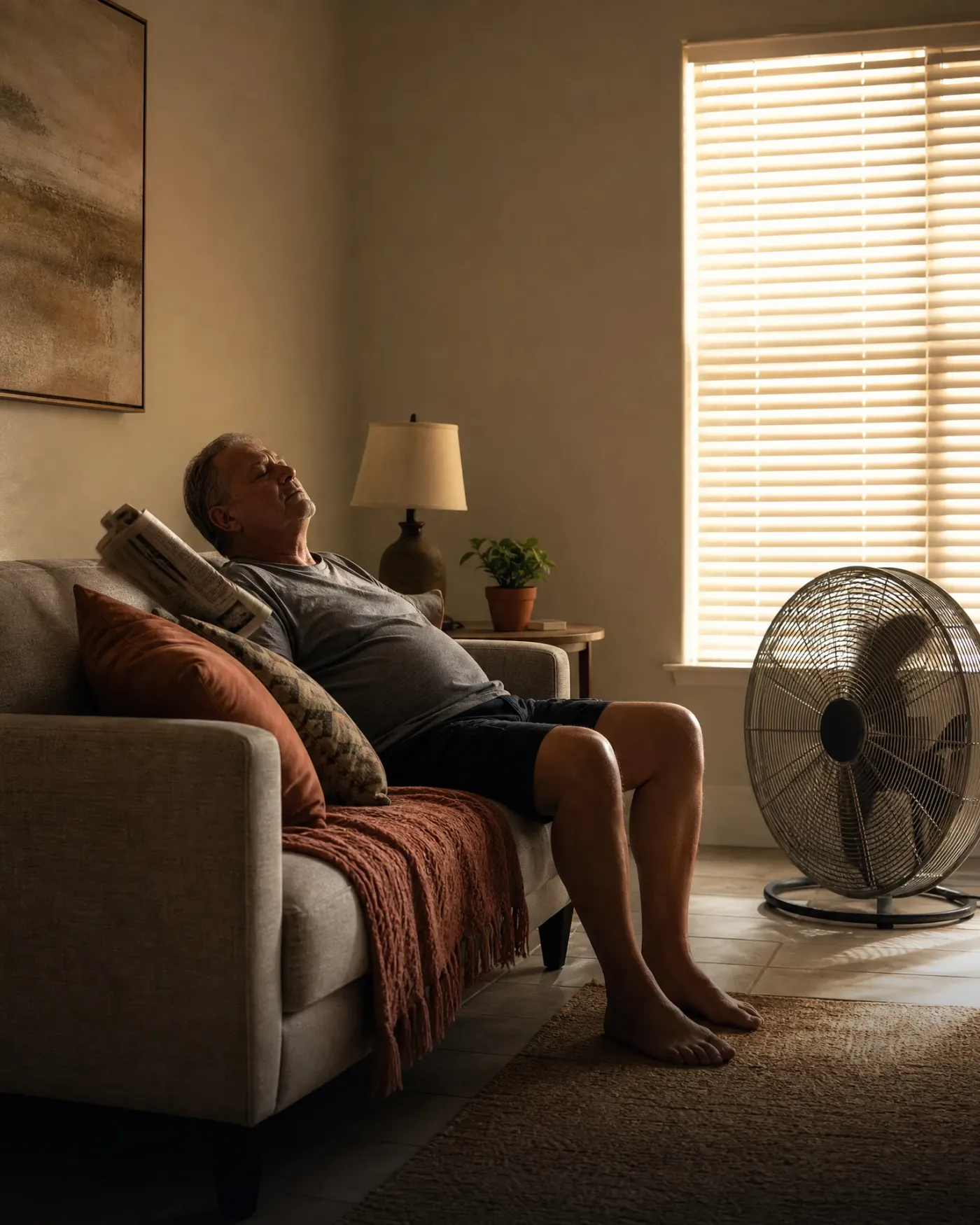
Your AC can't keep up on an Illinois afternoon because the heat and the humidity load it with more work than it was sized for. An air conditioner is built to handle a certain amount of heat per hour. When the outdoor temperature climbs into the 90s, the system has to run longer just to pull the same heat out of your house, and on muggy days it also has to wring moisture out of the air before it can even start cooling it. If the unit is low on refrigerant, if the coils are dirty, or if the airflow through the ducts is restricted, that extra load is enough to push it past what it can keep up with. You end up with a house that feels warm no matter how long the system runs, higher bills from the extra runtime, and a compressor working harder than it should. A system that was cooling fine in May can fall behind once the real heat and humidity of summer set in.

A woman in a gray turtleneck sweater stands by a window looking outside at snowy ground, with a dimly lit living room containing a sofa, shelves, lamp and a lit candle behind her.
A woman in a cream cable-knit turtleneck sweater stands in a warmly lit living room with a fireplace and shelves behind her, looking out a window toward snow-covered trees and a railed deck.
A woman in a cream knit turtleneck sweater stands by a window looking out at snow, with a lit fireplace, sofa and lamp in the room behind her.
A woman in a gray knit sweater sits by a window looking out at falling snow, with a dimly lit living room containing a sectional sofa, pillows, a lamp and houseplants behind her.

Overworked or Actually Broken

Running Flat Out

  • The system cycles on in the morning and never shuts off until the sun goes down.
  • Your thermostat might read 78 when you set it for 72, and the gap doesn't close.
  • Upstairs rooms stay warm while the room with the thermostat finally cools.
  • The outdoor unit runs hot to the touch and the air coming from the vents feels less cold than it did in June.
  • Your electric bill climbs because the compressor is working full hours instead of cycling normally.
  • Left alone through a stretch of 90-degree days, a system under this kind of strain is more likely to fail when you need it most.

Something's Wrong

  • The air coming from the vents is barely cooler than the room, even right after the system kicks on.
  • You hear a new sound, a hum, a click repeating, or a rattle that wasn't there last summer.
  • Ice forms on the copper line or the indoor coil even though it's 95 degrees outside.
  • The system short cycles, shutting off after a few minutes and starting again before the house cools.
  • One room never gets cool no matter how long the system runs, while the rest of the house is fine.
  • A technician can check refrigerant charge, the capacitor, and airflow to find what's actually failing, rather than the house just needing more time to cool.
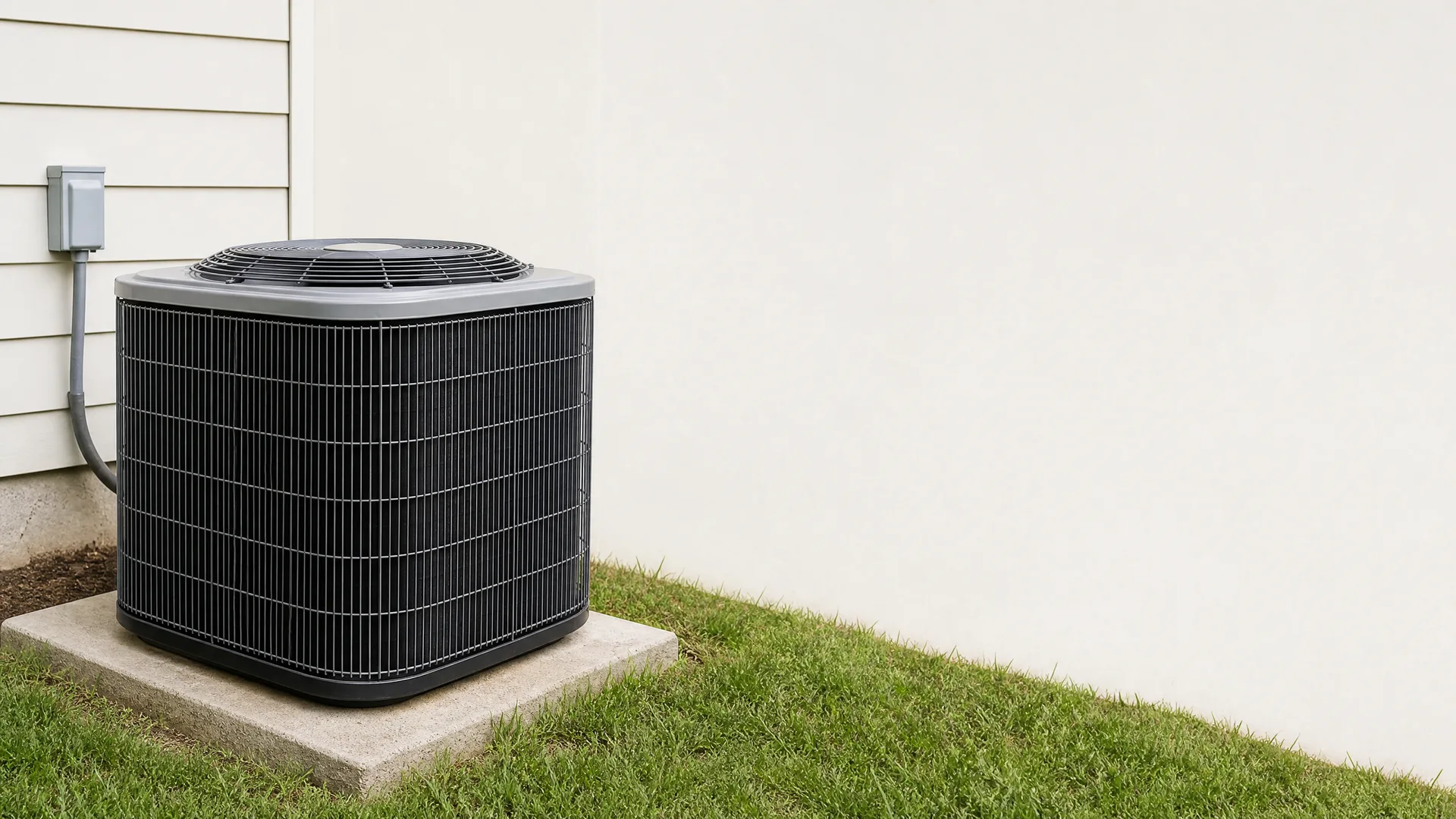
An outdoor air conditioner condenser unit on a concrete pad beside a house wall, with a gray electrical disconnect box and conduit above it and grass in the foreground.

Humidity Adds a Second Load

Your AC isn't just pulling heat out of the air. It's pulling moisture out too, and that takes separate work from the same compressor. On a muggy Illinois afternoon, the unit spends part of its capacity wringing water out of the air before it ever gets to lowering the temperature. That's why a dry 90 degree day feels easier on the system than a sticky 85 degree one. The compressor doesn't know the difference between the two jobs. It just runs longer to get both done.

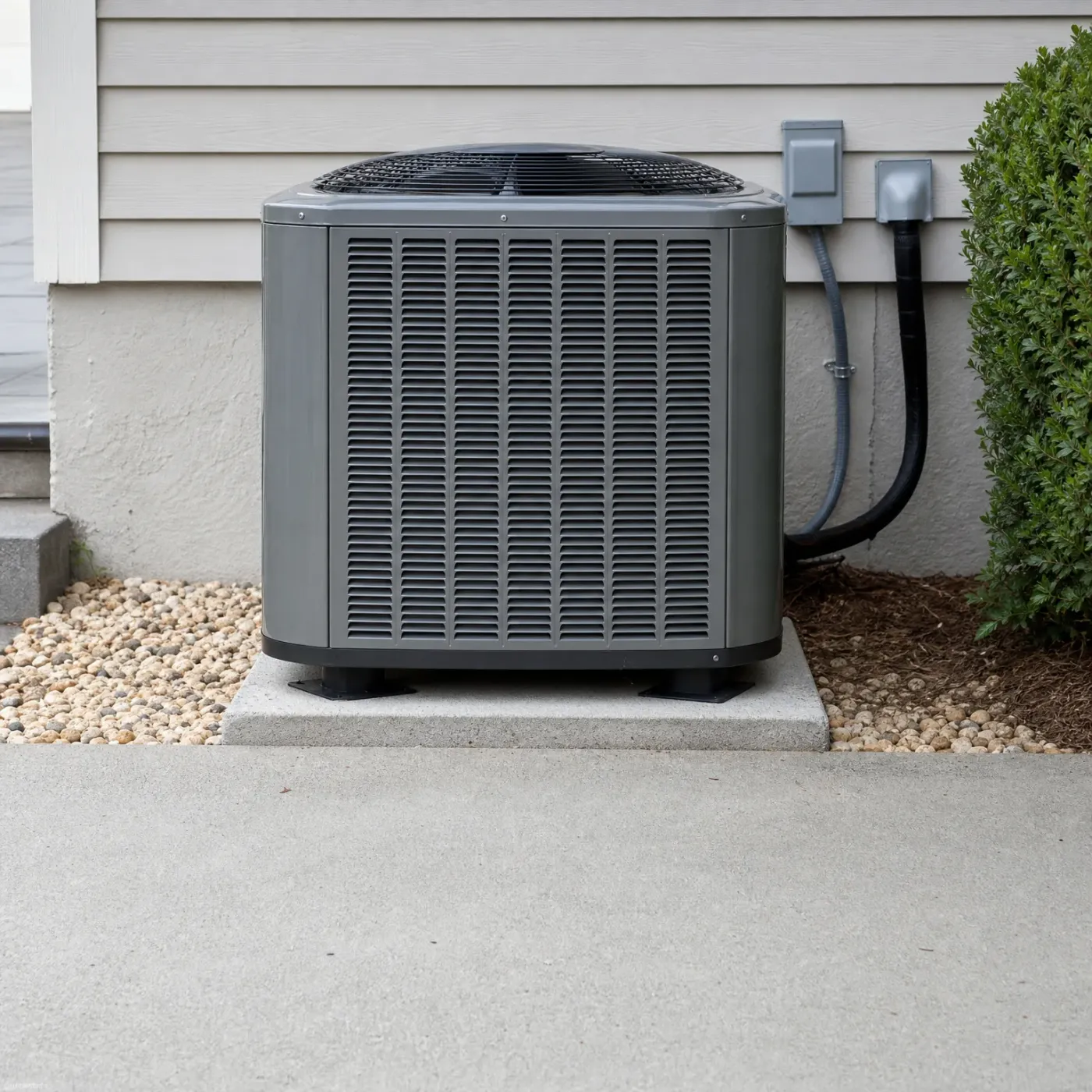
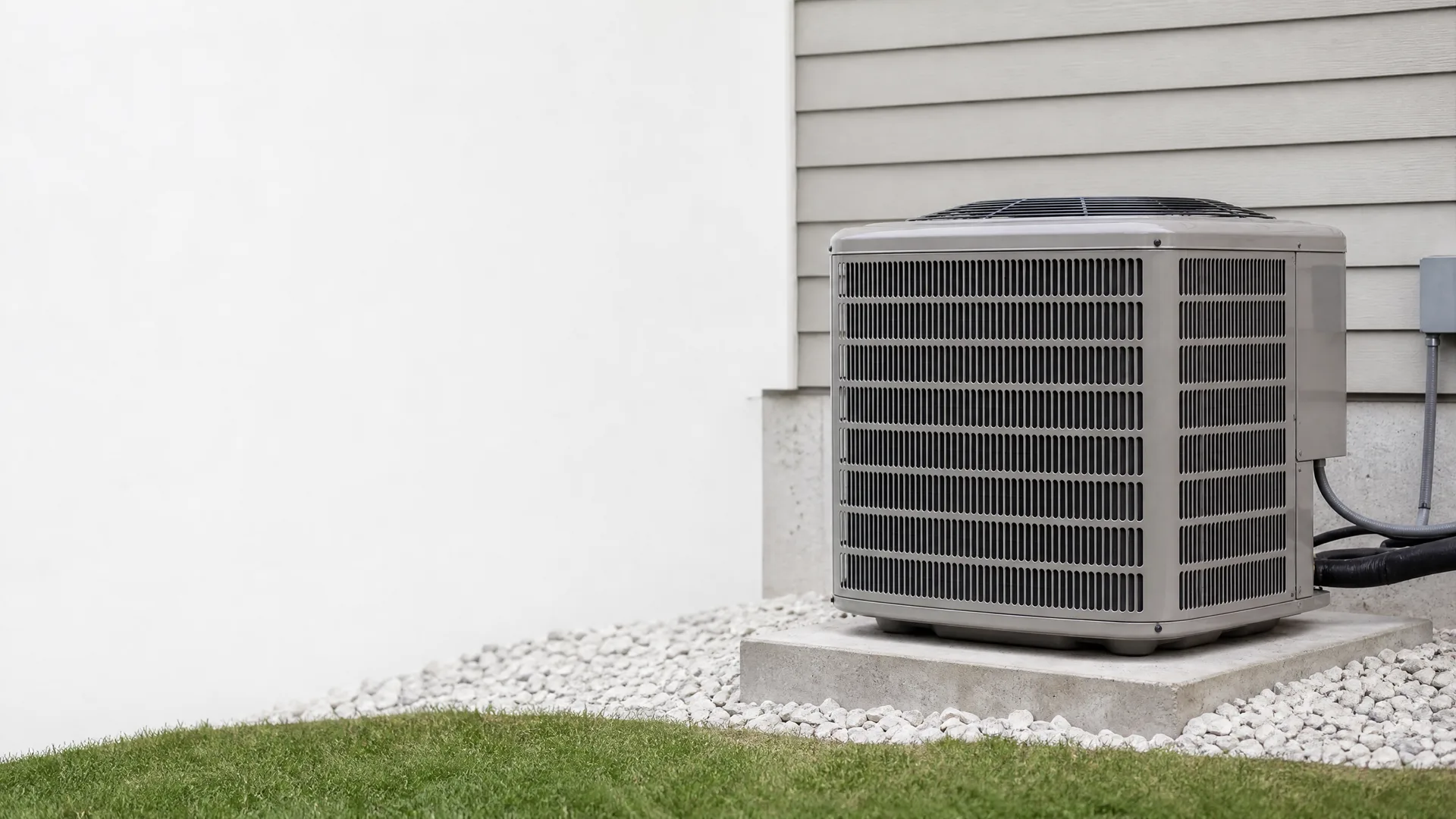
A gray outdoor air conditioner condenser unit on a concrete pad beside a house with horizontal lap siding, surrounded by white gravel and a lawn, with a white wall at left.

The Rating on the Tag

Every air conditioner has a tonnage rating, matched to the size of the house it was installed in. That number assumes a certain outdoor temperature, usually around 95 degrees. Go higher than that, and the unit is working outside the conditions it was rated for. It doesn't stop cooling. It just moves less heat per hour than the house is gaining, so indoor temperature creeps up no matter how long the compressor runs. A unit that was sized right five summers ago can still fall short on the hottest days.

Why Does Your House Still Feel Hot?

If your AC has been running nonstop and the house still feels sticky by late afternoon, that's the load catching up with it. You might notice the air coming out of the vents feels less cold than it did in June, or the unit outside running long after you've gone to bed. Some rooms may feel fine while others stay warm, especially upstairs. None of this means the unit is ruined. But a system that's straining to keep up on a 95 degree day is also running up your electric bill while it's at it, and power in Illinois isn't cheap. Left alone through a few more heat waves, a strained system tends to wear out the parts carrying the extra load.

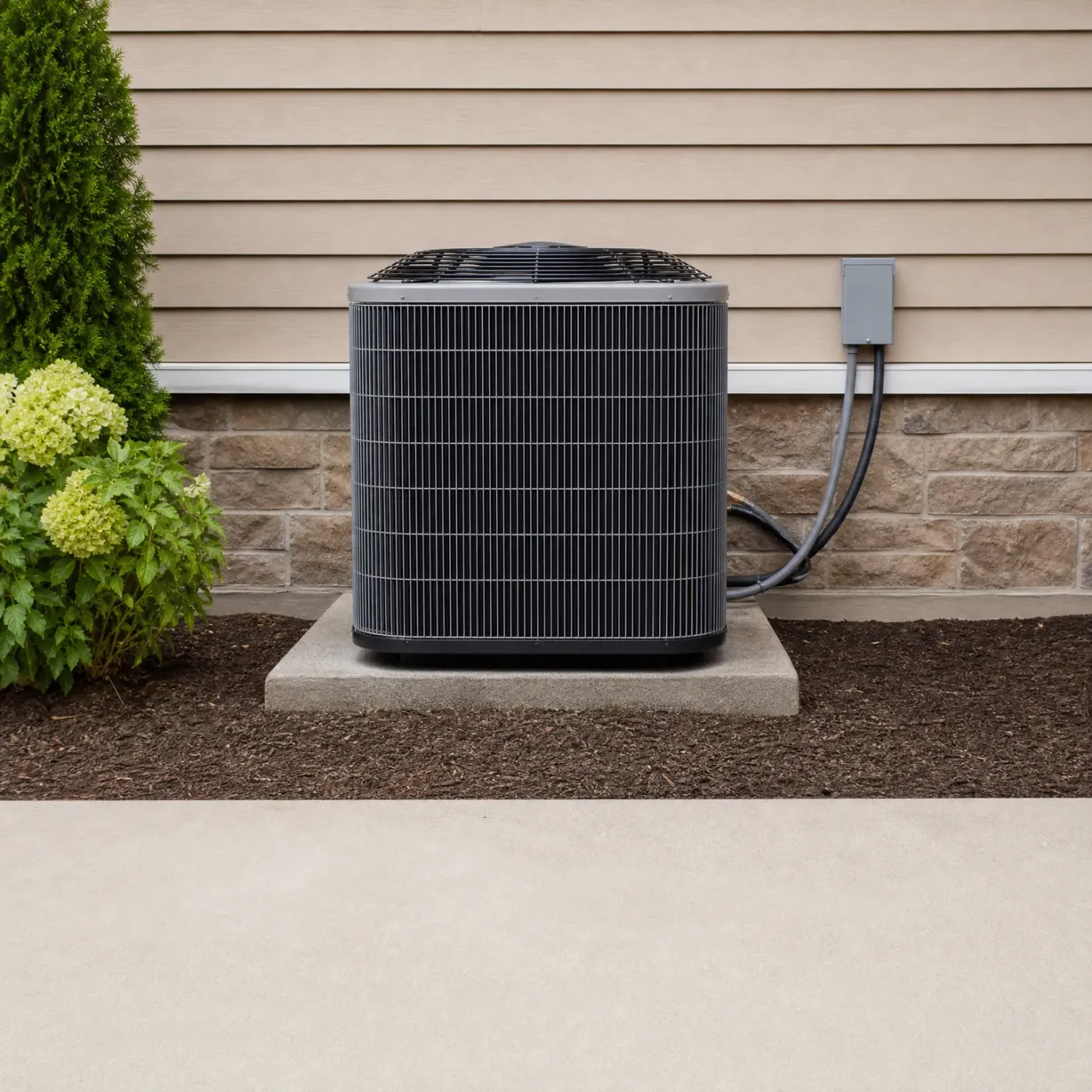
An outdoor air conditioner condenser unit on a concrete pad beside a house with beige horizontal siding and a stone-veneer base, with refrigerant lines running to a gray wall-mounted electrical box, surrounded by dark mulch, a flowering shrub and an evergreen on the left.

Running the Way It Should

The compressor cycles off and on through the day instead of running straight through. Air from the vents feels noticeably cold, and the thermostat setting and the room temperature match. The unit outside hums along steady, no odd noises, no ice on the lines.
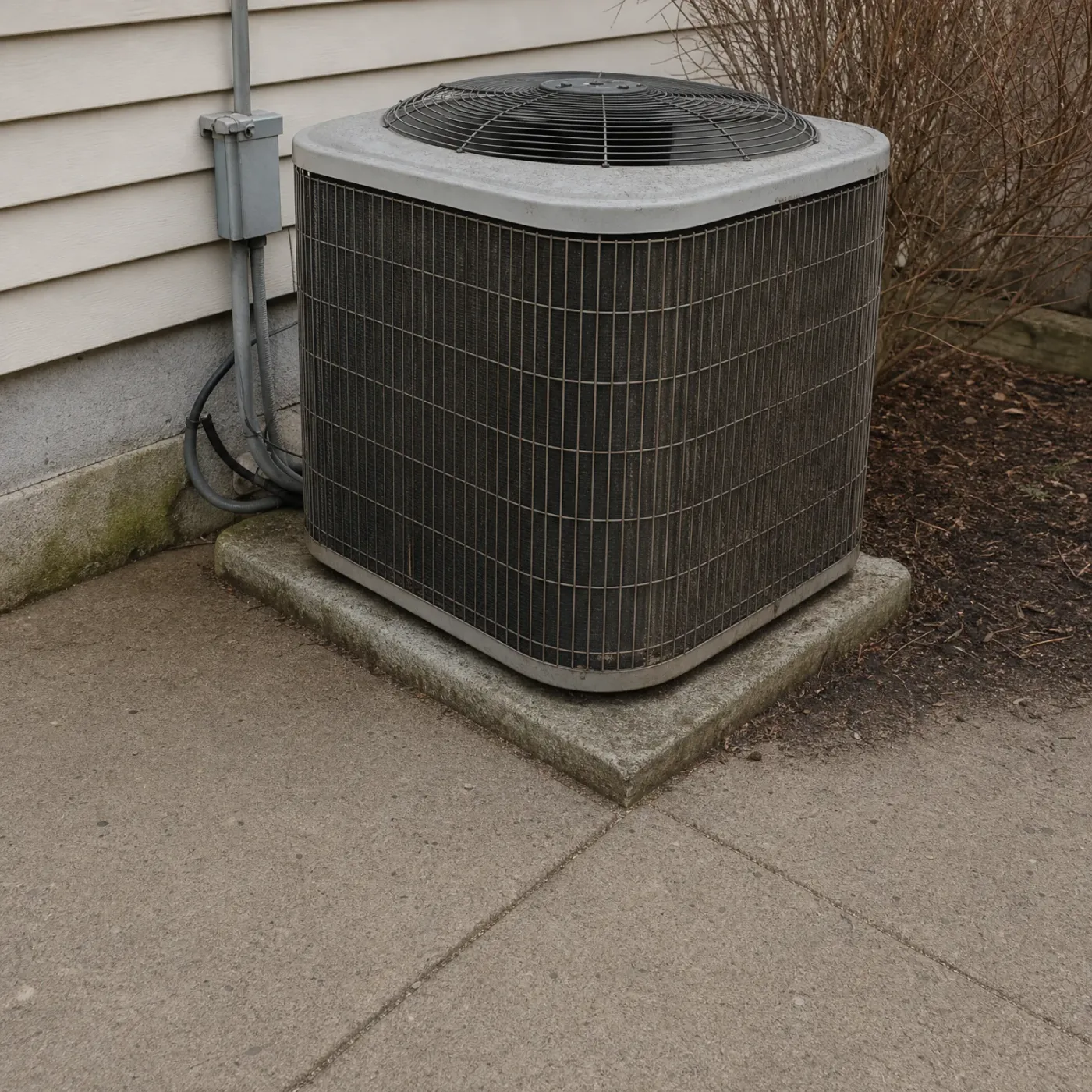

An outdoor air conditioning condenser unit on a concrete pad beside a house with light vinyl siding, an electrical disconnect box and conduit on the wall, bare shrubs and mulch to the right, and a concrete walkway in the foreground.

Falling Behind

The unit outside runs continuously and the air from the vents feels only a little cool, not cold. Some rooms lag several degrees behind the thermostat. This is when a repair call makes sense, before a strained compressor turns into a failed one.

A smiling man in a denim shirt and white t-shirt stands in an open dark doorway of a stucco house, facing a woman with long brown hair and a green jacket seen from behind in the foreground.

What's Actually Happening Inside the Unit

Inside the outdoor unit, the compressor pressurizes refrigerant and sends it through the coil, where it gives up heat to the outside air. On a 95 degree day, that coil is trying to dump heat into air that's already close to the limit of what it can absorb. The compressor has to run longer to move the same amount of heat it handled easily back in May.

Refrigerant charge matters more on days like this. If the system is even a little low, the compressor works harder for less cooling, and that gap shows up exactly on the afternoons you need it least. A unit that's been running rough for a few weeks, short cycling or tripping its breaker, is worth having looked at before the next heat wave instead of after. A contractor who knows Illinois systems can check the charge and the compressor's condition and tell you whether it's keeping pace with what the day is asking of it, or falling behind before you're stuck in a house that won't cool down.

A living room corner with a light beige sofa holding a textured taupe cushion, a large ceramic vase of olive branches by a window, a framed neutral artwork on the wall, and a dark bowl with stacked books in the foreground.
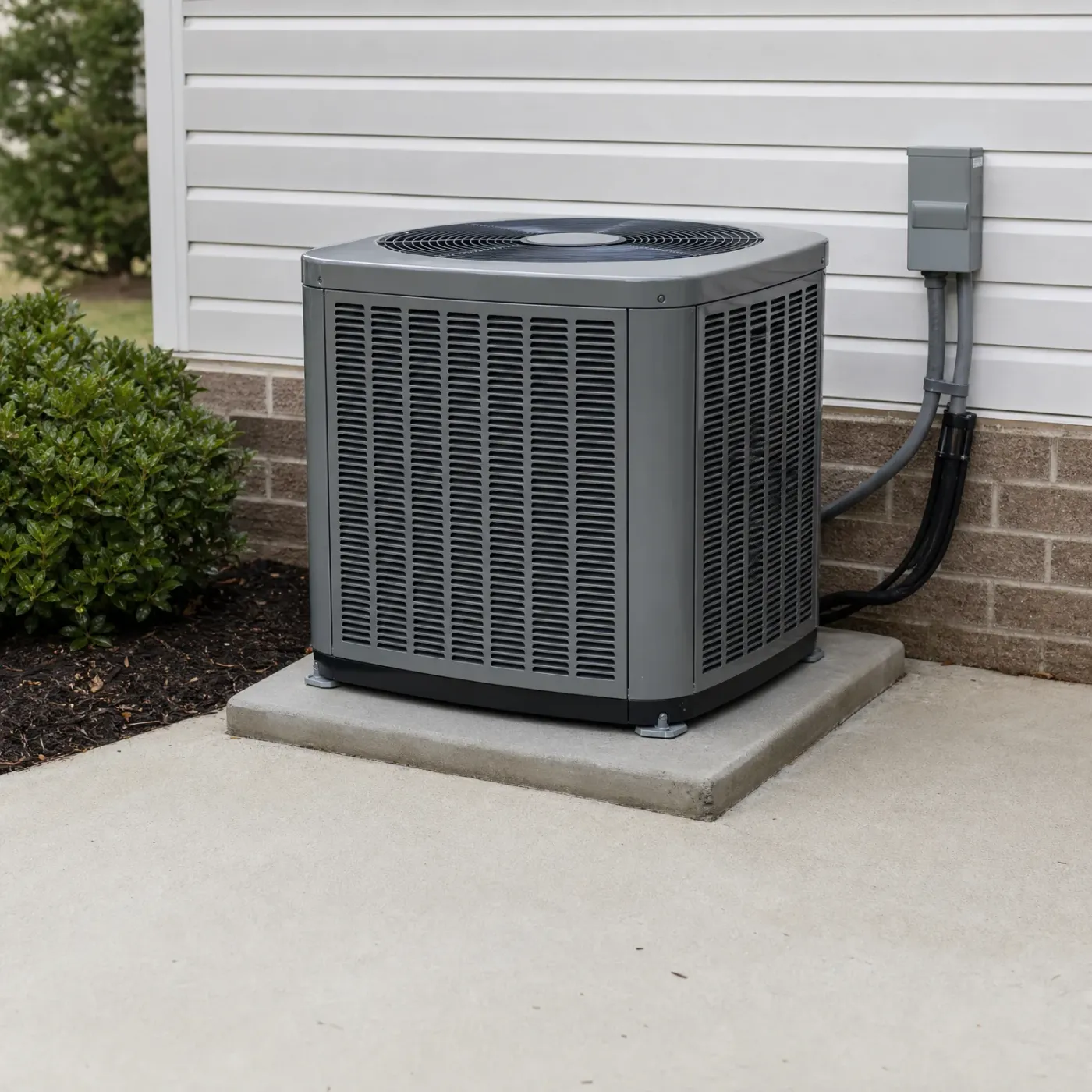
An outdoor air conditioning condenser unit on a concrete pad beside a house with white horizontal lap siding, with an electrical disconnect box and insulated refrigerant line on the wall and a shrub over mulch to the right.

A Unit Keeping Pace

The pad is clean, the lines run straight along the wall, and the disconnect box is intact. A unit like this cycles through the day without strain, even when the concrete around it is hot to the touch.

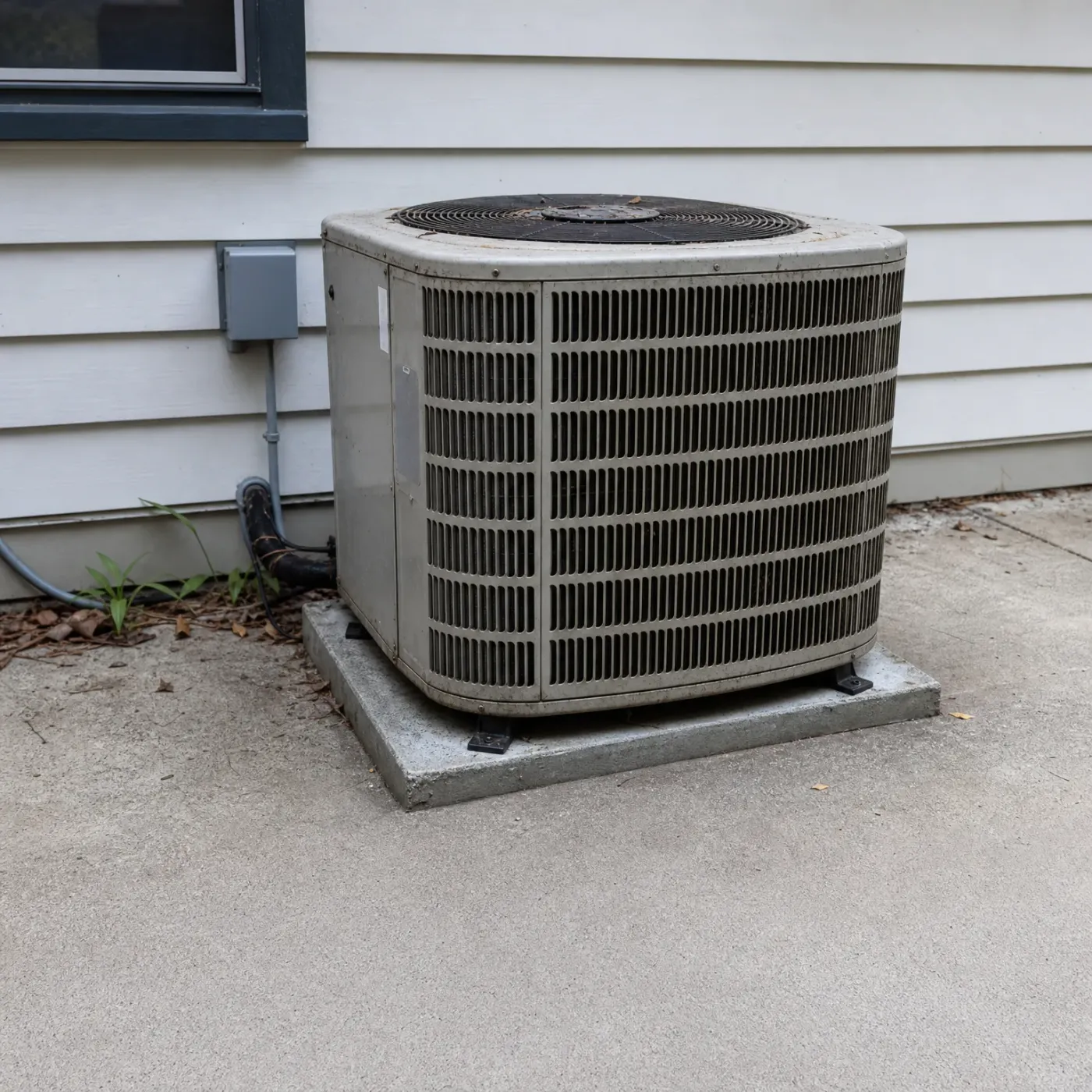
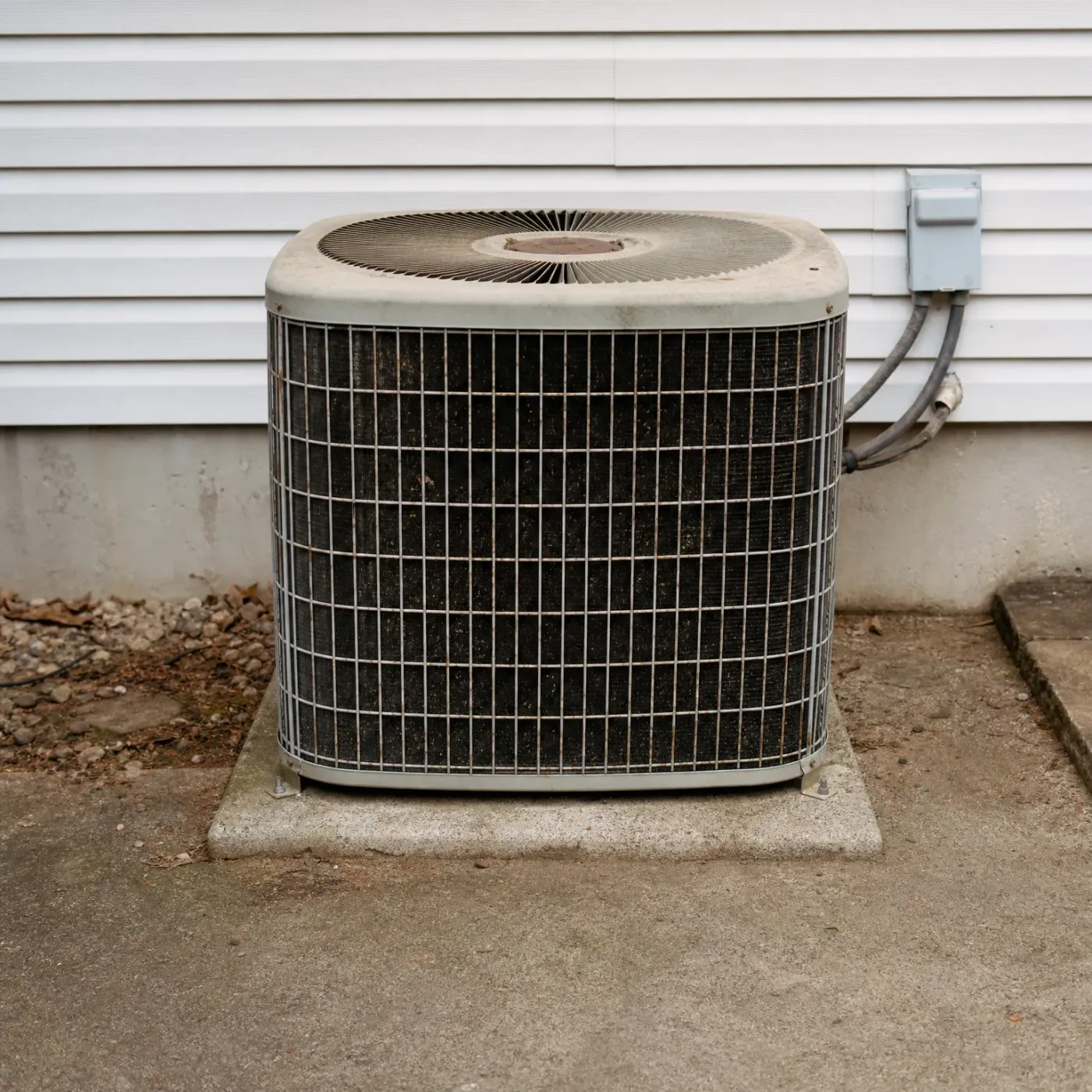
An outdoor air conditioner condenser unit on a concrete pad beside a house with light horizontal lap siding, with an electrical disconnect box and conduit on the wall behind it.

A Unit Falling Behind

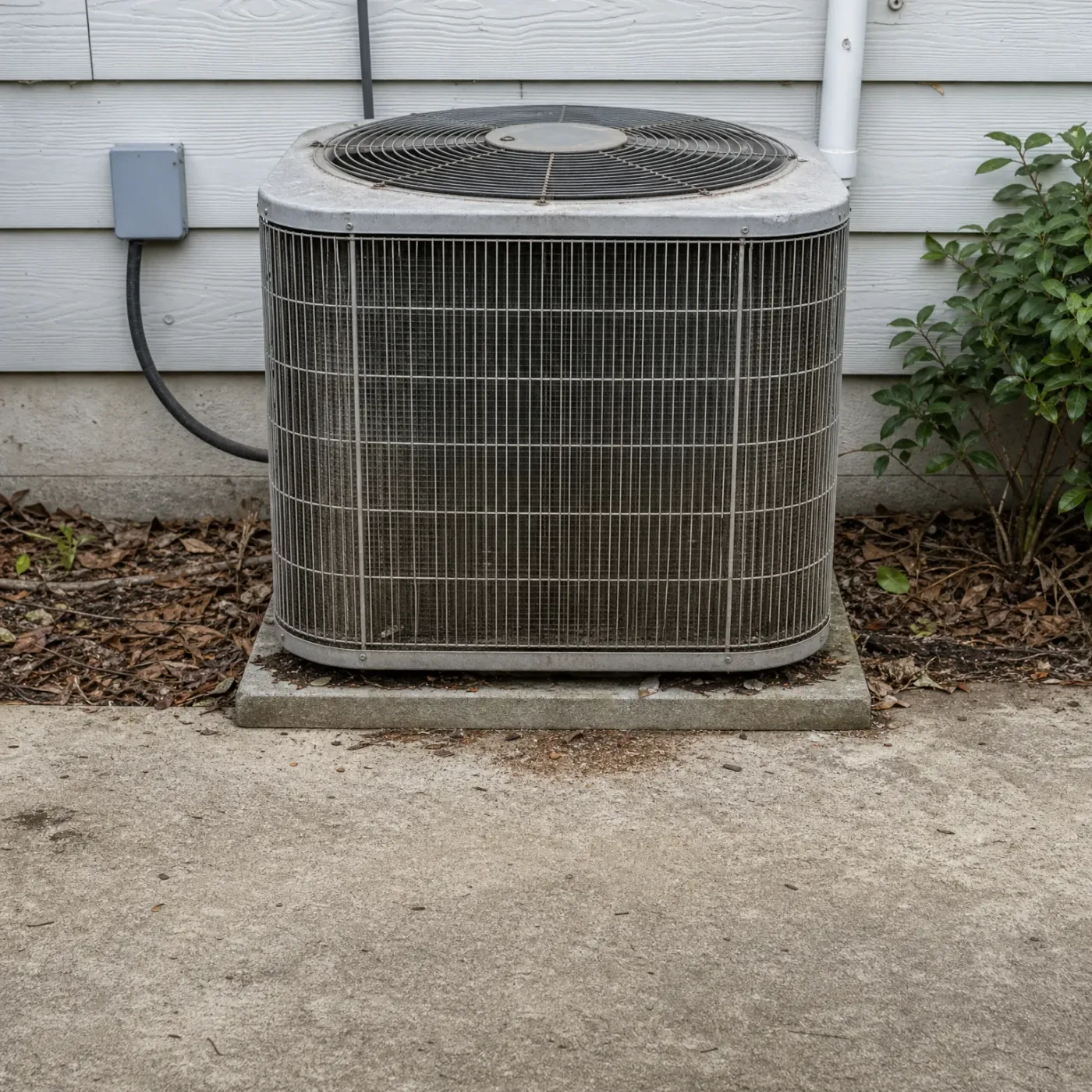
Weathering on the cabinet, a disconnect box that's seen some age, lines running low along the foundation. None of that alone stops an AC from cooling, but it points to a unit that's been working hard for years and may not have much margin left for a 95 degree day.

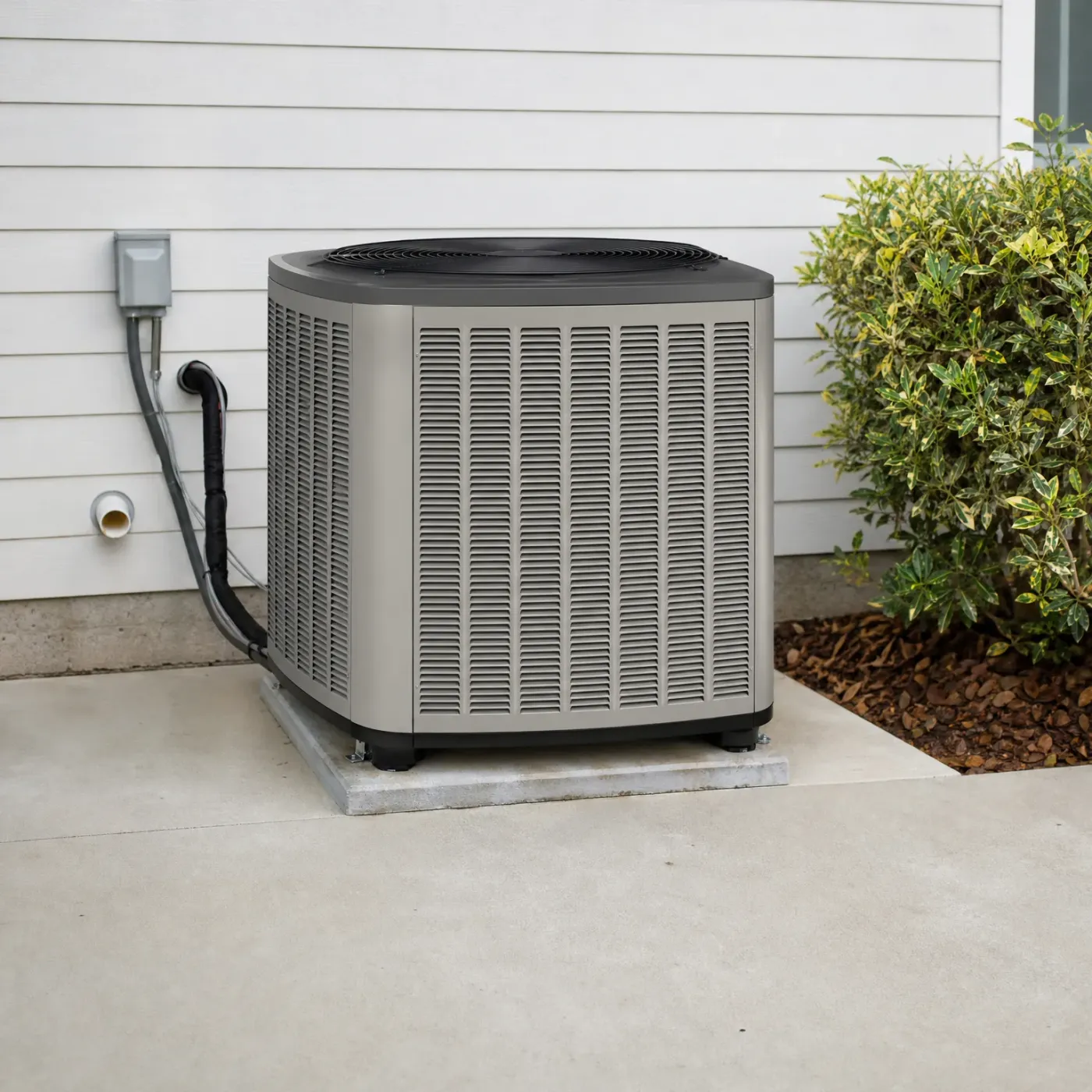
An outdoor air conditioning condenser unit on a concrete pad beside a house with white horizontal vinyl siding, with a gray electrical disconnect box and refrigerant lines on the wall behind it.
Before you get your air conditioner repair
A gray outdoor air conditioner condenser unit on a concrete pad beside a house with white horizontal siding and a brick foundation, with a wall-mounted disconnect box and conduit, and a green shrub with mulch at left.
After you get your air conditioner repair

An air conditioner pro near you

A unit that's been losing ground since July doesn't usually pull itself back even. Low refrigerant, a weak capacitor, a coil caked with dust: whichever it is, the load this week isn't going to be lighter than last week's, and the unit won't get stronger on its own. The longer a compressor runs flat out trying to cover a gap it can't close, the more it's working against itself, and that's wear you don't get back. You could spend the afternoon calling around, explaining the same thing to five different shops, and still not know who's any good. Send the request instead and a contractor who works on Illinois systems in this kind of heat gets your information and reaches out. That's one less thing competing for your attention on a day the house is already uncomfortable and the power bill is already climbing.

A Problem That Waits

Some AC trouble gives you warning. A dirty filter chokes airflow slowly. A low charge from a small leak drops capacity bit by bit. The unit still runs, still cools some, and it's easy to tell yourself it'll hold until fall. On a mild June day it might. But the margin you're living on is thin, and you won't know how thin until a 95 degree afternoon asks for everything the unit has left to give.

A Problem That Doesn't

A failed capacitor won't start the compressor at all. A tripped breaker that keeps tripping means the outdoor unit stops running the moment it's reset. A frozen coil blocks airflow until it thaws, and running the system while it's frozen only makes things worse. There's no slow slide to watch for. One afternoon the house is warm and the next the unit isn't running, right when the heat outside is at its worst and waiting any longer costs you comfort you can't get back.

Power costs 17.67 cents per kilowatt-hour statewide

At 17.67 cents a kilowatt-hour, a struggling AC costs more to run than a healthy one doing the same job. When the compressor runs long hours just to keep up, that time on the meter adds up fast. A unit that's losing ground doesn't just leave you warm, it leaves you paying more for it.

EIA-861 2025 statewide residential average

A gray outdoor air conditioner condenser unit on a concrete pad beside a house with horizontal siding and a stucco foundation, with a disconnect box and conduit on the wall, decorative gravel, mulch, and a shrub nearby.
The coils are clean, so the unit can shed heat as fast as the compressor pulls it in.
An outdoor air conditioning condenser unit on a concrete pad beside a house with horizontal lap siding, with an electrical disconnect box and conduit on the wall, mulch and a green shrub to the right, and a concrete walkway in the foreground.
Dirt on the coil grilles traps heat against the unit, and it has to work harder to let go of any of it.
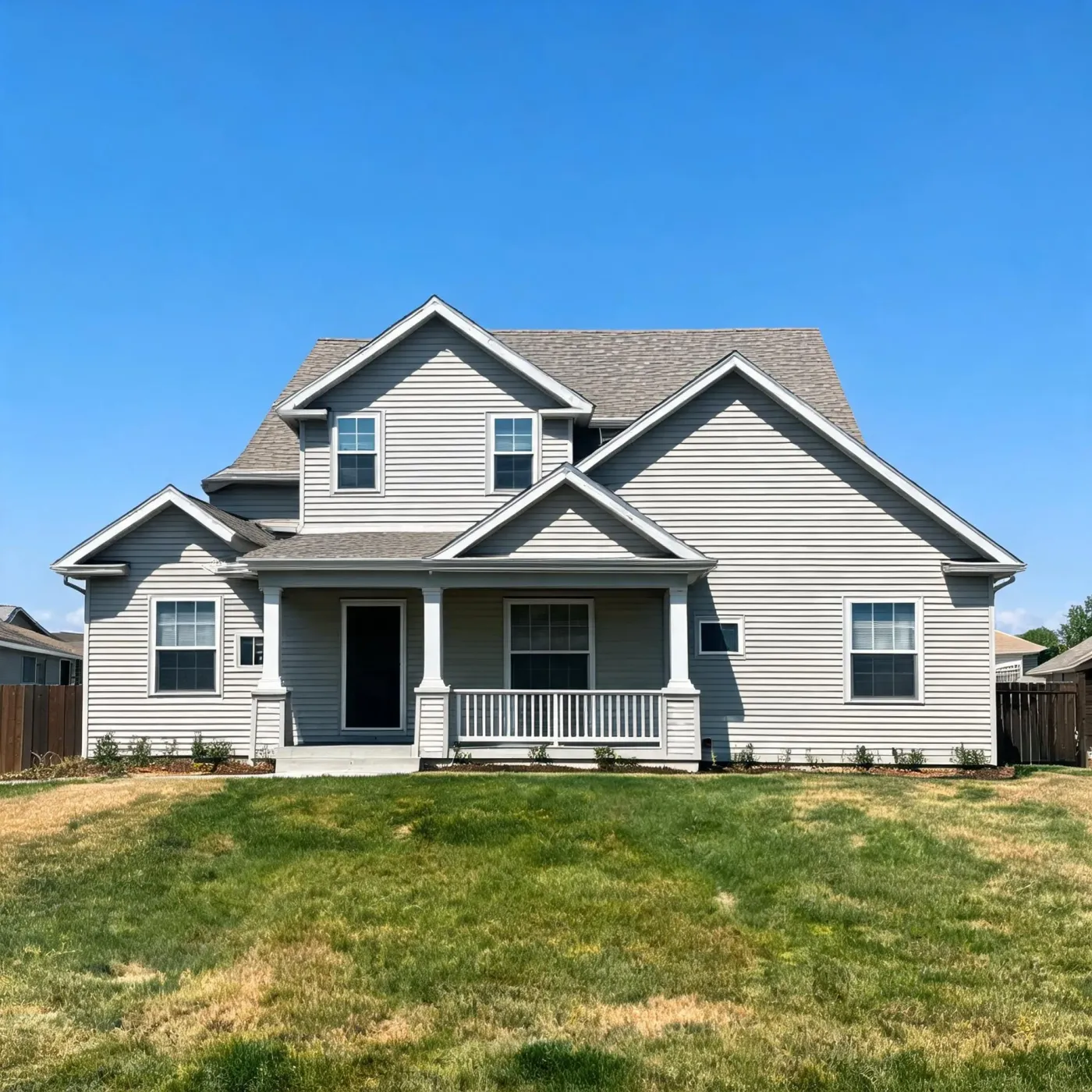
A two-story gray horizontal-siding house with multiple gables, a covered front porch with white columns and railing, and a dark front door, fronted by a patchy green and brown lawn under a clear blue sky.

Illinois summers run heavy, not just hot. Averaged across June, July and August, the dew point here sits at 63°F, a figure NOAA tracks for the state. That's the number that tells you why the air feels thick even when the thermometer isn't that high. For your AC, moisture that heavy means the coil has to pull water out of the air before it can pull heat out, and both jobs run through the same compressor. A unit already behind on heat removal now has a second task stacked on top of it. That's why the house can feel damp and warm at once, even with the system running.

NASA POWER T2MDEW county cells weighted by homes

A bearded man in a plaid flannel shirt stands in a kitchen looking out a window toward snow-covered shrubs, with a steaming mug on the windowsill and potted plants on a shelf behind him.
A smiling man with dark curly hair in a navy t-shirt sits on a gray couch indoors, with a large-leafed plant and a window in the background.

Where Your AC Stands Now

  • An AC that falls behind in July stays behind until the load itself lets up in the fall.
  • The cause is almost always one of a few things: low refrigerant, a worn capacitor, or a coil too dirty to shed heat.
  • Each of those gets worse on its own schedule, but none of them gets better without someone opening the unit up.
  • Once you send the form, finding the right contractor for your situation is off your plate.
  • A unit brought back to full capacity can cycle off during the day instead of running straight through.
  • Catching the problem now means the rest of August doesn't have to feel like the last stretch.

Your air conditioner isn't struggling because the summer is tougher than it used to be. It's struggling because something inside it, the refrigerant charge, the capacitor, or the coil, isn't doing its job, and the Illinois heat and humidity are exposing that weak point every afternoon. A unit at full strength handles a 95 degree day with the dew point near 63 by cycling off sometimes. A unit that's fallen behind just runs, and keeps running, and the house still doesn't cool.

None of the usual causes fix themselves. Low refrigerant from a small leak keeps dropping. A capacitor that's weakening keeps weakening. A dirty coil doesn't clean itself off in the next heat wave. Whatever is behind your unit's trouble will still be there next week, and the heat isn't going to ease up enough this month to cover for it.

What changes once you send the form is simple. You stop being the one who has to track down who's available, who works on your kind of unit, who can actually get to your house. That part becomes someone else's job, not yours. A contractor who knows what to check shows up, finds whichever of these it is, and brings the unit back to where it can keep pace with the rest of August instead of losing ground to it. The house stops being a place you just tolerate until September.

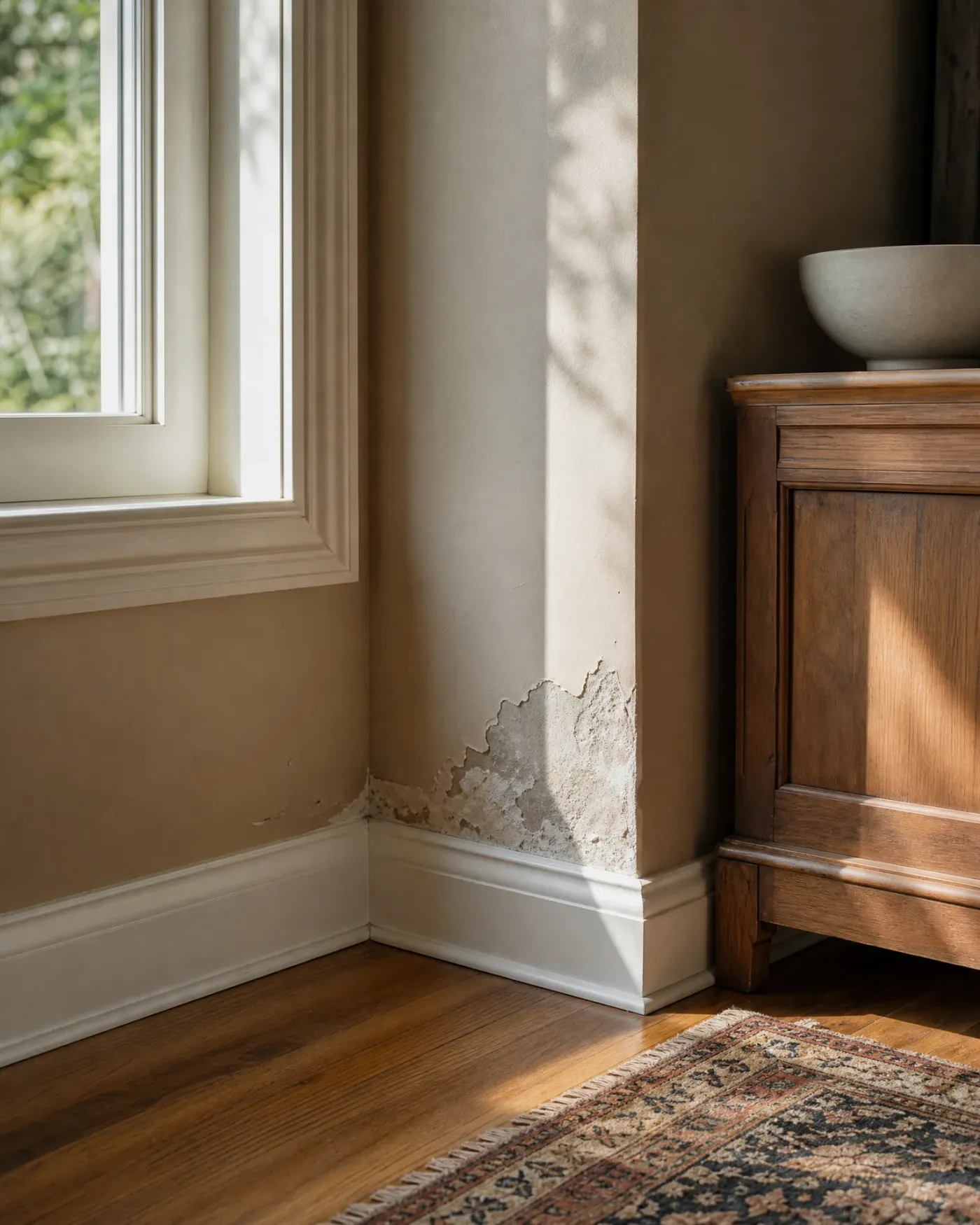
Interior room corner with sunlight from a window, showing peeling paint and damaged plaster on the wall above a white baseboard, a wooden cabinet with a pale bowl on top, hardwood floor and a patterned rug.
Interior corner of a room with tan walls, white profiled baseboard and window trim, a wood-plank floor in sunlight, and green foliage visible through the window.
An empty room corner with cream walls, white baseboard, two windows with deep sills showing green foliage outside, and a wood plank floor lit by sunlight.
Empty room corner with beige walls, white beadboard wainscoting, chair rail and baseboard, a window with green foliage outside, and sunlight casting leaf shadows on the wall above a wood floor.
Sunlit room corner with a multi-pane window, beige walls, white baseboard, wood floor with a woven rug, and a dark wooden cabinet holding a ceramic table lamp below a framed picture.

A local pro for your air conditioner repair

Send the request today and let an air conditioner pro reach out to you.

Connect with a pro

No charge to send it. You decide if you hire them.