

When it starts the way it should
The compressor kicks on within seconds of the thermostat calling for cool air. You'll hear a low hum and the fan spinning behind the coil guards, steady and even, with no clicking or delay.
A compressor that won't start usually comes down to one of a few things. A capacitor that's worn out can't give the motor the jolt it needs, so the unit hums or clicks and nothing happens. A tripped breaker or a bad contactor can cut power to the outdoor unit before it ever reaches the compressor. Low refrigerant from a slow leak can trip a safety switch that keeps the compressor from running so it doesn't damage itself. On a hot Illinois afternoon, with the thermostat calling for cooling and the house already warming up, none of these show themselves until the system just doesn't turn on. Since most homes here keep gas heat separate from the AC, this is strictly an electrical or refrigerant problem, not a furnace issue. A contractor can test the capacitor, the contactor and the charge to find which one it is.
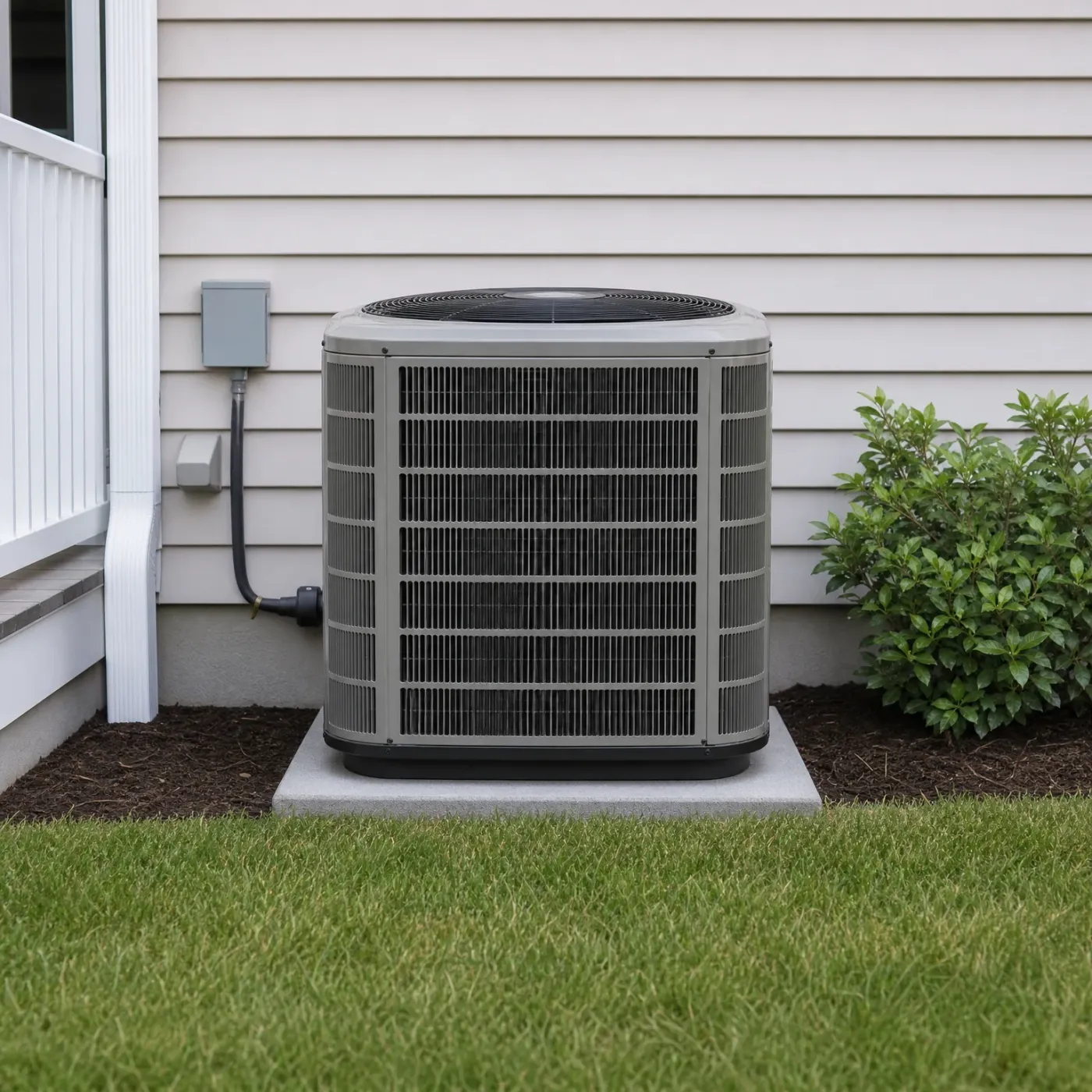
The compressor kicks on within seconds of the thermostat calling for cool air. You'll hear a low hum and the fan spinning behind the coil guards, steady and even, with no clicking or delay.
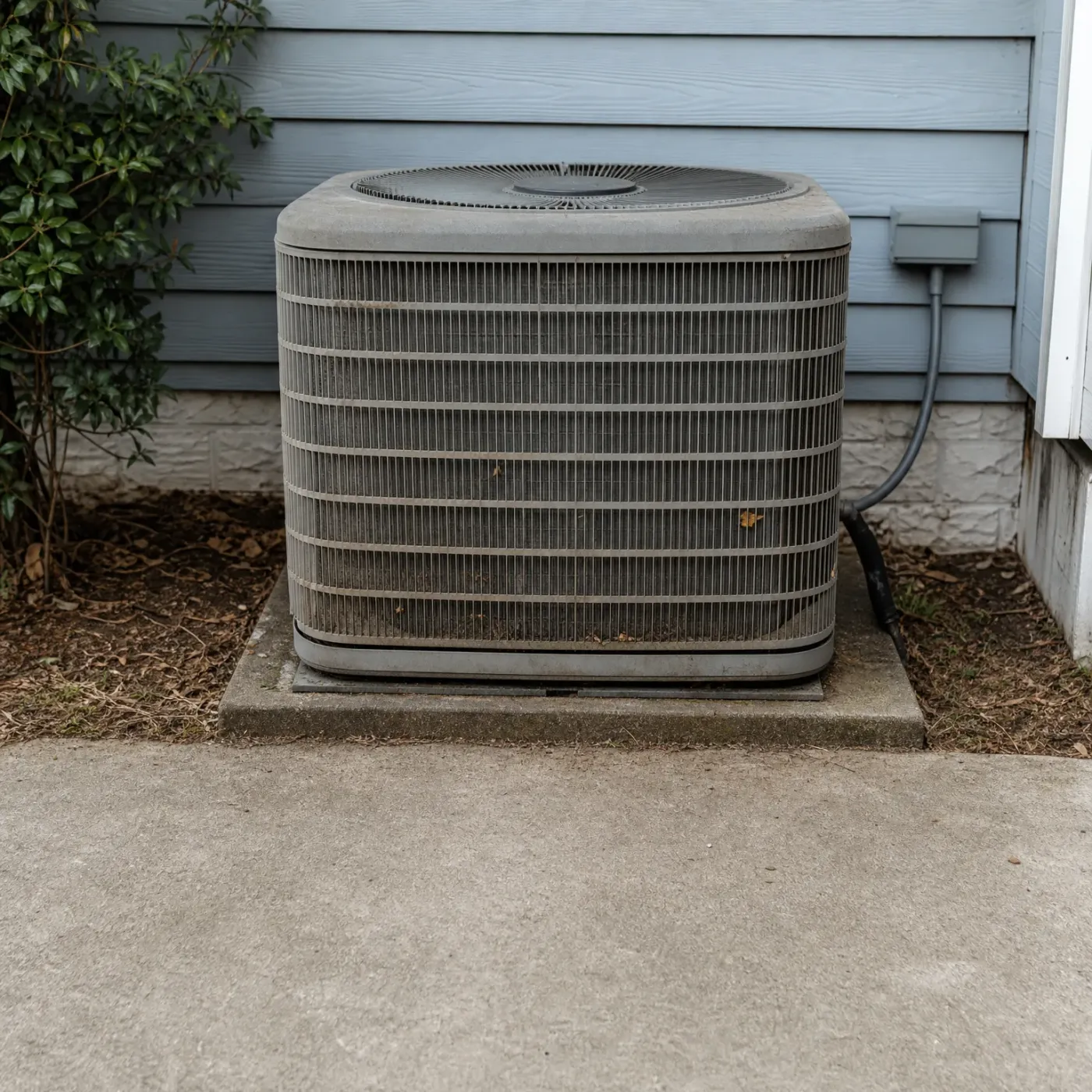
The unit sits silent, or hums without starting. Dust caked on the coil guards like this makes the compressor work harder to shed heat, which strains a weak capacitor or contactor until it quits.
Illinois summers run humid, and NOAA puts the average dew point at 63°F across June, July and August in the parts of the state where most homes sit. At that level the air holds onto its moisture, so your AC has to pull more water out of the house before it can actually cool it. That's extra load on the compressor every time it cycles, hour after hour, all summer. A unit already struggling to start, maybe from a weak capacitor or a tired contactor, gets pushed harder in air this heavy, and a problem that might have waited a week shows up sooner. If yours won't kick on at all, sending in the details here saves you the trouble of searching for a contractor, calling around, and repeating the same explanation to each one.
NASA POWER T2MDEW county cells weighted by homes
A silent compressor on a muggy Illinois afternoon doesn't wait for a good time. The house heats up fast when the humidity's sitting near that 63°F dew point, and most of these homes don't have a backup way to pull moisture out of the air if the AC is down. You could start calling contractors yourself, explaining the clicking or the humming or the dead silence to each one, waiting on callbacks, then weighing quotes against each other while the house stays sticky. Or you could send this request once and let that part be someone else's job. You still need the diagnosis, whether it's the capacitor, the contactor, or power not reaching the outdoor unit, and that takes a trained eye. But the search for who does that work, the part that eats your evening, is what you hand off the moment you send this.
A compressor that won't kick on almost always comes down to the same short list: a worn capacitor, a tripped breaker, a failed contactor, or a thermostat signal that isn't reaching the outdoor unit. What you hear, or don't hear, when the thermostat calls for cool tells you which one you're dealing with. A single click with no hum after it usually means the contactor or the disconnect. Total silence means someone needs to check the unit directly rather than guess from inside the house. None of this sorts itself out by waiting, and in an Illinois summer, with dew points sitting near 63°F through June, July, and August, a down AC lets a house heat up and feel damp within hours, not days.
The part you can't do from the living room is the diagnosis. That takes someone at the unit with meters and a flashlight, not another guess based on what it sounds like from the hallway. What you can skip is everything that normally comes before that visit: searching for a licensed contractor, calling a few to see who answers, explaining the same symptoms over and over, then weighing quotes against each other while the house keeps climbing in temperature. Once that search is handed off, the only thing left on your end is waiting for the right person to show up and look at the unit. The compressor still needs a real fix. Finding who does that fix is the part that stops being your problem.
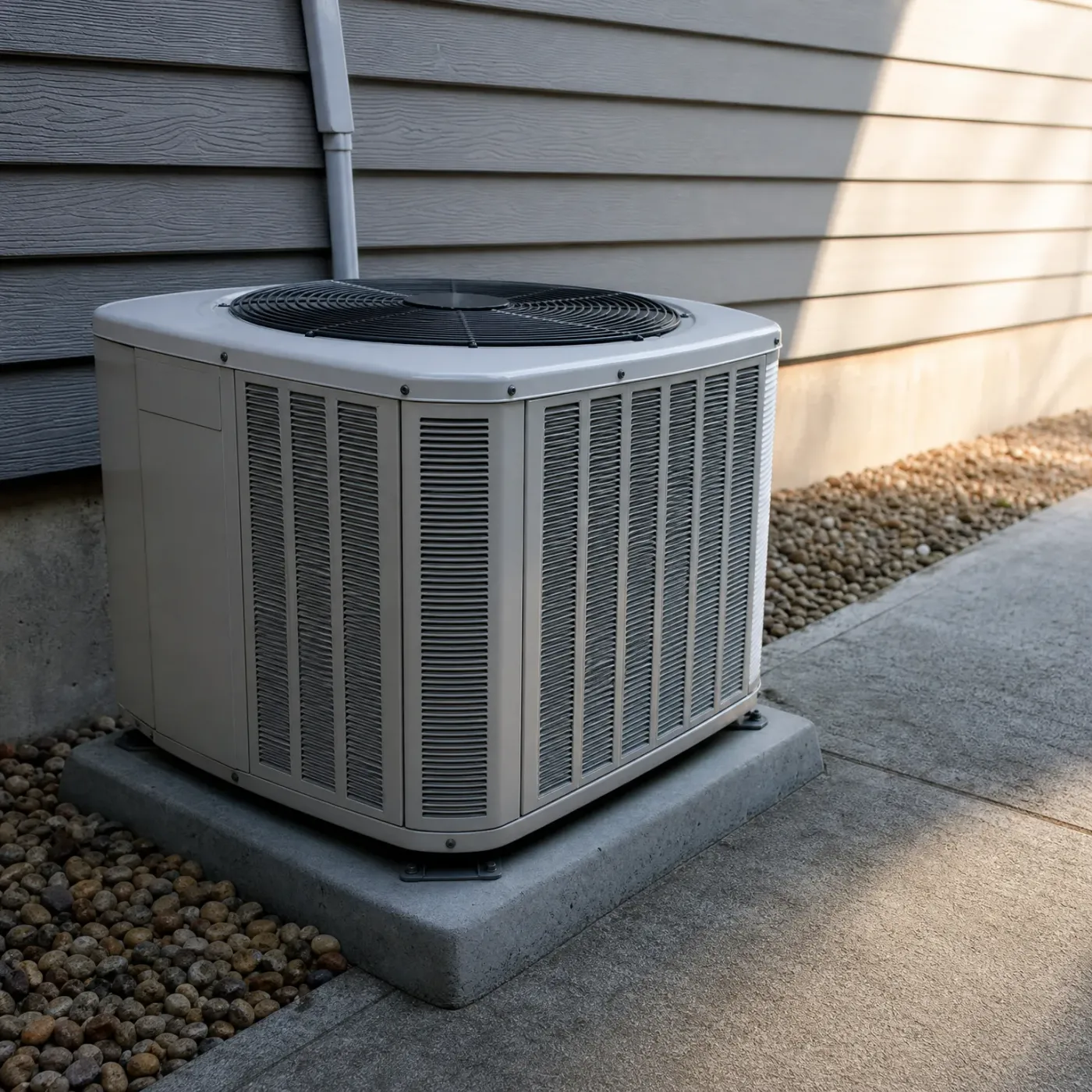
Answer a few questions instead of calling shop after shop.
You only hire the pro if you want to.