Tell a local repair pro what your air conditioner is doing.
Your downstairs feels fine. Upstairs the air sits heavy, the thermostat says 74 and the room feels like 80, and by August you've stopped fighting it. That gap between floors usually comes down to airflow that never reaches the second floor the way it should, or a system that was sized for the whole house and can't keep up with a bedroom under the roof in July.
Finding out which one it is means someone looking at your actual ducts, your actual unit, maybe your attic. Not a guess over the phone.
That's the part that eats your evening. Searching for a contractor near you, calling two or three, telling each one the same thing about the upstairs being hot while downstairs is cool, waiting on callbacks, then trying to compare what each one quoted you when they didn't even look at the same things.
Illinois summers are sticky enough without that. Most houses here run gas heat and electric cooling, and that cooling bill already stings when the power rates are what they are. An upstairs that never cools down right means that unit is running longer than it should, for less comfort than it should be giving you.
Answer the next few questions about your house and your system, and this gets matched to a contractor who handles exactly this kind of problem, the uneven-floor kind, not just general AC work. They'll reach out to you directly. You skip the part where you're the one doing the legwork, explaining your attic layout to a fourth stranger on the phone, and get straight to someone looking at what's actually going on upstairs.
Heat rises, so your upstairs is already working against gravity before the air conditioner does anything. But the bigger reason is airflow. Most Illinois houses run one duct system sized for the whole place, and the upstairs usually gets the shorter end of it. A duct run that's too long, too narrow, or kinked in the attic can't push enough cold air up there, especially when that attic is sitting at well over 120 degrees on a sticky July afternoon and radiating heat down through the ceiling. The return side matters too. If there isn't enough return air pulling from the second floor, the system can't move air through it efficiently even when supply is fine. None of this means your air conditioner is undersized or failing. It usually means the duct and vent setup upstairs needs adjusting, a blower that's underperforming needs a look, or a return needs adding. Left alone, the system just keeps running longer to chase a temperature it can't reach up there.
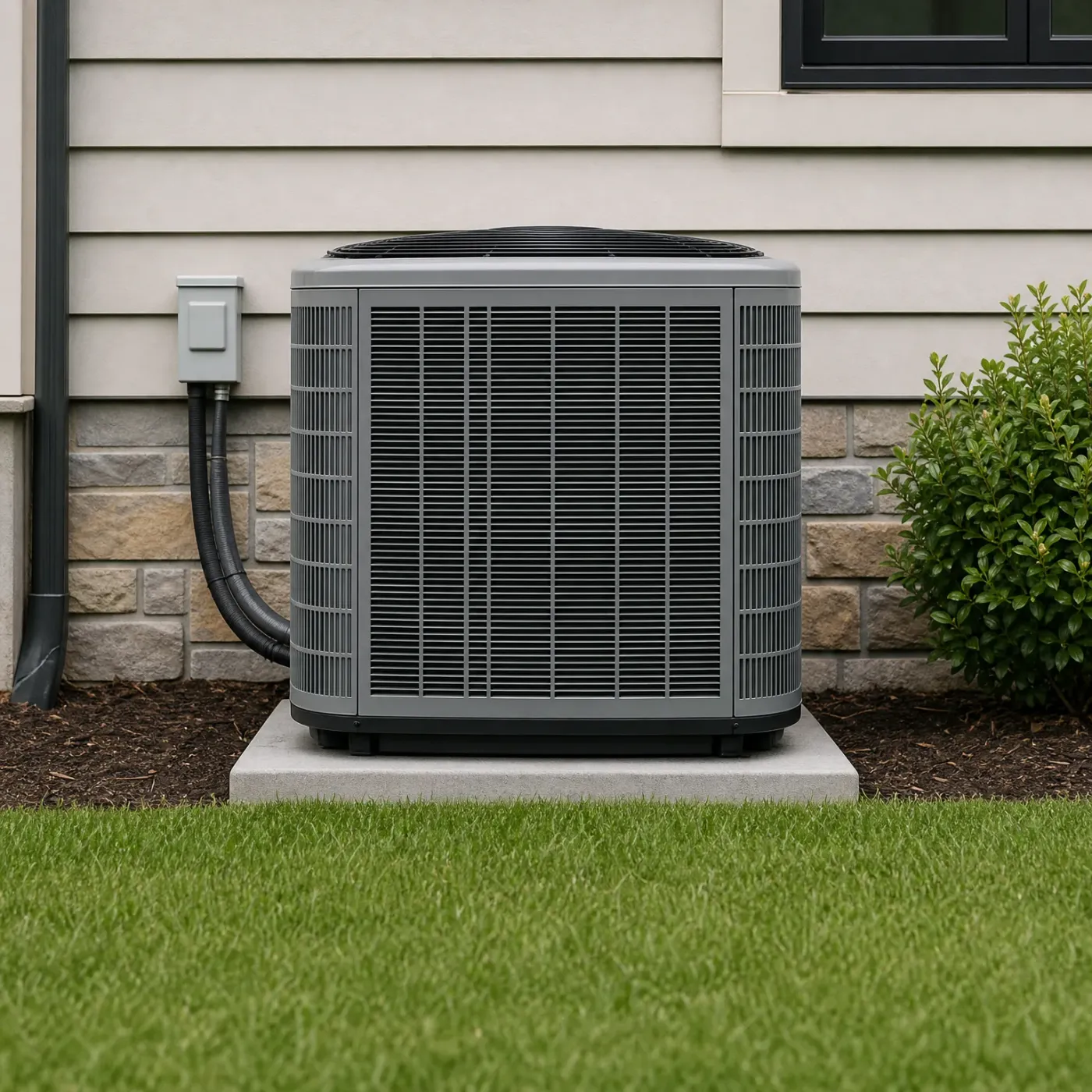
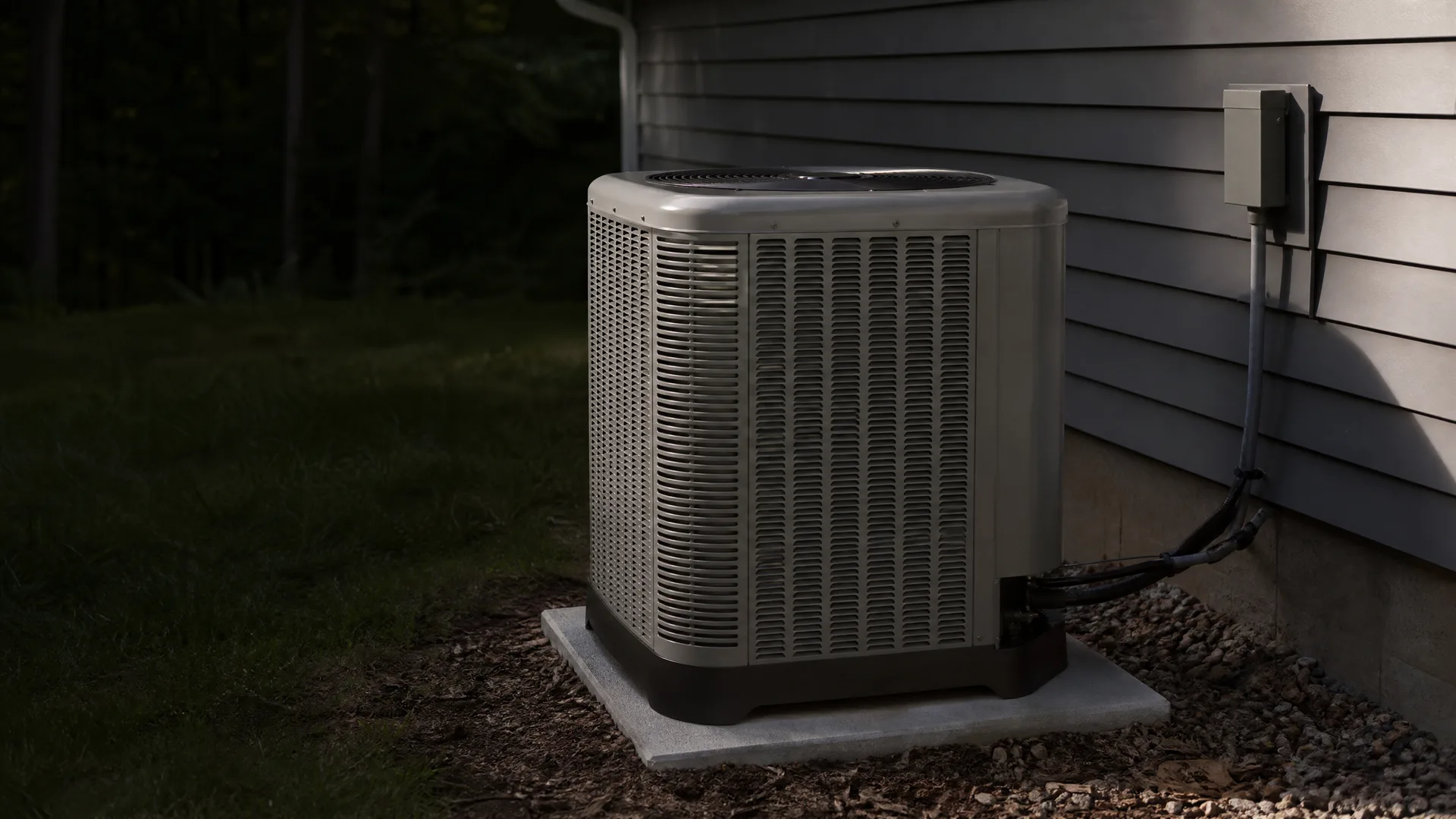
The outdoor unit matters too. A clean condenser like this one can move heat out of your house without a fight.
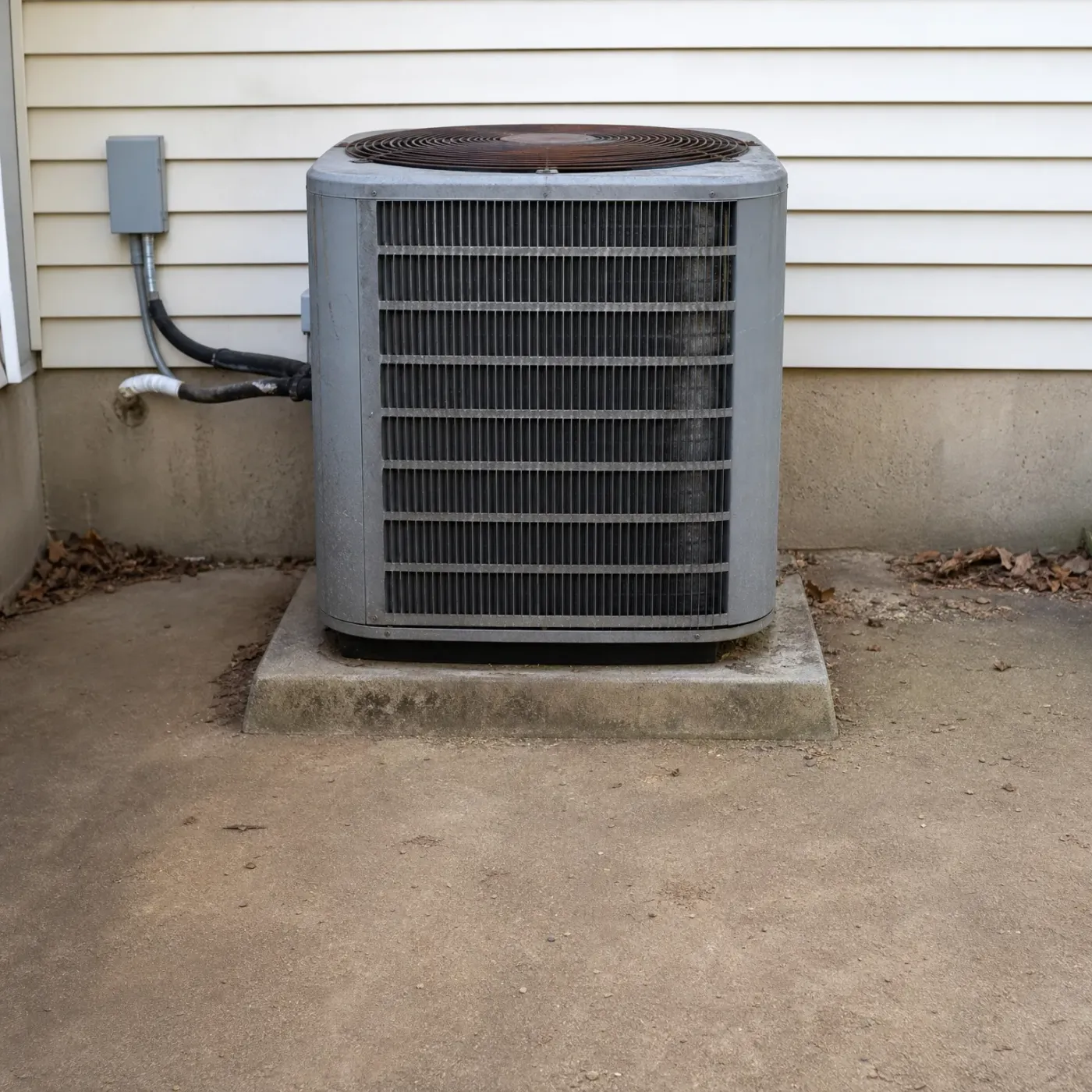
Caked-on dust and dirt choke the airflow this unit needs, and the upstairs feels it first on a 90 degree day.
Why the Air Stops Upstairs
A single thermostat downstairs tells the system when to stop, even though the upstairs may still be 80 degrees.
Return air ducts are usually few or missing upstairs, so hot air collects there with no path pulling it back down.
Supply ducts running through a hot attic lose cold air before it ever reaches an upstairs vent.
Closed or blocked vents in unused downstairs rooms push more of the system's effort toward the main floor and starve the upstairs.
A system sized for the whole house splits airflow evenly by design, not by which floor actually needs more cooling.
Leaky or crushed duct runs in the attic let cold air escape before it reaches the upstairs rooms at all.
The thermostat on your main floor is in charge of the whole house, and it only knows what the air around it feels like. Once that spot hits 74, the system stops, whether the upstairs ever got there or not. That alone explains a lot of the gap.
Airflow has to go somewhere, and in most houses it's easier for it to stay on the main floor. Supply ducts that run up through the attic sit in the hottest part of the house all summer, so the cold air loses some of its punch before it ever reaches a vent. If those ducts have a seam that's loose or a section that got crushed when something was stored up there, even more of that air never makes it out at all.
Getting air up is only half the job. It has to come back down, and that means a return duct pulling warm air off the ceiling and sending it back to the system to be cooled again. Upstairs rooms often have just one return, or none, so the hot air that collects near the ceiling has nowhere to go. It sits there, the thermostat downstairs never sees it, and the room stays warm no matter how long the system runs.
None of this means the system is sized wrong. It means the air it makes isn't reaching the rooms that need it most.
Describe what your air conditioner is doing once, in one form.
Sending the form costs nothing.
Why duct length changes everything
The air conditioner pushes the same pressure through every duct, but the runs reaching your upstairs rooms are almost always longer than the ones feeding downstairs. Air loses push the farther it travels, and every bend in the duct costs more of it. By the time cooled air reaches a bedroom at the far end of the house, it's moving slower and arriving cooler air in a smaller amount than what left the system. Downstairs rooms closer to the unit get first pick of the airflow, so they cool fast while the upstairs waits on whatever's left.
What a weak system can still do
An air conditioner sized correctly for your house can usually handle the load if the air actually gets where it needs to go. The problem upstairs is rarely that the unit can't make enough cold air. It's that the path from the unit to those rooms is longer, hotter, and often runs through an attic that adds heat back into the duct before the air ever reaches a vent. A duct that passes through 120 degree attic air in July is fighting the system the whole way there.
Before you get your air conditioner repairAfter you get your air conditioner repair
Walk upstairs on a July afternoon and you can feel the difference the thermostat can't. The downstairs unit reads 74 and shuts the system off, but your bedrooms are still sitting well above that. So the system kicks back on, then off, then back on again, all while the upstairs barely cools. Every one of those extra run hours costs money, and power in Illinois isn't cheap. It also costs the equipment itself. A compressor and blower that run long hours against weak airflow wear faster than ones doing a job that's actually balanced across the house. None of this fixes itself. The hottest stretch of summer puts the most load on the system, which is exactly when the gap between floors tends to open wider, not close. The upstairs that feels warm in June can feel unlivable by August. Dealing with the airflow now, while it's still an annoyance and not a crisis, is a smaller job than waiting until the second floor is the room nobody wants to sleep in.
What the heat gap costs you
By mid afternoon the upstairs bedrooms can sit five to ten degrees above what the thermostat downstairs reads.
A hot upstairs makes the air conditioner run longer trying to satisfy a thermostat that already reads satisfied downstairs.
Power in Illinois costs enough that those extra run hours show up clearly on the summer bill.
A system working against weak upstairs airflow all summer puts more wear on the compressor and blower than a balanced one would.
Left alone, the gap between floors tends to widen as the hottest weeks of July and August push the system harder.
Catching the airflow problem now is simpler than waiting until the upstairs becomes unlivable on the worst days.
Illinois summer air carries a dew point that averages 63°F across June, July and August, according to NOAA climate data. That's heavy, sticky air, the kind that makes your skin feel damp standing still. Your air conditioner has to pull that moisture out before the room feels comfortable, not just drop the temperature. Upstairs, where the air is already warmer and the duct runs longer, the system is fighting both the heat and the wet air at once. That's extra work on top of a layout that already shortchanges the second floor, and it's why the upstairs lags behind long after downstairs feels fine.
NASA POWER T2MDEW county cells weighted by homes
Is it just hot up there, or worse at night?
You probably notice it most at bedtime. The upstairs bedrooms hold onto heat long after the sun goes down, the air feels stale instead of cool, and a box fan in the hallway only moves the same warm air around. Closets and the space above the garage run even hotter than the bedrooms. If the air conditioner runs most of the afternoon and evening without the upstairs ever catching up, it's working harder than it should for rooms that still feel muggy. Left alone through enough summers, that strain adds up on the unit, not just on your comfort, and it shows up on the power bill before it shows up as a breakdown.
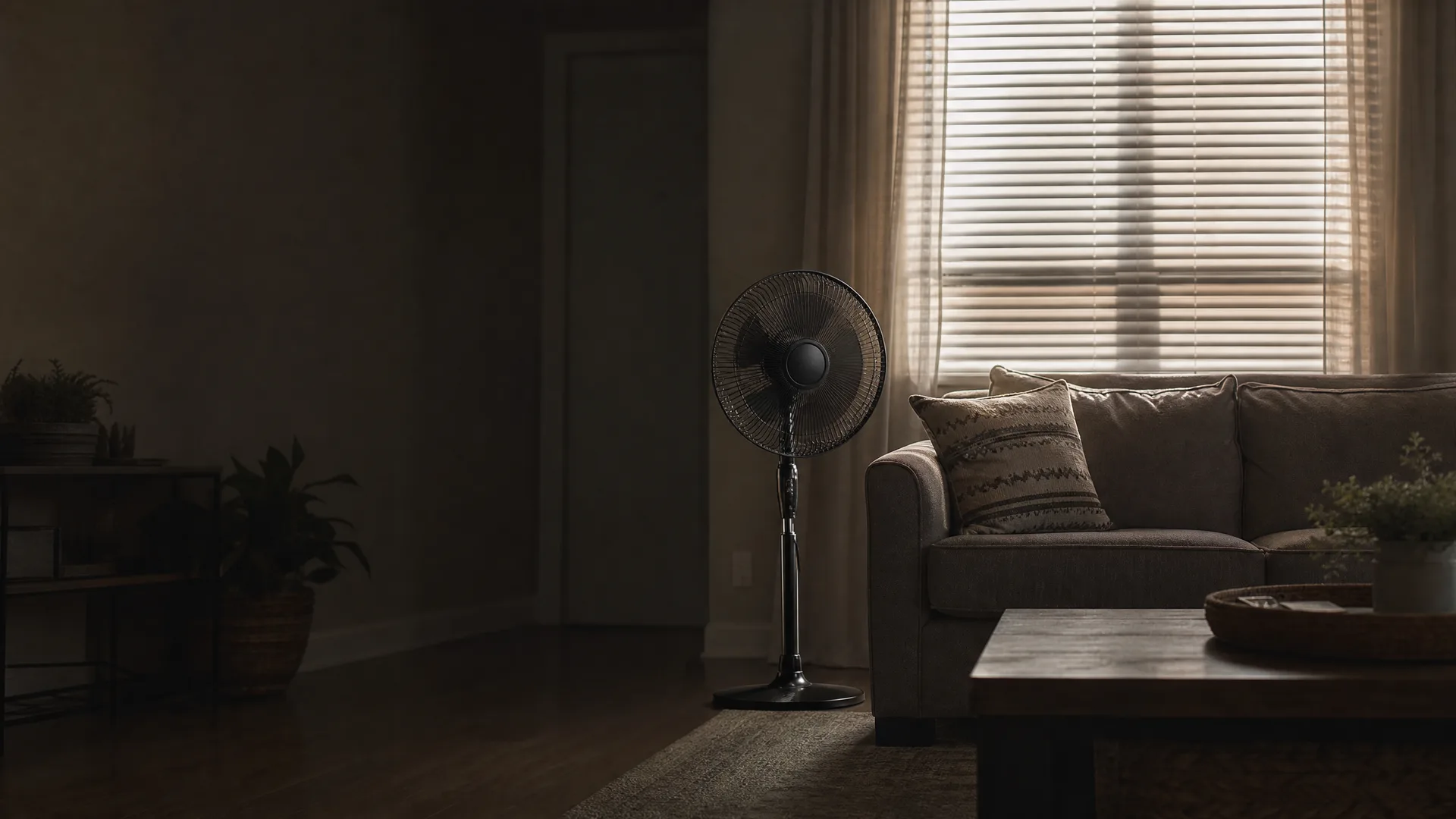
It's almost four and the sun's been on the back of the house all afternoon. You've got the blinds down in the living room downstairs, a fan running next to the couch, and it's still the coolest room in the house. Upstairs the air conditioner has been running since noon and the bedrooms still feel thick. You go up to grab something and come back down faster than you meant to. The thermostat on the living room wall says 74. Nobody's checked what it feels like at the top of the stairs. The fan just keeps turning the same warm air past the couch.
Power costs 17.67 cents per kilowatt-hour statewide
At that rate, an air conditioner straining to cool a hot upstairs all afternoon shows up directly on your bill. A unit that's low on refrigerant or fighting a dirty coil runs longer for the same result, and every extra hour burns 17.67 cents a kilowatt-hour.
EIA-861 2025 statewide residential average
Your upstairs runs hotter because the system was never built to treat it the same as downstairs
One thermostat, longer duct runs, a return air path that barely exists up there. None of that fixes itself, and none of it means your air conditioner is ruined. It means something specific is off, whether that's a charge that's low, a coil that's dirty, or ductwork that's lost too much pressure by the time it reaches the second floor. A contractor who actually looks at your system can tell you which one it is.
That's the part that's hard to do on your own: finding someone who'll look at your specific setup instead of guessing, without you calling around to three different companies and explaining the same thing three times. Answer a few questions about your house and you'll get matched with a contractor who handles this kind of repair, and they'll reach out to you directly. No more comparing quotes from people who haven't seen your attic or your ducts.